Table of Contents
Public anger is mounting in Syria following contradictory statements from Damascus and Amman regarding Jordanian airstrikes that killed civilians in the southern provinces of Deraa and Suwayda on Monday evening. While Jordan claims the operation targeted terrorist cells, images of civilian casualties have fueled domestic unrest and strained relations between the two nations.
Conflicting Accounts of the Strikes
Jordanian officials stated that their air force conducted retaliatory strikes against “dens of terrorist organisations in southern Syria.” The kingdom claimed these targets were linked to suspects involved in an attack on a Greek Orthodox church in the village of Hamoud, located in Jordan’s Karak governorate. That incident, which occurred last week, resulted in nine deaths and at least 34 injuries. King Abdullah II had previously vowed an “iron fist” response to the event.
Jordanian authorities reported that the airstrikes were carried out in coordination with Damascus. However, the Syrian Ministry of Foreign Affairs explicitly denied this, stating that the attacks occurred “without prior coordination or notification with the Syrian side.” An official from the ministry described the strikes as “treacherous” and noted that Damascus had expressed its “complete reservation” regarding the military action.
Navvar Saban, a researcher at the Arab Center for Contemporary Syrian Studies, told Al Jazeera that both governments are navigating a difficult political landscape. “Amman wants to show that it acted against a serious threat through legitimate security channels. On the other hand, Damascus cannot afford to appear to have approved an operation that killed Syrian families,” Saban explained.
Civilian Casualties and Public Outcry
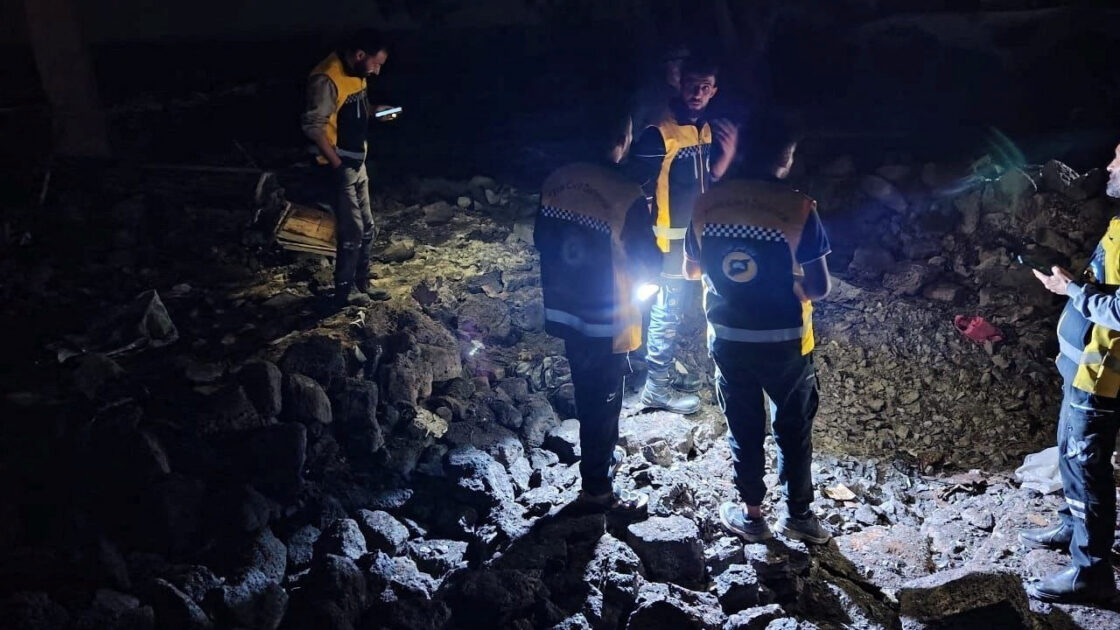
The strikes resulted in the deaths of several civilians, including a grandmother and her three grandchildren, whose bodies were recovered from a tent in the village of al-Taff in the Lajat area. Syrian civil defence reported that three other family members were wounded in the same attack. Additionally, an 80-year-old man, Riyad Karrad, was killed in the Deraa countryside, and a 60-year-old man, Mutlaq Abu al-Khalil, died in the northern countryside of Suwayda.
The incident has triggered significant public frustration. Experts suggest that the Syrian population expects their government to ensure their protection and provide transparency when citizens are harmed. “If people feel Damascus is more concerned with protecting the relationship with the Jordanians than accountability, some of the anger could turn inward,” Saban told Al Jazeera.
Regional Relations and Future Cooperation
Jordan has conducted multiple airstrikes in Syria since 2023, often citing the need to combat drug and arms smuggling. Despite these tensions, analysts note that both nations share strong mutual interests in maintaining a stable relationship. Sean Yom, an expert on Jordan at Temple University, told Al Jazeera that a stable, friendly Syria is essential for Jordan to manage refugee repatriation, secure shared borders, and resist regional pressures.
Following the latest incident, the Syrian Foreign Ministry condemned the strikes as a violation of sovereignty but signaled a desire to maintain diplomatic ties. The ministry announced that it is working with Amman to establish a joint security committee aimed at improving border security and preventing future incidents.
Despite these diplomatic efforts, observers emphasize that the immediate priority remains addressing the grievances of the affected families. “Ultimately, the families deserve a specific answer about the strike that killed their relatives, their friends, their family. Syrians need to understand why their families got killed,” Saban stated.