Table of Contents
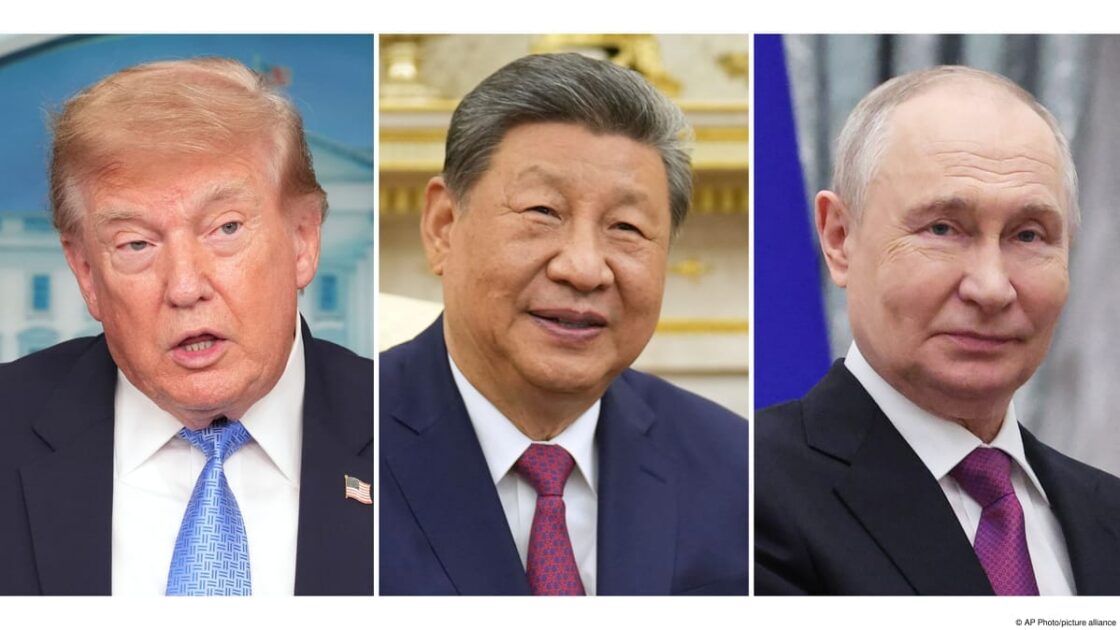
Chinese officials announced on Monday that the leaders of the United States, Russia and China will gather in China this week for their inaugural trilateral summit to address world peace. Presidents Xi Jinping, Donald Trump and Vladimir Putin are scheduled to meet on Thursday in the southern Chinese city of Shenzhen during the Asia-Pacific Economic Cooperation summit.
Trilateral Discussions on Global Peace
While Beijing released limited information regarding the agenda, foreign ministry spokeswoman Mao Ning stated during a news briefing that the gathering will feature in-depth discussions on maintaining global peace and fostering stable relations. Describing the event as groundbreaking, Mao made the announcement shortly after Beijing officially confirmed the meeting.
US President Donald Trump previously characterized the upcoming meeting as interesting while speaking to reporters at a Florida airport on November 8, noting that the agenda will cover several topics including denuclearization and efforts to end the war in Iran. However, Trump did not mention Russia’s war in Ukraine during his remarks.
According to a Wall Street Journal report from last month, Russian President Vladimir Putin intended for the discussions to broker a peace agreement for Ukraine that benefits Moscow. Meanwhile, Agence France-Presse reported that US officials do not expect Trump to bring up the subject.
German President Frank-Walter Steinmeier reported following his trip to China that Xi seemed frustrated when questioned about whether Ukraine would be part of the trilateral agenda. Steinmeier told public broadcaster ARD that Xi explicitly noted the conflict is a European matter that requires Europeans to be present at the negotiating table. Additionally, German Chancellor Friedrich Merz urged Trump on Friday to avoid any surprises regarding Ukraine during his talks with Putin, asking him to remain aligned with European and Ukrainian partners.
Denuclearization and Arms Control Positions
Washington aims to bring Beijing into future nuclear arms control agreements, though China maintains that the US and Russia must cut their own arsenals first. Beijing previously turned down Trump’s call for expanded disarmament negotiations after a US-Russia nuclear treaty expired in February.
Despite previous disagreements, the US State Department reported that senior diplomats Wang Yi and Marco Rubio agreed during a recent call on the necessity of substantive leader-level dialogues to pursue objectives such as peace and denuclearization. United Nations Secretary-General Antonio Guterres remarked on Monday that a commitment by the three leaders to meaningful denuclearization would represent a major accomplishment for the international community.
Status of the Iran Conflict
The conflict involving Iran, which commenced with US and Israeli strikes on February 28, is currently experiencing a partial de-escalation even though critical problems remain unresolved. Both the United States and Israel have paused large-scale strikes while conducting elections over recent weeks.
Simultaneously, Tehran has persisted in trying to regulate the Strait of Hormuz, a vital passage for international oil and natural gas shipments, while targeting vessels deemed unauthorized to use the waterway. Prior to the midterm elections, Trump warned on October that the US might launch another military operation called Epic Fury, though he specified no timeline. Earlier peace negotiations between the US and Iran facilitated by Pakistan in April failed to establish a lasting resolution.
As a principal economic partner to Iran, Beijing has repeatedly attempted to act as a mediator in the dispute. Asserting that preventing further escalation is a primary goal, Beijing recently hosted political leaders and diplomats from multiple Middle Eastern nations to encourage all sides to resume negotiations.