Table of Contents
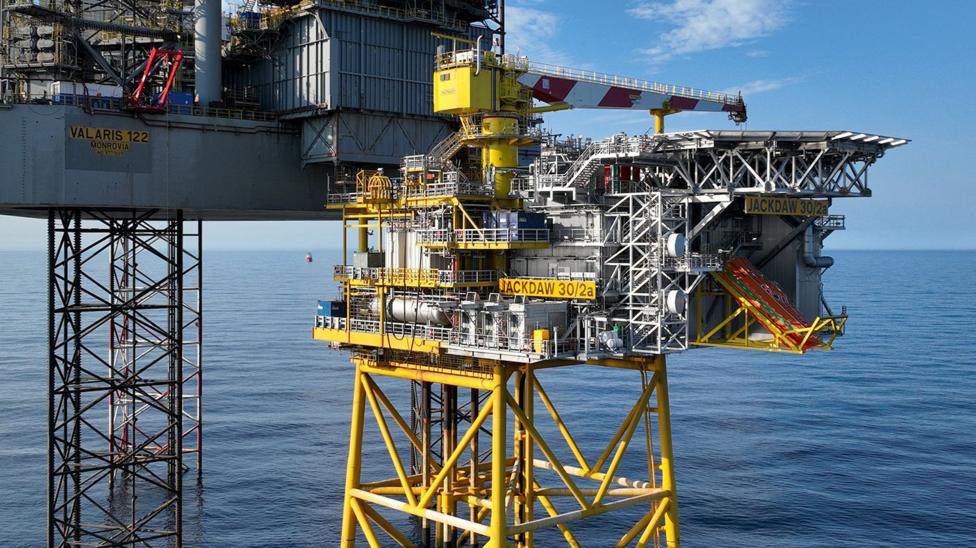
Natural gas has begun flowing from the Jackdaw field in the North Sea, a development the UK government states will help heat millions of homes and businesses this winter. The project, located 150 miles east of Aberdeen, received official approval last month following years of legal challenges and uncertainty.
Production and Economic Impact
Operated by Adura as a joint venture between Shell and the Norwegian energy firm Equinor, the Jackdaw field is expected to provide approximately 6% of the United Kingdom’s total gas production. According to Adura, this output is sufficient to power 1.4 million homes, representing about 2% of total UK demand when imports are considered.
Energy Secretary Miatta Fahnbulleh stated that the project will bolster the nation’s energy security and reduce reliance on imported gas with higher emissions. The UK government estimates that over an 11-year lifespan, the field will support hundreds of jobs and contribute £2.9 billion to the economy. The gas is processed at the existing Shearwater platform before being transported to the St Fergus gas terminal in Aberdeenshire.
Claire Mueller, Adura’s Jackdaw project director, described the start of production as a positive step for the North Sea industry. “At a time of considerable uncertainty around the world, Jackdaw will provide secure energy from our own waters to heat British homes and power our economy,” she said.
Legal and Environmental Context
The project’s path to production has been contentious. Although initially approved by the previous Conservative government, the consent was struck down by the Court of Session in Edinburgh in January 2025. Lord Ericht ruled that the original permitting process was unlawful because it failed to adequately account for the climate impact of burning the fossil fuels extracted from the site.
Following that ruling, developers were permitted to continue preparatory work while submitting new environmental impact assessments that included the emissions generated by burning the gas. The current government’s decision to grant final approval has faced criticism from environmental groups and some Labour backbenchers.
Ross Greer, co-leader of the Scottish Greens, labeled the approval “climate vandalism,” while Greenpeace co-executive director Areeba Hamid argued the decision was a mistake regarding energy security and climate goals. Similarly, Oxfam accused the government of undermining its own climate commitments.
Future Energy Decisions
While the government has moved forward with Jackdaw, it has yet to make a decision regarding the Rosebank oil field, located off the coast of Shetland. Rosebank is significantly larger, containing an estimated 300 million to 500 million barrels of oil. Unlike the gas from Jackdaw, which is primarily intended for domestic use, oil from Rosebank would be sold on international markets.
The government has previously noted that while projects like Jackdaw support domestic supply, they may have a limited impact on global energy prices. In an August consultation response, Energy Minister Michael Shanks noted that because North Sea output represents a small fraction of global demand, domestic production would not materially lower consumer energy bills.
Adura CEO Neil McCulloch has urged the government to approve the Rosebank project, describing the commencement of Jackdaw as an important step toward restoring confidence in the North Sea sector.