A senior World Bank official stated that Lebanon has been slow to utilize international financial assistance for rebuilding regions devastated by the 2024 war and subsequent fighting. World Bank Managing Director of Operations Anna Bjerde made the remarks during a visit to southern Lebanon on Tuesday, where she noted the slow pace of reconstruction.
Aid Disbursement and Reconstruction Delays
The international financial institution approved a $250 million loan in June 2025 to assist Lebanon with clearing debris and restoring damaged public infrastructure following the 2024 conflict between Israel and Hezbollah. However, a progress report from September revealed that only $4.2 million had been disbursed, significantly short of the anticipated $100 million target by July 2026. The World Bank previously estimated that post-war recovery efforts would cost approximately $11 billion.
Prime Minister Nawaf Salam’s office issued a statement explaining that parliamentary ratification of the loan faced significant delays. The statement also noted that ongoing security issues stemming from Israel’s presence in southern Lebanon postponed the timely execution of project activities.
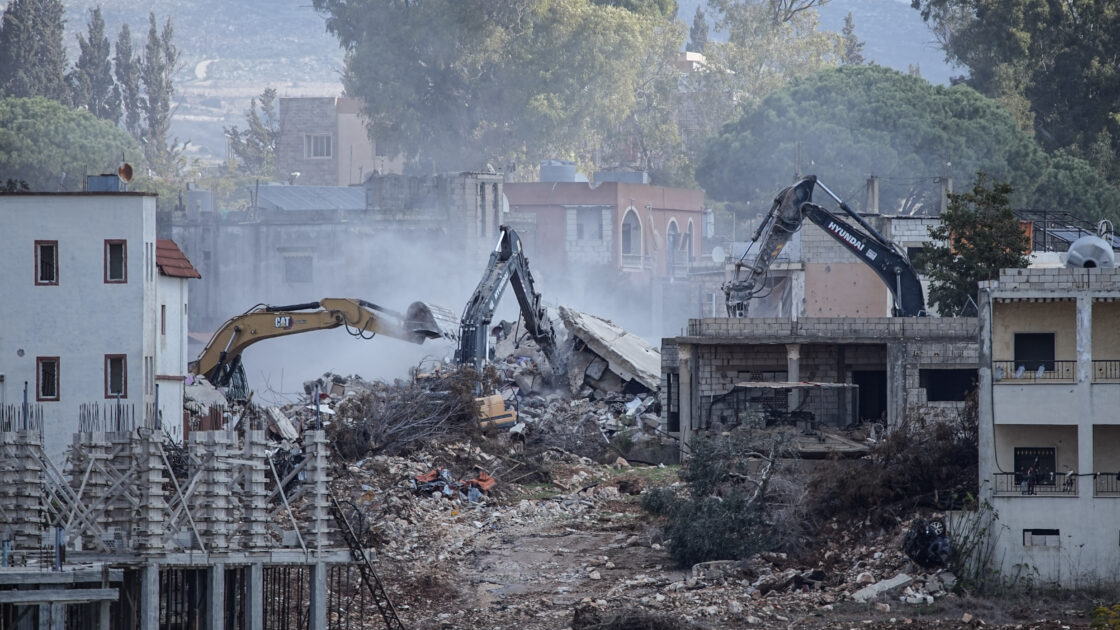
Israel has maintained operations and occupied portions of southern Lebanon up to the Litani River since March, stating the actions aim to dismantle Hezbollah infrastructure while destroying civilian residences. According to Lebanon’s National News Agency, recent military actions included artillery strikes near Baraachit, Beit Yahoun, Rashaf, and Sarbine, alongside the demolition of homes in Zawtar ash-Sharqiyah and Haddatha by Israeli earth movers.
Displacement and Economic Impact
The United Nations reports that at least 304,500 Lebanese remain internally displaced, decreasing from an earlier peak of 1.2 million, while up to 4,500 people have died in the attacks. Last month, Hezbollah stated it would distribute up to $14,000 to families whose homes were destroyed or rendered uninhabitable, while criticizing the government for neglecting its responsibilities toward displaced citizens.
Israel has declined to withdraw from southern Lebanon, pointing to security concerns regarding the delayed disarmament of Hezbollah and other groups. This disarmament is mandated by the trilateral ceasefire framework established in April, supported by the United States and the Lebanese government.
Israeli Defence Minister Israel Katz stated that Israel will not pull back from its current security zones or redeploy forces. He added that any escalation across fronts would prompt preparations to occupy additional territory.
Bjerde acknowledged that Lebanese institutions face severe strain and that security conditions demand careful planning regarding where clearance and repair work can safely begin. In its Summer 2026 Lebanon Economic Monitor report, titled A Conflict-Torn Economy, the World Bank projected a 6.4 percent contraction in Lebanon’s economy for the year.
The report noted that conflict escalation in March interrupted economic recovery, further harming housing and infrastructure, displacing residents, disrupting supply chains, and severely impacting tourism and domestic demand. Additionally, a joint report by the UN Food and Agriculture Organization, the World Food Programme, and Lebanon’s Ministry of Agriculture indicated that more than one million people, representing roughly 21 percent of the recorded population, experience crisis-level hunger.
Lebanon’s government maintains it is utilizing all available resources under difficult conditions, pointing to the distribution of about $100 million in housing loans to 1,500 families as reported by the National News Agency. Bjerde emphasized that the World Bank must maintain daily oversight and remain persistent to ensure implementation, stating that the organization aims to accelerate reconstruction efforts for the benefit of the population.