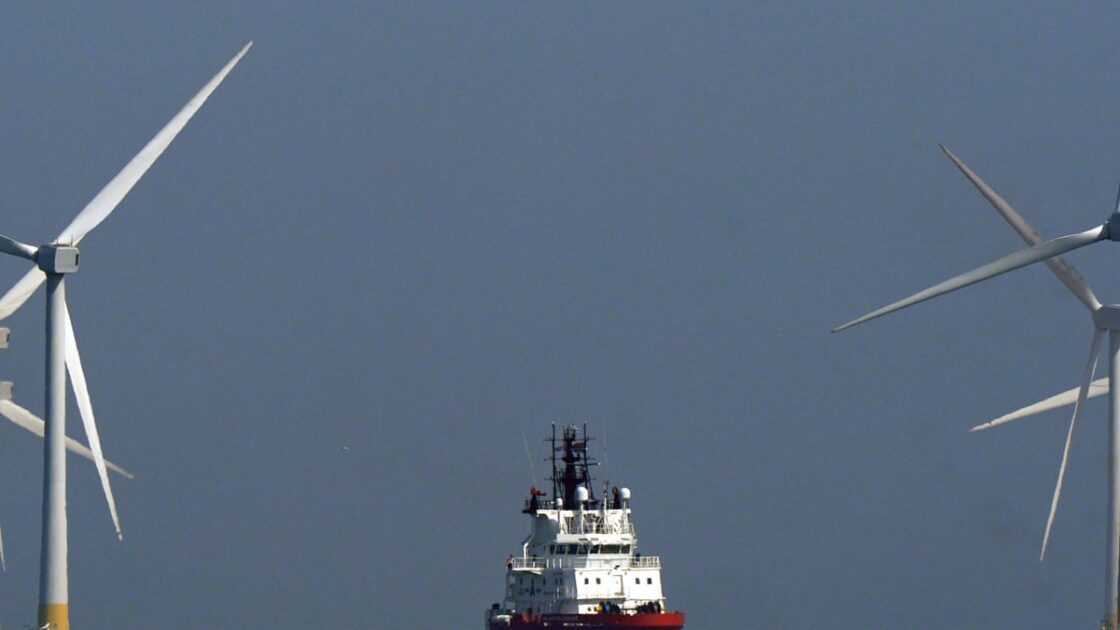
The UK national wealth fund is lending £1bn towards two major offshore windfarm projects off the coast of Norfolk, known as the Vanguard schemes. While the investment has been praised as a boost for British renewables, questions have been raised over whether the private equity giant KKR and utility firm RWE actually needed state financial backing.
Financing the Vanguard Windfarms
The two massive windfarms require nearly £13bn in debt financing, as reported by The Guardian. The project advanced after German utility RWE secured a contract to build the windfarms during a recent renewables auction. RWE subsequently sold a 50% stake in the Vanguard projects to US private equity and infrastructure investor KKR. Meanwhile, a consortium of 35 international banks provided £12.8bn in debt, which includes the £1bn contribution from the UK’s national wealth fund (NWF).
Under its operational guidelines, the state-backed NWF is not intended to replace private capital. Instead, its funding must be additional, meaning it ensures infrastructure is built that would not otherwise materialize without state intervention. The fund assesses each potential investment to ensure it delivers financial and non-financial value that would otherwise go unachieved.
Questioning the Need for State Support
Industry observers question whether the Vanguard windfarms would have been abandoned if the NWF had withheld its £1bn loan. Both RWE and KKR are massive, highly experienced financial players capable of raising capital. Furthermore, offshore wind projects are heavily de-risked through an auction mechanism that guarantees an inflation-linked price for electricity over 20 years, set at £91.20 per megawatt-hour for this project.
While rising borrowing costs present challenges for developers, the NWF’s decision to join the lending syndicate on an established commercial project has drawn scrutiny. The NWF defends the loan by stating that its involvement broadens the pool of capital available to offshore wind developers and addresses unprecedented liquidity demands following recent auction successes.
Other major NWF financial commitments, such as funding for Sizewell C and small modular reactors by Rolls-Royce, are viewed as projects that genuinely depend on state backing. In contrast, offshore wind is a mature market backed by guaranteed revenue contracts. With finite capital available, critics argue the fund could achieve greater decarbonisation impact by targeting areas like heat pumps, electric vehicles, or energy storage solutions instead of assisting financially powerful firms through tight borrowing conditions.