Table of Contents
Crude oil flows out of the Gulf have increased substantially, surpassing pre-war averages and easing initial supply disruptions caused by the US-Israel war on Iran. Despite this recovery in export volumes, global oil prices continue to climb, with Brent crude trading at its highest levels since April.
Market Anxiety and Futures Pricing
Brent crude front-month futures for December delivery rose by more than 2 percent to temporarily surpass $117 a barrel. According to market analysts, climbing prices reflect deep anxiety regarding potential renewed hostilities, shrinking oil reserves, and skyrocketing transport expenses.
Adi Imsirovic, an energy systems lecturer at the University of Oxford and veteran oil trader, told Al Jazeera that the market indicates abundant prompt oil alongside expectations of prolonged conflict and escalation. Imsirovic explained that futures markets accurately reflect expectations of a continuing war without a clear end in sight.
Adapting Supply Routes Around the Strait
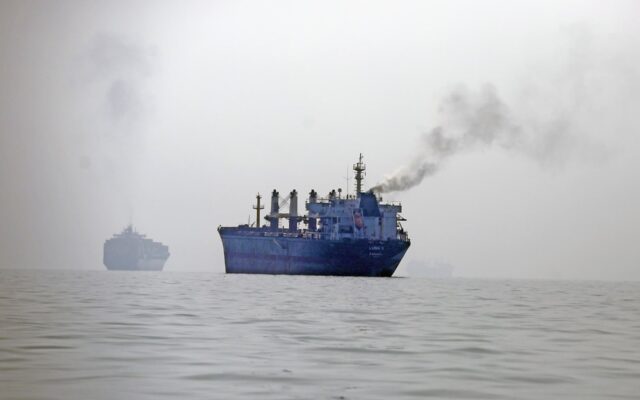
Producers have adapted to Middle Eastern volatility by establishing shuttle systems and ship-to-ship transfers off Oman and the United Arab Emirates to minimize vessel exposure in the Strait of Hormuz. Data from market intelligence firm Kpler showed that over 70 percent of crude crossing the strait in August utilized ship-to-ship transfers.
Producers also increased exports via Saudi Arabia’s East-West pipeline and the Habshan-Fujairah pipeline in the UAE to bypass the strait entirely. Kpler data indicated that 40 percent of Gulf exports bypassed the waterway by September, compared with 17 percent prior to the conflict.
Escalating Transport and Delivery Costs
Logistical workarounds have introduced severe financial burdens, with London Stock Exchange Group data showing freight expenses reaching up to $40 per barrel—roughly 10 times standard rates—driven by steep insurance premiums and logistical hurdles. The United Kingdom Maritime Trade Operations logged 32 commercial vessel attack incidents in October, making it the deadliest month since the war began.
Isabel Figuerola-Ferretti, an oil market expert at Comillas Pontifical University in Madrid, told Al Jazeera that barrels are moving neither smoothly nor reliably. Figuerola-Ferretti stated that delivering a barrel has become considerably more expensive.
While recent intelligence figures showed exports touching pre-war levels, investment strategist Pavel Molchanov of Raymond James & Associates expressed skepticism to Al Jazeera about a full recovery. Molchanov cited International Energy Agency data showing September OPEC Gulf production at 15.8 million barrels per day, representing 75 percent of the pre-war baseline.
Global stockpiles are simultaneously depleting, with observed inventories dropping by 10 million barrels in September to sit 509 million barrels below pre-war levels according to the IEA. Figuerola-Ferretti described the situation as a chronic squeeze driven by concrete supply risks, transit hazards, and depleted inventories.
Outlook for Future Oil Prices
Analysts anticipate no near-term relief for prices, noting that Brent futures for October 2027 delivery remained above $90 a barrel. Figuerola-Ferretti stated that a return to $70 oil requires durable de-escalation, normal shipping conditions through Hormuz, replenished inventories, and normalized freight costs.
Molchanov stated that supplies cannot realistically exceed 85 percent of pre-war volumes without a permanent diplomatic resolution. Molchanov added that once political groundwork is established, logistical steps will involve demining Hormuz, reinstating shipping crews, and restarting production at shut-in oilfields.