A comprehensive investigation has mapped 25 military and paramilitary commanders linked to wartime sexual violence during Sudan’s ongoing conflict. Published by the Centre for Information Resilience (CIR), the study examines five locations and periods of reported abuse, connecting commanders’ roles to evidence gathered by the United Nations, rights groups, and Sudanese organizations.
The Chain of Command
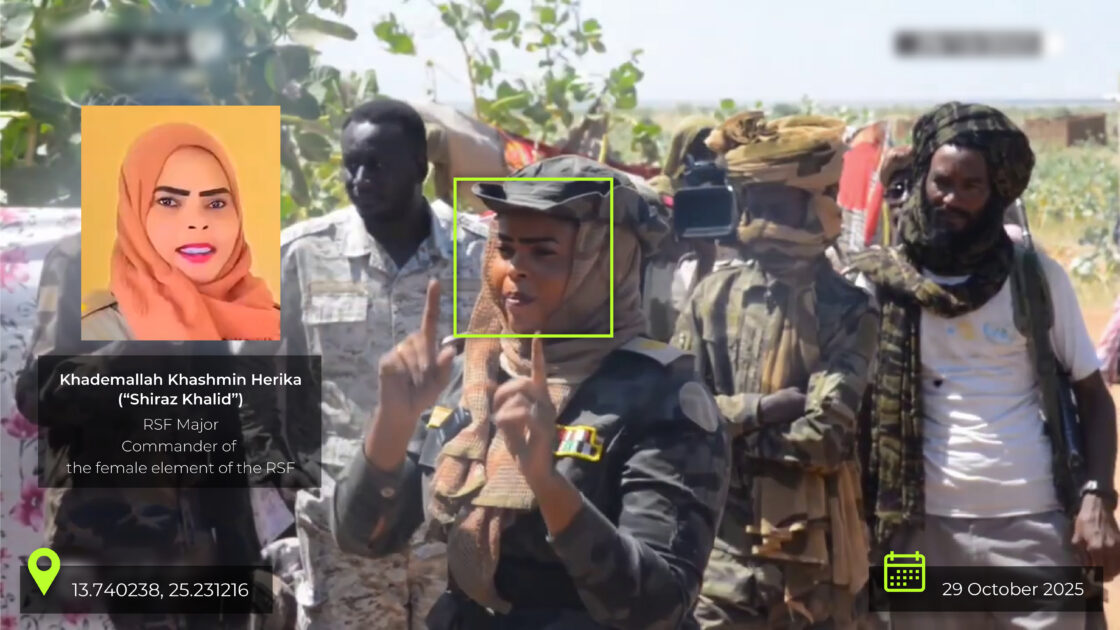
The investigation covers both the Rapid Support Forces (RSF) and the Sudanese Armed Forces, along with their allied groups, who have been engaged in a three-year war. On the day the RSF entered el-Fasher in October 2025, a TikTok video showed Khademallah Khashmin Herika, a major commanding the RSF female contingent also known as Shiraz Khalid, apparently encouraging fighters to rape women. The CIR describes her remarks as explicit incitement to rape. Separate footage placed Herika in el-Fasher and Garni, where survivors reported girls being detained and abused. While investigators verified identities, locations, and filming dates, the report does not establish that each identified commander personally committed or ordered acts of rape.
The most senior RSF officer identified near el-Fasher was Abdul Rahim Hamdan Dagalo, deputy commander and brother of RSF leader Mohamed Hamdan Dagalo, also known as Hemedti. CIR verified his presence at the army’s former 6th Infantry Division base on October 26, 2025, and at the Saudi Hospital on November 4. In separate drone footage from October 27, a voice matching Dagalo instructed artillery commander Hussein Abu Jalak to pursue fleeing vehicles outside the city. RSF sector commander Gedo Hamdan Ahmed, known as Ibn Shouk, also appeared across the investigation from Zamzam displacement camp to el-Fasher.
A Commander on Both Sides
Another officer, Abuaqla Mohamed Ahmed Alwakil, known as Kaykal, shifted allegiance during the conflict. Appointed as an RSF division commander in Wad Madani in December 2023, he was verified at a former army base there on December 24, the same day human rights monitors documented rapes at the city’s Industrial School. Kaykal later defected to the army in October 2024. When military forces recaptured Wad Madani in January 2025, CIR verified him in the city commanding the Sudan Shield Forces, whose fighters were subsequently accused of abducting and abusing women by the United Nations and Human Rights Watch.
In Gezira, investigators examined abuses against marginalized Kanabi communities. Verified footage from Hantoub Bridge showed fighters beating and sexually degrading a detained man, displaying insignia linked to the army-allied Baraa Bin Malik Brigade, General Intelligence Service, and Special Mission Forces. Major-General Abdelmoneim Abdelbasit Mohamed, commander of the Sennar axis, was also placed in Wad Madani during the recapture. Al Jazeera contacted the RSF and the Sudanese Armed Forces for a response to the findings, but received no reply. Both forces have previously denied allegations of sexual violence by their personnel.
Sanctions and Evidence Limitations
On October 26, Britain imposed sanctions, including asset freezes and travel bans, on 15 senior commanders from Sudan’s rival forces over suspected atrocities, including conflict-related sexual violence. Those named included Abu Jalak and Al-Nour Ahmed Adam, known as al-Qubba. The UK government stated the action followed CIR reporting and pledged 5 million pounds for survivors alongside 10 million pounds for broader humanitarian assistance. These sanctions are a separate list from the 25 commanders in the CIR report, and designations do not equate to criminal convictions.
The CIR states it has reasonable grounds to believe the identified commanders were directly or indirectly responsible for sexual violence, though data limitations prevent attributing individual responsibility for specific incidents. While presence, rank, and repeated appearances can guide further investigation, establishing criminal guilt under command-responsibility rules requires additional evidence regarding effective control and knowledge. For survivors, stigma and inaccessible services continue to obstruct both treatment and testimony, while the investigation preserves evidence from images recorded by fighters themselves.