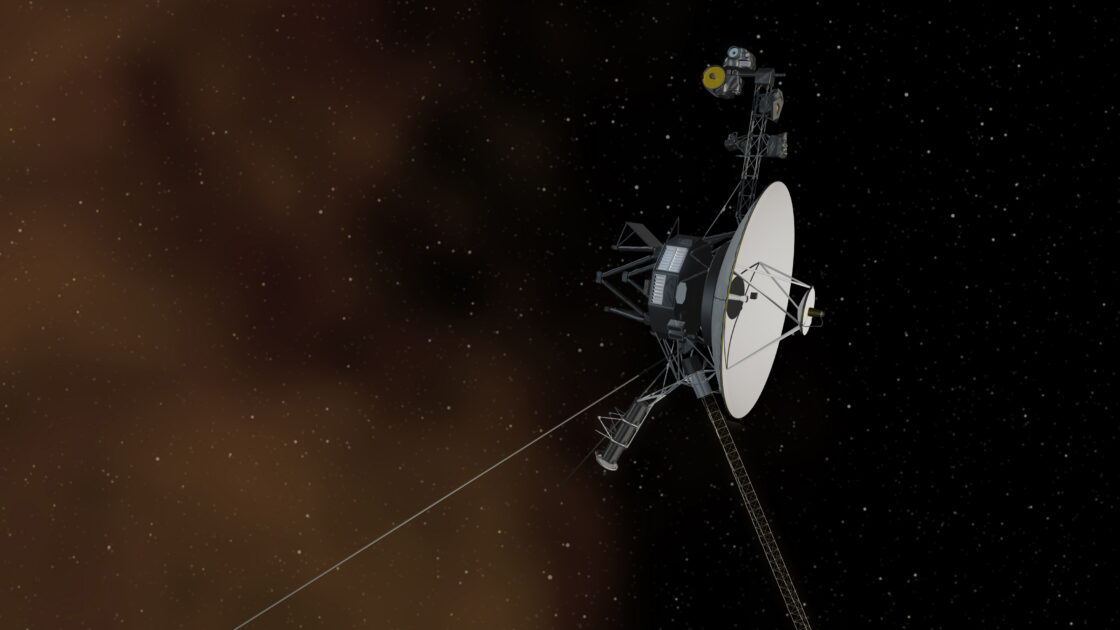
NASA has announced that its Voyager 1 spacecraft is set to become the first human-made object to reach a distance of one light-day from Earth.
A Historic Interstellar Journey
The robotic space probe will reach the milestone of traveling at least 16 billion miles since its launch in 1977. This vast distance equals one light-day, representing the distance that light travels in 24 hours.
Following its Saturn flyby in 1980, which concluded its primary planetary mission, the probe entered interstellar space. It currently travels at approximately 36,000 miles per hour (58km/h) through the space between stars.
NASA estimates that it will take the spacecraft 18,000 years to travel a single light-year, and twice that duration before it approaches another star.
Ongoing Operations and Scientific Impact
Powered by plutonium, Voyager 1 launched shortly before its twin, Voyager 2, which is projected to reach the one light-day threshold in 2035. Both spacecraft continue transmitting daily data to Earth, offering measurements on magnetic field strength and direction, surrounding pressure, dust levels, and galactic cosmic rays.
A small team of NASA engineers maintains the probes, issuing commands approximately once a week and intervening more frequently if issues arise. In October, the engineering team temporarily lost contact with Voyager 1 and has not yet determined the cause of the outage.
Suzanne Dodd, the project manager for Voyager 1, characterized the spacecraft as a national treasure while speaking to The Associated Press news agency, comparing the twin probes’ continuous operations to weather satellites.
Beyond its scientific contributions, the mission has left a lasting cultural footprint, notably capturing the iconic “Pale Blue Dot” photograph of Earth in 1990.
“All of us — everyone on Earth — have been touched by these missions,” stated Bill Nye of the Planetary Society.