Table of Contents
For more than four decades, the World Athletics Championships have taken place across various continents, yet never in Africa. That milestone will arrive in 2029 when Nairobi hosts the track and field championships, bringing the premier global event to a region whose athletes have heavily shaped the sport’s history.
A Historic Milestone for African Athletics
The World Athletics Championships began in 1983 in Helsinki, Finland, following decades where major athletics competitions were tied primarily to the Olympic Games. That inaugural event gathered 1,333 athletes from 153 countries to establish a foundation for international athletics.
Africa’s connection to the sport dates back much earlier, highlighted by Ethiopia’s Abebe Bikila winning the Olympic marathon gold in 1960. Subsequent generations featured competitors like Uganda’s John Akii-Bua, Morocco’s Said Aouita, and numerous Kenyan champions.
Kenya holds a prominent place in the sport as the second most successful nation in World Athletics Championships history. Kipchoge Keino’s 1,500-metre victory at the 1968 Mexico City Olympics cemented Kenya as a distance-running powerhouse, paving the way for athletes such as Paul Tergat, David Rudisha, Eliud Kipchoge, Vivian Cheruiyot, Hellen Obiri, and Faith Kipyegon.
For Keino, a two-time Olympic champion and former world record holder, the selection of Nairobi marks a culmination of decades of progress. “When we started running, we were young Kenyans with a dream to represent our country and show the world that African athletes could compete at the highest level. Seeing Kenya prepare to host the World Athletics Championships in 2029 is a deeply special moment,” Keino told Al Jazeera, adding that it shows how far the country has progressed from sending athletes abroad to welcoming the world.
Securing the Bid in Budapest
Kenya secured the 2029 hosting rights after a three-year campaign that concluded at the World Athletics Council meeting in Budapest on September 15. Nairobi competed against established global cities including London, Rome, and Munich.
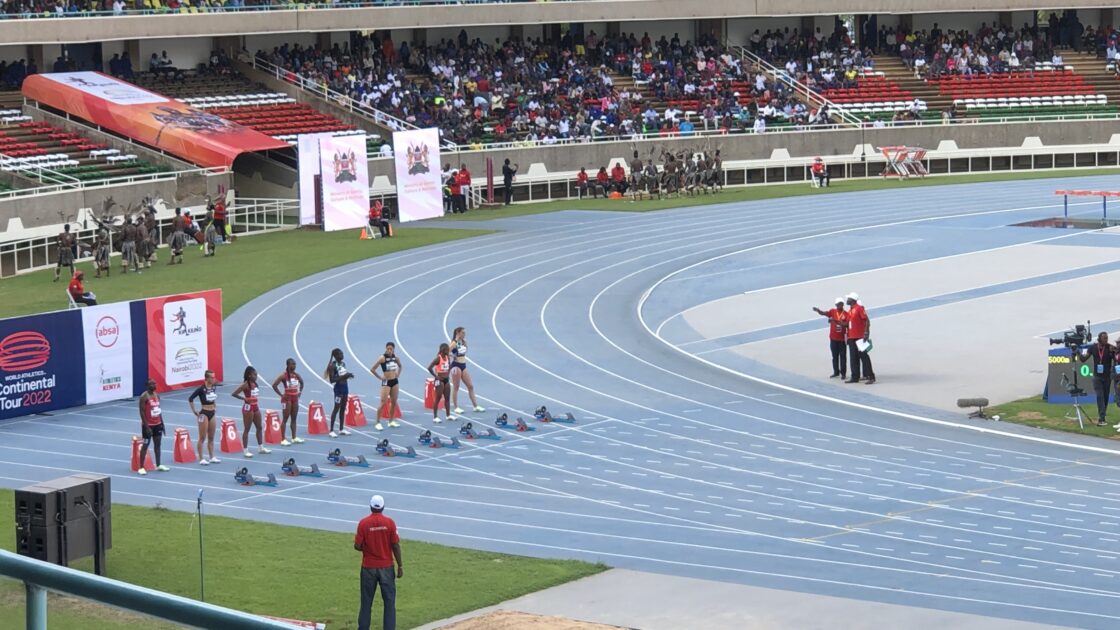
Nairobi’s winning proposal emphasized the ongoing renovations at Kasarani stadium for the 2027 Africa Cup of Nations, alongside past hosting experience from the 2017 World U18 Championships and the 2021 World U20 junior Championships. The nation also utilized insights gained from an unsuccessful bid for the 2025 championships, which went to Tokyo.
World Athletics President Sebastian Coe stated that the council evaluated four strong bids and called Nairobi’s proposal compelling and emotional. Athletics Kenya declined to comment on the decision.
Doping Concerns and Infrastructure Challenges
The announcement immediately brought renewed attention to persistent scrutiny regarding doping in Kenyan athletics. Figures released following the decision show that 318 Kenyan athletes have faced anti-for-doping rule violations since the Athletics Integrity Unit was established in 2017, with 136 of those bans still active. While Kenya does not record the highest overall number of global violations, its prominence in distance running frequently draws international focus.
The nation’s anti-for-doping framework has also experienced regulatory tests. The World Anti-Doping Agency declared Kenya’s anti-for-doping agency non-compliant with the global code in 2025, before removing the country from the compliance watchlist in 2026 after corrective actions were implemented. High-profile recent cases, such as the bans of marathon world-record holder Ruth Chepngetich and former half-marathon world-record holder Kibiwott Kandie, have kept the issue prominent.
Dan Wanyama, a Kenyan Member of Parliament and chair of the committee on sports and culture, expressed confidence in the nation’s readiness. “We have already held several athletics championships which were very successful. It is a thing of pride for us to defeat major global cities London, Munich and Rome,” Wanyama told Al Jazeera, noting that contractors are already working at the Moi International Sports Stadium, also known as Kasarani.
Meanwhile, local fans feel the criticism is disproportionate. Winston Omondi told Al Jazeera, “If it was about doping, then there are so many developed countries that should not even be participating in athletics, including London itself.”
Beyond doping and stadium renovations at Kasarani and Nyayo for the 2027 Africa Cup of Nations, Nairobi must deliver adequate training facilities, transit networks, accommodations, and essential infrastructure for security, broadcasting, and medical care. The city’s traffic congestion and public transport systems will also face close evaluation as organizers work to ensure a seamless global event.
As preparations begin, Omondi reflected on the journey to this milestone, noting that the country and continent have progressed too far to be judged solely through a single lens.