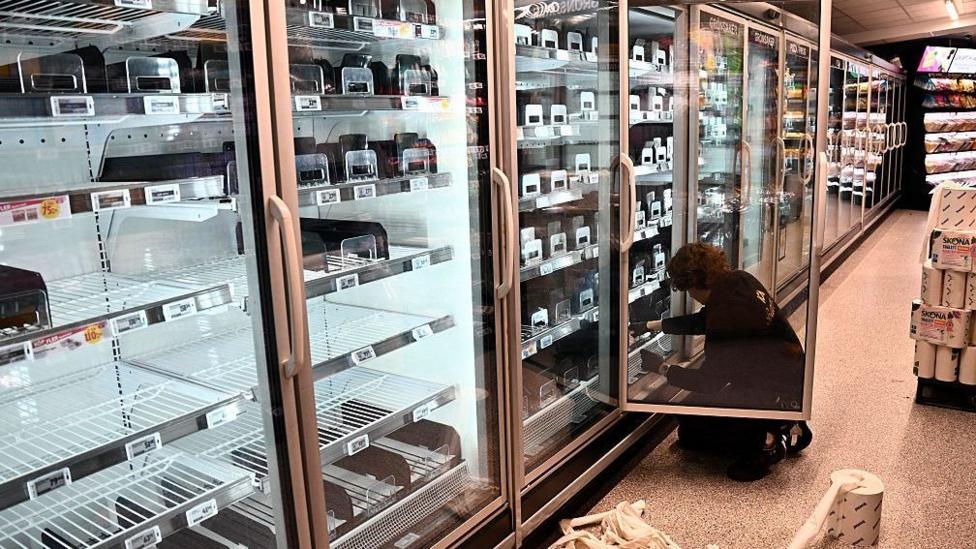
Businesses within the UK’s food supply chain have experienced disruptions from a cyber-attack that targeted supermarket fridges and freezers across several European nations on Monday. The National Cyber Security Centre (NCSC) stated it is monitoring a small number of instances where vulnerable technology was exploited domestically.
Impact on UK and European Businesses
Dr Richard Horne, the chief executive of the NCSC, told the BBC Radio Four Today programme that officials worked overnight to alert potentially vulnerable organizations across the UK. The British Association of Independent Meat Suppliers (AIMS) reported to the BBC that some of its members unexpectedly became collateral damage in the hacks. Two members experienced unexpected refrigeration defrosting, while another observed cold storage units rising in temperature to 100 degrees Celsius (212 degrees Fahrenheit).
AIMS spokesman Tony Goodger noted that the affected devices were empty at the time, preventing any loss of produce, but urged companies to maintain vigilance. He stated that the incident must serve as a warning to the entire food industry regarding their potential exposure as targets. Supermarkets located in Ireland, Sweden, Estonia, Belgium, Luxembourg, the Netherlands, and Finland reported compromised refrigeration systems during Monday’s incident, following similar attacks that affected hundreds of French supermarkets and food suppliers in early October.
Those French incidents spoiled fresh and frozen food valued at millions of euros by exploiting vulnerabilities in remote refrigeration control systems identified months earlier by security researchers. Sabcobel, a Belgian refrigeration manufacturer, explained that the units’ evaporators were switched to defrost mode during Monday’s events, causing temperatures to rise. Retailers impacted across Europe reported having to discard large amounts of spoiled food, resulting in significant financial losses. Mathieu Tilman, a Belgian supermarket operator, described the waste to the BBC as distressing, noting the ethical concerns of discarding food while people go hungry.
Cyber Security Warnings and Industry Response
Dr Horne mentioned that determining responsibility for the hacks remains premature, but emphasized the urgent need for businesses to secure and update critical infrastructure technology. He observed that society relies on foundational technology that lacks sufficient investment, with many firms operating outdated systems beyond their lifespan and failing to isolate them securely from the internet. Such practices create vulnerabilities easily exploited by hackers, a process accelerated by the use of artificial intelligence by adversaries, according to the UK cyber chief.
In the UK, major supermarkets were approached for comment regarding their security safeguards. Graham Wynn, assistant director of regulatory affairs at the British Retail Consortium, stated that retailers invest heavily in cybersecurity and collaborate with the NCSC to secure their refrigeration units against potential threats. Paul Chichester, NCSC director of operations, noted during the launch of the organization’s annual report that domestic impact remains minimal while officials work to identify and close existing vulnerabilities before malicious actors exploit them.