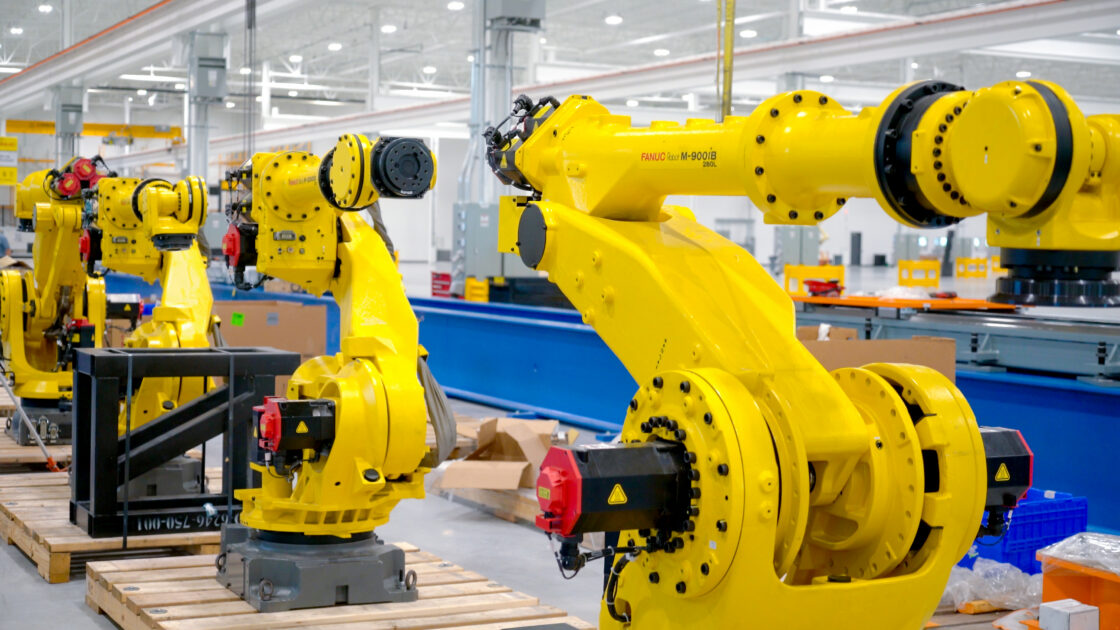
President Donald Trump has declared the imports of foreign-made factory robots to be a national security threat. The move orders new US negotiations with trading partners while leaving open the possibility of imposing new tariffs on robot imports in the future.
Proclamation Details and Industry Impact
Issued on October 28, the presidential proclamation marks a significant increase in government scrutiny over foreign-made industrial robots. This development could complicate manufacturing operations for major American corporations that depend on these machines, including Detroit automakers General Motors and Ford, electric vehicle producer Tesla, and defense and aerospace giants Boeing and Lockheed Martin.
The proclamation characterizes industrial robots and machinery as vital for manufacturing US military weapon systems. It also calls them a driving force behind all critical infrastructure sectors across the domestic economy.
Investigation Findings and Potential Tariffs
According to an investigation led by US Secretary of Commerce Howard Lutnick, importing such robots poses risks to the US industrial base. The findings indicate it threatens the long-term competitiveness of the United States in a sector becoming increasingly essential to national security.
The Department of Commerce investigation additionally identified unique security and safety risks that could introduce significant cybersecurity vulnerabilities. These vulnerabilities might lead to severe consequences for the United States.
This language mirrors the justifications used by the Federal Communications Commission when it banned new models of foreign-made robots—such as robotic vacuums, humanoid robots, and four-legged robot dogs—in July 2026. However, that prior FCC action specifically excluded industrial robot arms and other fixed or stationary robots typically used in automotive plants and logistics warehouses.
Under the new directive, the United States and its trading partners are instructed to adjust imports of robotics, industrial machinery, and their components. The goal is to reach new agreements within 180 days of the proclamation. If no agreements are finalized by that deadline, the proclamation warns that the president may implement additional measures, including tariffs, duties, quotas, and fees on these imports.