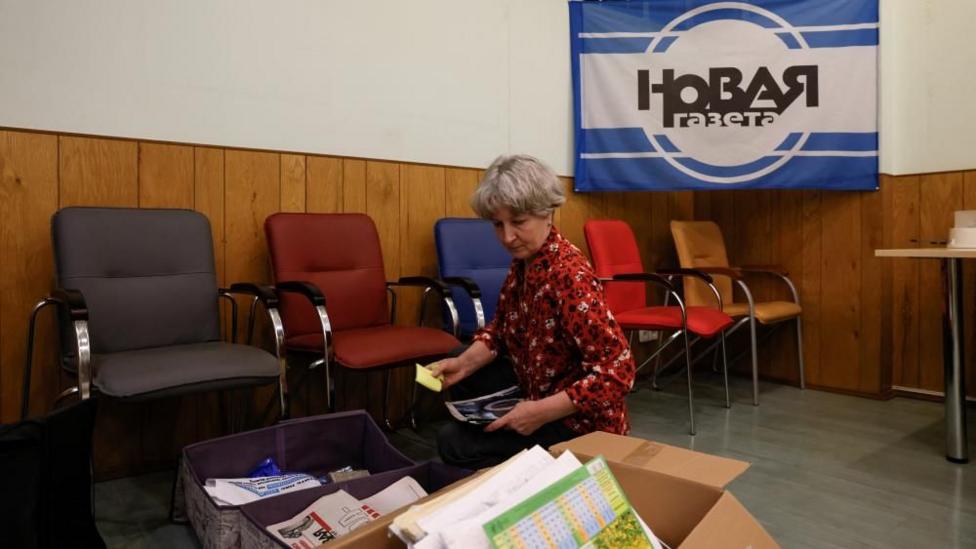
Russia’s most prominent independent newspaper, Novaya Gazeta, is packing up its editorial offices and shutting down after 30 years of investigative journalism. Co-founder and Nobel Peace Prize laureate Dmitry Muratov told BBC News that the authorities have effectively strangled the publication by cutting off its funds and evicting it from its headquarters.
Decades of Fearless Reporting and Heavy Toll
For three decades, Novaya Gazeta built a strong reputation for investigating official corruption, human rights abuses, and bureaucratic power struggles. According to the newspaper, six of its journalists were killed for carrying out their professional duties, including Anna Politkovskaya, who was shot dead in her apartment building.
Following Politkovskaya’s murder, her office was preserved as a memorial museum, but the current eviction order has cleared out most of the room, leaving only her desk and a portrait behind. Muratov told BBC News that the state deployed various methods to shut them down, starting with website blocks, a ban on the print edition, the revocation of their media licence, and the designation of staff as ‘foreign agents’.
Crackdown on Independent Media
In a statement published on its website, the newspaper accused the Russian authorities and special services of forcing it to halt operations through a coordinated act by the repressive state apparatus. The publication stated that basic human rights and freedoms have been dismantled in the country, and holding personal convictions is now treated as state treason.
Pressure on independent journalism intensified significantly following the full-scale invasion of Ukraine in February 2022, accompanied by new laws designed to criminalize dissent. Earlier this year, police searched the newsroom and arrested veteran investigative journalist Oleg Roldugin on charges of unlawful access to computerized information. Current editor-in-chief Sergei Sokolov was also taken in for questioning and had his home searched in connection with the case.
Despite losing its licence and facing blocked donations that prevented the newsroom from earning money, the publication had continued operating on a reduced scale while loyal readers used virtual private networks to bypass website blocks.
Reflecting on the future, Muratov told BBC News that the country is experiencing a terrible catastrophe driven by dictatorships that rely on chaos to strengthen personal power. He affirmed that the team will remain committed to upholding human rights above the authority of states.