Table of Contents
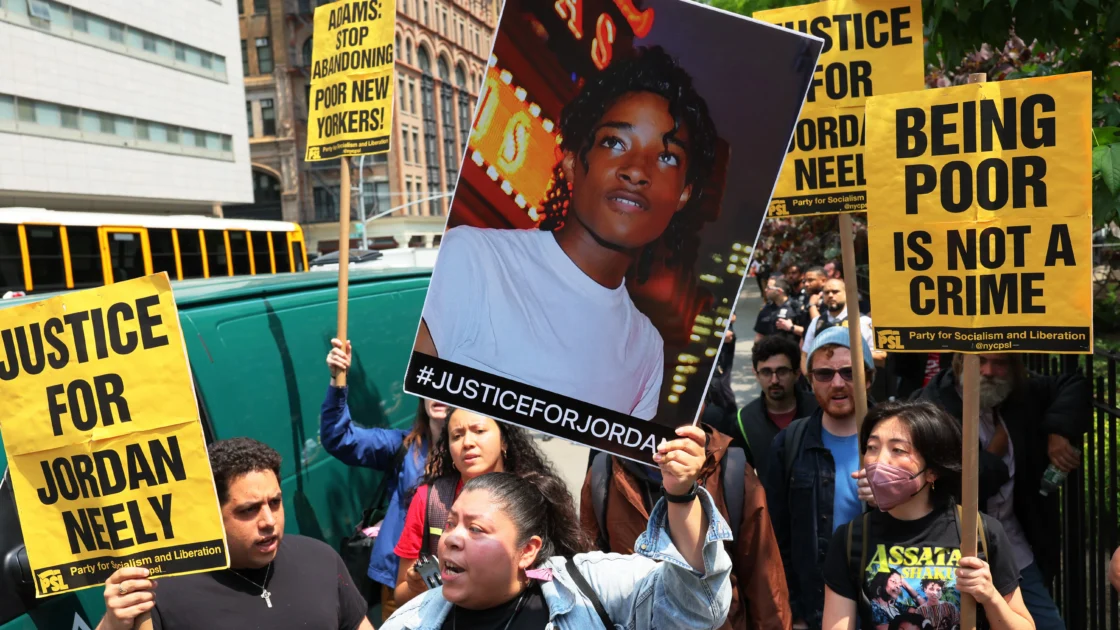
In a new book titled Man in the Mirror: Hope, Struggle, and Belonging in an American City, journalist Anand Giridharadas revisits the May 2023 killing of Jordan Neely, an unhoused Black man who was placed in a fatal chokehold on a New York City subway by former Marine Daniel Penny. Giridharadas spent more than two years investigating the tragedy to explore what happens when social media turns human beings into caricatures and why both men ultimately felt abandoned by society.
The Incident and Legal Aftermath
On May 1, 2023, Jordan Neely boarded a subway car while experiencing a mental health crisis, shouting threats and frightening passengers. Daniel Penny intervened by putting Neely in a chokehold for six minutes, resulting in his death. A video of the encounter deeply divided the nation, with some viewing Penny as filling a void left by law enforcement and others seeing Neely as a victim whose life was treated as disposable, as reported by NPR.
In December 2024, Penny was acquitted of criminally negligent homicide after a jury deadlocked on a second-degree manslaughter charge, which the prosecution then dismissed. Following the verdict, Vice President-elect JD Vance and President-elect Donald Trump invited Penny to the Army-Navy game, and a Silicon Valley venture capital firm subsequently hired him.
Giridharadas explains that both men shared a profound sense of abandonment. According to Giridharadas, Neely had reason to feel abandoned for a long time, while Penny argued that law enforcement and social systems failed to prevent Neely from being on that subway car in that condition. Giridharadas notes that this widespread feeling of abandonment drives people to take matters into their own hands with tragic results.
Neely’s Background and Penny’s Roots
Neely had a history of police interactions spanning over a decade, starting with minor offenses related to homelessness, before progressing to more serious violent crimes and assaults. He had been sent to a rehab facility in the Bronx as part of an alternative-to-incarceration program, but walked out. Weeks later, outreach workers and police interacted with him at Coney Island shortly before his death, failing to recognize he was a fugitive with an active warrant.
Meanwhile, Giridharadas traces Penny’s background to central Long Island, describing towns populated largely by white flight as middle-class refugee camps from the terror of New York City. He compares these communities to immigrant populations that harbor a complicated relationship and barely concealed contempt for the places they left behind.
Regarding Penny’s demeanor, Giridharadas states he did not sense sadness or remorse during a brief conversation at a victory party a year and a half after the incident. He adds that bodycam footage and interrogation tapes showed Penny lacked even curiosity about what happened to Neely.
Politicization and Broader Parallels
Penny initially projected an ideological blankness before willingly embracing the symbolic role, financial support, and a position as a partner on the American dynamism team at venture capital firm Andreessen Horowitz, which invests in startups working on weapons systems and drones.
Giridharadas also draws parallels between the arguments surrounding Penny and the case of Luigi Mangione, noting how both the political right and left have used the narrative of a broken, unresponsive system to justify individuals taking matters into their own hands. Black Lives Matter activist Hawk Newsome similarly remarked that if vigilantes exist, the community needs its own institutions, schools, and media.
Giridharadas concludes that the overarching common thread across the political spectrum is the pervasive belief that citizens are abandoned, the system is rigged, and no one is listening.