Table of Contents
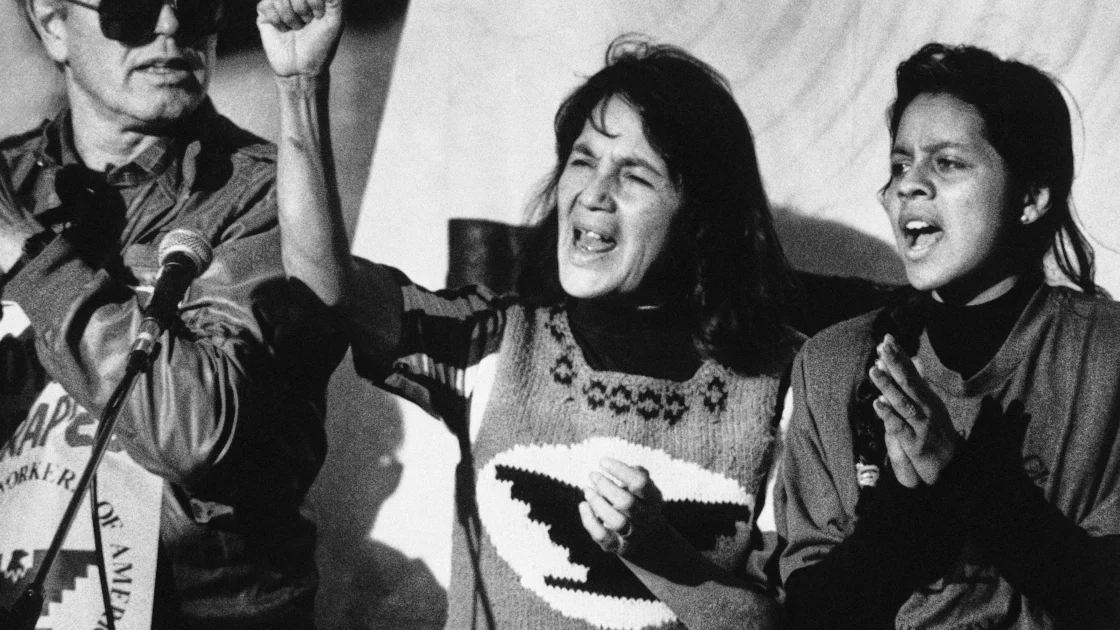
Dolores Huerta, who co-founded the United Farm Workers union to improve conditions in fruit and vegetable fields and coined the rallying cry “Sí, se puede!”, has passed away at the age of 96. Her family announced through her foundation that she died Wednesday at home.
A Lifetime of Activism
Huerta maintained an active schedule into her 90s, participating in protests and speaking across the country regarding race, poverty, and LGBTQ+ and women’s rights on behalf of her Bakersfield, California-based foundation. Her three-word Spanish slogan translates to “Yes, it can be done” and stemmed from her belief that people could spark change, cementing her status as a prominent labor leader, civil rights icon, and feminist activist.
Her decades of labor earned her numerous honors, including the Presidential Medal of Freedom, which was presented by then-President Barack Obama in 2012. Obama praised her tenacity and joked that he had borrowed her slogan for his 2008 campaign. Earlier this year, Huerta revealed in disclosures that she was sexually abused in the 1960s by farmworker movement co-founder César Chavez, resulting in two children—a secret she maintained for six decades. From the early 1970s onward, Huerta shared her life with Richard Chavez, César’s brother, with whom she had four children, in addition to seven children from two prior marriages. Explaining her long silence, Huerta noted she feared coming forward would jeopardize her life’s work and the progress achieved for workers, describing it during a 2016 interview with Latino USA as her personal cross to bear.
Roots in Community and Early Union Work
Born Dolores Clara Fernandez in 1930 in Dawson, New Mexico, her father was a miner, union activist, and state legislator. Following her parents’ divorce when she was 3, her mother relocated her and her brothers to California, where Huerta grew up surrounded by a diverse community of working families and learned independence, compassion, and activism from her mother, who owned a restaurant and hotel.
Initially working as an elementary school teacher in the San Joaquin Valley, Huerta transitioned to organizing after becoming frustrated by her students’ poor living conditions. She noted in a 2017 PBS Independent Lens documentary that she could accomplish more by organizing farmworkers than by trying to teach hungry children.
Early civil rights work in Stockton led her to meet César Chavez. Together, they established the National Farm Workers Association in 1962, which later became the United Farm Workers of America, where she served as a key leader and negotiator. She participated alongside Filipino grape pickers in the five-year Delano Grape Strike and collaborated with Chavez to negotiate collective bargaining agreements and contracts that secured the first health and benefit plans for farmworkers. Chavez, who passed away in 1993, once characterized her as fearless, tough in negotiations, and deeply committed.
Political Campaigns and Lasting Legacy
Huerta met U.S. Sen. Robert Kennedy during his 1968 visit to Delano and volunteered on his presidential campaign, registering Mexican Americans to vote in California. She stood on stage with Kennedy immediately after his California primary victory and was thanked publicly moments before he was shot. Despite the devastation of his assassination, she continued her organizing efforts.
Throughout her demonstrations, Huerta was jailed 22 times. In 1988, she sustained severe injuries—including three broken ribs and a pulverized spleen requiring over a dozen blood transfusions—after being struck by a police officer’s baton during a protest against Republican presidential candidate George H.W. Bush’s opposition to the UFW grape boycott in San Francisco, later reaching a settlement with the city. Following her recovery, she redirected her efforts toward campaigning for women’s rights and encouraging Latinas to run for office, while also campaigning for Democratic Presidents Bill Clinton, Obama, and Joe Biden.
Her son, Emilio Huerta, highlighted her courage as a primary driver of her life’s work in taking on the agricultural powerhouse. Huerta mastered political lobbying, securing financial aid for the unemployed and disability insurance for California farmworkers, while speaking out against toxic pesticides, advocating for immigrant amnesty, and opposing federal guest worker programs. By spearheading nationwide boycotts of grapes and lettuce in the early 1970s, she created the economic and political pressure required for California to pass the first state law recognizing farmworkers’ right to collective bargaining.
As the first Latina inducted into the National Women’s Hall of Fame, she also received nine honorary doctorates and had schools, murals, and streets named in her honor. Although she faced occasional criticism from liberal activists, such as her 2016 endorsement of Hillary Clinton over Sen. Bernie Sanders, she continued to receive recognition, including a documentary overseen by guitarist Carlos Santana and her appearance in the 2025 documentary “Seeds of Change: The Life and Legacy of Dolores Huerta.”
Reflecting on her journey in the 2025 film, Huerta expressed her ultimate goal for her activism. “I hope that my legacy will be one of an organizer that organized to fight injustice,” she stated.