Table of Contents
At least six people were killed and over a dozen others were injured when a gunman with suspected far-right ties opened fire in central Krakow, Poland’s second-largest city. Three additional bodies were discovered at the suspect’s home during a subsequent police search.
How the attack unfolded
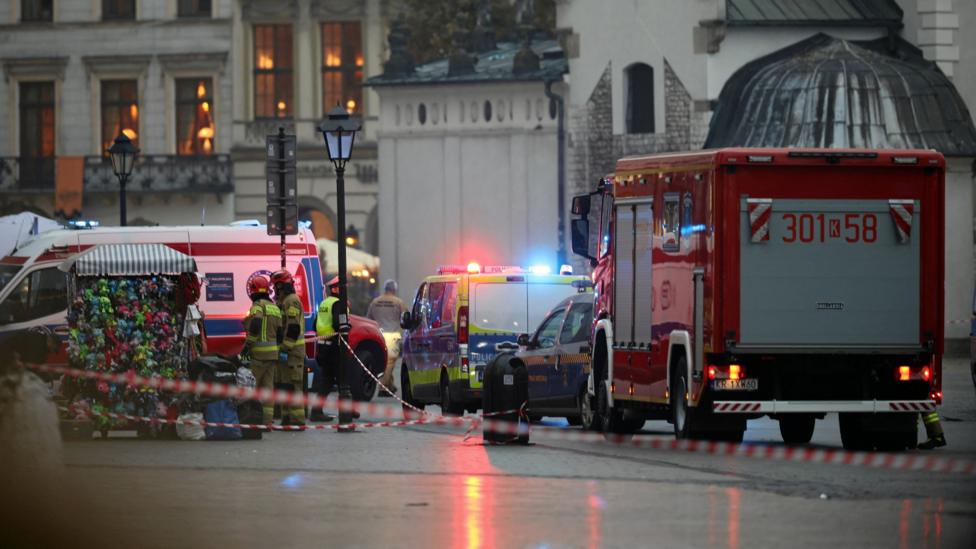
The shooting began shortly before 15:00 local time (14:00 GMT) in Krakow’s bustling Main Market Square, a popular destination for tourists. Police stated that a man drove into the square and started shooting at random people from his vehicle. Footage captured scenes of panic as individuals fled amid the sound of gunfire. A passing tram was struck by bullets, shattering its windows, though no passengers were injured. Armed officers arrived quickly and engaged the suspect, shooting him within three minutes of the incident’s start to prevent further casualties, according to officials. The 25-year-old suspect was arrested and remained hospitalized after undergoing surgery for a gunshot wound. The Krakow branch of the National Public Prosecutor’s Office opened an investigation into a terrorist offense. Verified footage showed a police officer confronting the suspect on the ground and firing several times before the officer was apparently injured himself. Shop windows in the square sustained bullet damage, and city officials urged residents and tourists to avoid the area. Police checked the suspect’s car at the intersection of Dietla and Stradomska streets for explosives, but none were found, though residents of nearby buildings were evacuated during the operation.
Victims and casualties
Four women and two men were confirmed killed in central Krakow, consisting of four Polish citizens, a British national, and an Austrian woman. Prime Minister Donald Tusk announced that three additional bodies—a 53-year-old father, a 52-year-old mother, and a 21-year-old sister of the suspect—were found at the gunman’s house in Ostrowiec Świętokrzyski, located about 200 kilometers from Krakow, after counter-terrorism police searched the property. Sixteen people, including five foreigners, two police officers, and the attacker, were hospitalized. The interior ministry reported that the foreign victims came from Austria, Britain, Germany, Portugal, and Russia. Prime Minister Tusk identified the injured officers as Senior Constable Jakub Kulik and Senior Constable Artur Morański. A government minister stated that one officer was in a very critical condition after being shot three times during the arrest. Police spokesperson Katarzyna Cislo told Radio Krakow on Sunday that two hospitalized women had been discharged, while the remaining patients, including the two injured officers, were in stable condition. Polish authorities have not yet released the names and ages of the other victims.
Suspect details and motive
Police identified the attacker as a 25-year-old Polish man without disclosing his name. Local governor Krzysztof Jan Klęczar reported that the gunman remained in critical condition in the hospital. A police spokesperson stated that the suspect wore military-style attire and carried a military-grade weapon, though authorities clarified he was not a soldier. Numerous weapons and ammunition pieces were recovered from his vehicle. Polish media reported that the suspect held a firearms permit and may have sourced the weapons from his family home. A government minister indicated that preliminary findings point to inspiration from far-right ideologies, describing the gunman as an ultra-nationalist.
Witness accounts
Jonathan Balshaw, visiting from Ipswich with his partner Dominika, was near St Mary’s Basilica when the shooting began. He told BBC News that they hid with others through the church’s side door until the gunfire stopped, noting that over 20 shots were fired with distinct sounds from multiple firearms. Caitlin Shasby, who arrived in Krakow for a weekend trip from Newcastle with a friend named Jon, heard shots from her hotel room and received a call instructing them to stay indoors. Gazeta Krakowska reported that two surgeons, Dr Mateusz Wierdak and Prof Michał Pędziwiatr, rushed to help the wounded after having lunch nearby. Pędziwiatr told the local outlet that two police officers were conscious with chest gunshot wounds, and added that the perpetrator was also conscious with wounds to the abdomen, thigh, and chest, expressing pain.
Reactions in Poland and internationally
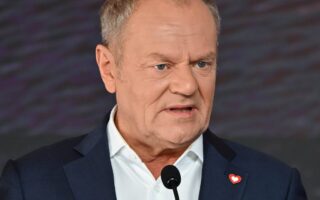
Visiting Krakow, Prime Minister Donald Tusk described the incident as a cruel attack on human lives and stated that Poland had not previously experienced such drastic cases of terrorism. Krakow Mayor Łukasz Gibała signed an order declaring a period of mourning in the city until Wednesday, 11 November. British Prime Minister Andy Burnham expressed shock and sadness, stating that the United Kingdom stands in solidarity with Poland. British Foreign Secretary Ed Miliband shared on social media that the UK government deeply mourns those who died. US Ambassador to Poland Tom Rose called the incident a savage and murderous attack, while EU foreign policy chief Kaja Kallas termed it a tragedy felt far beyond Poland. Ukrainian President Volodymyr Zelensky also shared shocking condolences on behalf of the Ukrainian people to the families and loved ones of the victims.