Table of Contents
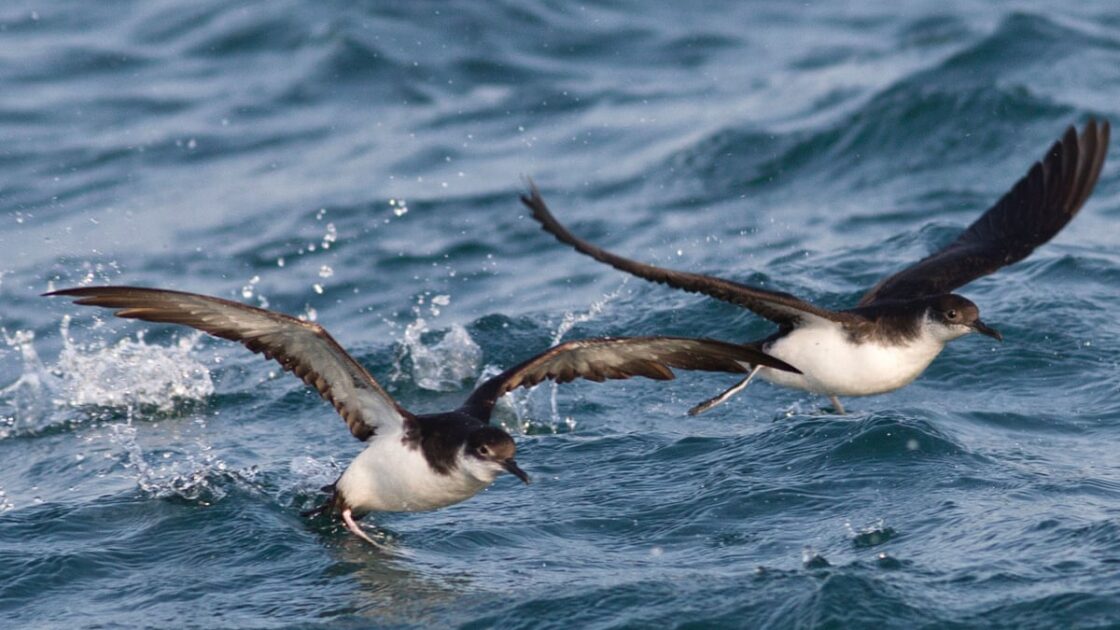
Seabirds returning from foraging trips can be thrown hundreds of miles off course by a form of jet lag that arises when their body clocks get out of sync with local time, researchers say. Tracking data from Manx shearwaters on the west coast of the UK revealed that when the birds returned home to their colonies after trips over the Atlantic, their rapid eastward flights disrupted their sense of time and navigation.
Impact on Adult and Young Shearwaters
The impact was limited on adult shearwaters because the birds were able to correct their bearings in flight. At most, the birds veered off course by about 15 degrees. After correcting their course, this added only an estimated 3 miles to a 600-mile journey. But less experienced birds were likely to have a tougher time, the study found, with first-time foragers at risk of flying off course by hundreds of miles.
Most studies on birds’ biological clocks have been conducted under laboratory conditions, but Dr. Patrick Lewin, a behavioural and sensory ecologist at the University of Oxford, set out to investigate wild birds with the help of his colleagues. Their analysis of 20 years of GPS tracking data revealed a clear effect when the Manx shearwaters flew east across lines of longitude as they returned home, leading their clocks to run up to an hour or so behind local time. As Lewin explained to The Guardian, the internal clock of the bird can be subject to a jet lag phenomenon, which manifests as birds flying off course.
How Seabirds Use the Sun
Like many animals, shearwaters use the sun as a compass. Because the sun moves across the sky as the Earth rotates, reading its position correctly relies on the birds adjusting their heading relative to the sun, using their body clock to keep track of the time of day. Sunset and sunrise keep the bird’s body clock in sync, helping them adjust to changes in local time.
Writing in Science, Lewin stated that the mismatch between local time and the birds’ internal clocks could make them drift off course when the sun lay farther around the sky than expected. Surprisingly, the errors remained when birds followed the coastline, where landmarks could have guided them, further supporting the idea that the sun plays a central role in anchoring their sense of direction.
According to Lewin, this lag has a very limited impact on the overall journey for adult shearwaters, with errors adding a calculated 5km to a 1,000km journey. However, for first-time migrant birds, such orientation shifts due to sun compass errors could result in deviations of hundreds of kilometres as they lack a map sense to help reorient them when they lose their way.
Broader Significance of the Findings
Prof. Richard Holland of Bangor University, who was not involved in the study, described it as a significant finding, noting that it seems to confirm in wild animals what more controlled experimental studies have shown regarding reliance on the sun compass for animals that move during the day, even when it is not accurate.
Manx shearwaters spend most of their lives far out at sea. They cover enormous distances but return each year to islands off the west coast of the UK to breed in burrows. Holland added that while the consequences of these errors are not entirely clear from the study since the birds return to their colony and the errors are small, the research highlights the importance of understanding the role of biological rhythms across multiple contexts in animal behaviour as researchers increasingly realize their importance for numerous biological functions.