Table of Contents
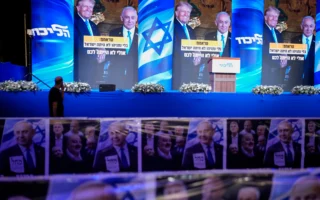
Israelis have cast their ballots in a parliamentary election marked by record-high voter turnout, resulting in a tight political stalemate. Updated exit polls show that Prime Minister Benjamin Netanyahu’s ruling bloc and the opposition bloc led by Gadi Eisenkot are tied, with neither side securing the necessary majority to form a government independently.
Exit Polls Show Neck-and-Neck Race
Updated projections from public broadcaster Kan 11 and Channel 13 put both the pro-Netanyahu and anti-Netanyahu blocs at 51 seats each in the 120-seat Knesset. Meanwhile, Channel 12 projected a slight edge for the pro-Netanyahu camp with 52 seats compared to 49 for the opposition. Kan 11 projected Netanyahu’s Likud party as the largest single group with 27 seats.
Forming a secure government requires at least 61 seats, leaving neither major faction with a clear path to a majority. The high voter turnout also raised the threshold for smaller parties to enter parliament, threatening the survival of fringe groups that Netanyahu relies upon for a coalition.
Opposition Demands Netanyahu’s Resignation
Following the election, opposition leader Gadi Eisenkot called on Netanyahu to step down, stating that the public had voted decisively for change. In a speech in Jerusalem, Eisenkot urged a decent leader to accept the will of the voters and announced his readiness to form a Zionist conscription government aimed at addressing military service obligations.
Eisenkot also warned Netanyahu against initiating major security decisions or new conflicts, arguing he no longer held a mandate. The opposition leader previously centered his campaign on ending military service exemptions for Ultra-Orthodox men.
Role of Arab Parties and Record Turnout
The Ra’am party emerged as a potential power broker, with exit polls predicting the religious Muslim party will secure seven seats, making any future government formation dependent on some form of cooperation. The Central Elections Committee reported that voter turnout reached 66.7% by 6 p.m., marking the highest partial turnout figure since records began in 1973.
The Central Elections Committee rejected a request by Likud and other allied parties to extend nationwide voting hours past 10 p.m., citing strong public engagement and no widespread justification for an extension, despite localized issues such as a power outage at a West Bank polling station.