Table of Contents
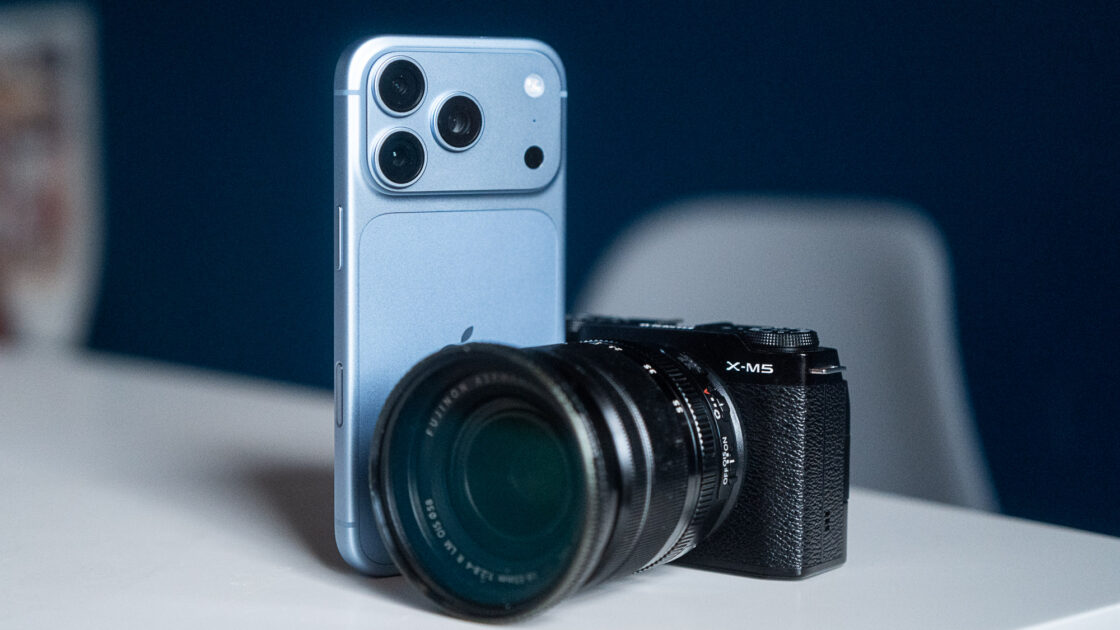
The iPhone 18 Pro features advanced sensors and lenses capable of capturing stunning images in various conditions, while introducing creative updates to Apple’s Photographic Styles. To evaluate how it measures up against traditional photography equipment, CNET tested the device on photo walks alongside Fujifilm’s X-M5, a compact mirrorless interchangeable-lens camera with built-in filmic profiles.
Photographic Styles vs. Fujifilm Recipes
Apple expanded its Photographic Styles tool on the 18 Pro to include advanced controls for image grain, bloom, and white balance, eliminating the need to manually edit individual shots. Similarly, Fujifilm has gained popularity for its filmic styles that users can install as shareable recipes to alter color tones and film grain instantly without post-processing.
Both systems function similarly in practice, as leaning toward warmer tones on the iPhone produced results comparable to Kodak Gold-inspired Fujifilm recipes. However, the iPhone lacks the ability to save specific styles as presets for later use or easy sharing, whereas Fujifilm’s community actively shares recipes. Both devices also support the raw format for further editing in applications such as Adobe Lightroom, Snapseed, or VSCO.
Size and Controls
The iPhone’s compact form factor makes it ideal for street and travel photography because it easily slips into a pocket, whereas the Fujifilm X-M5 requires a dedicated camera bag or a neck strap. Carrying multiple lenses further amplifies the physical burden of a traditional camera setup.
Conversely, dedicated cameras provide ergonomic grips for steady handling, while a thin smartphone can feel delicate and prone to accidental screen presses. Furthermore, adjusting exposure compensation, white balance, or shutter speed on a phone requires multiple screen taps, whereas cameras like the X-M5 or X100VI offer physical dials for instant adjustments in the field.
Interchangeable Lenses vs. Built-in Options
While models like the Fujifilm X100VI feature a fixed 35mm lens, the X-M5 supports interchangeable lenses ranging from ultrawide fisheyes to telephoto options. However, expanding a lens collection increases costs and requires carrying a heavier kit bag.
The iPhone incorporates multiple focal lengths—including 13mm, 24mm, 28mm, 35mm, 48mm, 100mm, and 200mm—into a single pocket-sized device. Although these rely on digital cropping or upscaling rather than optical pro-standard zoom, they effectively provide a full kit-bag of focal options for casual street photography.
Extra Features and Accessories
Users wanting to expand their mobile setup can utilize clip-on lenses like Moment’s anamorphic or macro options, alongside filters from brands like PolarPro. Because iPhones are exceptionally popular, compatible accessories are widely available on the market.
Fujifilm cameras also boast a robust selection of accessories, including thumb grips, half cases, flashes, and tripods, allowing users to customize their physical equipment extensively.
Phone vs. Camera Experience
As a smartphone, the iPhone allows users to instantly edit and share photos to Instagram or WhatsApp without transferring files to a computer. However, CNET noted that this connectivity can be a drawback for photographers seeking a distraction-free experience away from incoming notifications, phone calls, and pop-ups.
Choosing between the two depends primarily on budget and dedication to the craft, as the iPhone serves as an excellent all-around device for casual snappers who cannot afford two separate purchases. Meanwhile, CNET Editor at Large Katie Collins reported that using a proper camera on a trip to China successfully rekindled her dormant passion for photography.
Smartphone photography has advanced significantly in recent years, but lifting a physical camera to the eye to press the shutter button remains a distinct experience.