Table of Contents
Privacy-focused messaging app Germ has officially expanded to Android, following its initial iOS release in 2023. Co-founder Chloe Brown told WIRED that bringing the platform to Android fulfills the essential goal of enabling communication with a broader audience.
Multi-Identity Messaging Without Phone Numbers
Germ stands out by not requiring users to link a phone number to create an account. Brown, a former Stanford University lecturer who co-founded the app with former iMessage privacy engineer Mark Xue, described Germ as a multi-identity messenger designed to counter traditional walled gardens where platforms own a user’s single identity.
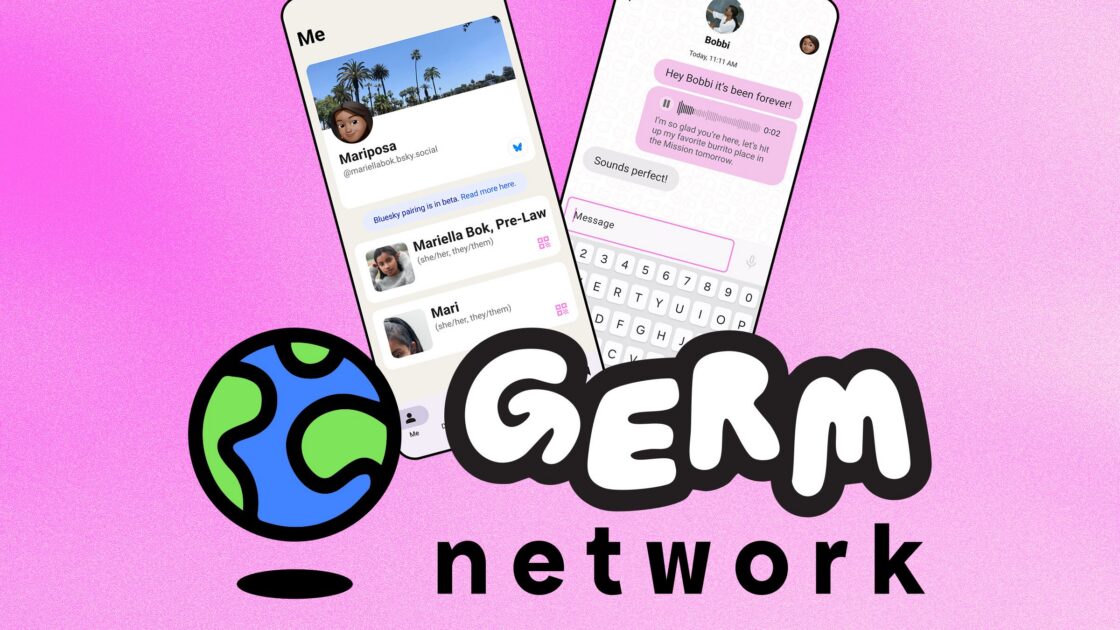
The core of the app relies on temporary “burner cards” that function like built-in secondary phone lines. Users can share these cards in person via an in-app QR code scanner or digitally by generating up to 100 custom links tied to a specific card.
To set up a card, users tap a green plus button under the app’s “Me” tab and select a name, pronouns, and photo. Cards linked to a Germ account cannot be discovered mutually, and connections made through each card remain private. Deleting a burner card permanently severs the associated connections and erases the corresponding chat history from the device.
Encryption and Quantum Security
The platform operates on Messaging Layer Security, an end-to-end encryption standard developed by the Internet Engineering Task Force. Exchanging burner cards actually involves swapping cryptographic keys with new contacts. Although the app has not yet completed a third-party audit, Brown stated that she is open to undergoing one in the future.
Xue highlighted the team’s focus on security, noting that Germ has implemented protections against future quantum computing threats capable of breaking conventional encryption. According to Xue, the small team has achieved the same level of quantum security as larger messaging platforms like iMessage and Signal, and the company has publicly detailed its security framework.
Bluesky Integration and Future Group Chats
Germ recently integrated with social media platform Bluesky, allowing users on the Authenticated Transfer Protocol to link their existing handles and display a messaging button on their profiles for encrypted texts. The new Android launch opens the door to an entirely fresh user base.
Looking ahead, Brown revealed that group chats are next on the development roadmap. While the platform currently supports only one-on-one conversations, the team plans to introduce support for larger group threads.
The platform supports one-on-one conversations while preparing to build support for larger group threads.