While resale websites continue to grow in popularity, the UK still discards about 711,000 tonnes of textiles every year, which is roughly the weight of seven US aircraft carriers. Although the global fashion and textiles industry remains heavily wasteful, recycling companies located in Peterborough and Northamptonshire are applying new technologies to transform discarded items into fresh materials.
Turning waste polyester into tomorrow’s clothing
Inside a warehouse situated next to the A14 in Kettering, a pile of discarded fabric—including dressing gowns, duvets, event banners, and lanyards from occasions like the Commonwealth Games—is continuously fed into a recycling machine. All these items are made from polyester, the most widely used textile fibre globally, and would traditionally have been incinerated or sent to landfill. Project Re:Claim, a partnership between The Salvation Army trading arm (SATCoL) and Plan B Circular, operates what they describe as Europe’s first commercial-scale polyester textile-to-textile recycling facility using technology adapted from a bottle recycling plant.
SATCoL collects the textiles, and items that cannot be reused in their current state are shredded and melted down. Impurities such as dead skin cells and hair are extracted to produce polyester pellets (rPET) that can subsequently be utilized to manufacture new garments. Tim Cross, the founder of Plan B Circular, stated that they process 500 kilograms of fabric every hour and possess the capacity to scale up if market demand rises.
Cross explained the challenge, noting that clothing manufacturers must shift from using virgin polyester to recycled polyester sourced from old textiles, and design future clothes so they can be easily recycled at the end of their lifecycle. He added that a polyester blazer does not require nylon buttons and labels, and a sports top does not need metal zips, as everything can be made entirely of polyester.
This design simplicity is crucial because the plant can only process items that consist of 100% polyester. Majonne Frost, head of sustainability at SATCoL, noted that most clothing is comprised of fiber mixes, such as polyester-cotton blends or three to four different materials combined. While researchers are actively testing methods to separate these mixed fibers, doing so at scale remains both difficult and costly, meaning most blended items are ultimately destroyed.
According to Project Re:Claim, manufacturing their rPET requires 89% less carbon than producing virgin polyester. Cross explained that they ship the pellets back to China in shipping containers that would otherwise travel empty, where the material is spun back into yarn. He added that while the technology is ready, legislation is lagging behind and should be actively driving the design and production methods used in clothing.
Meanwhile, changing European Union rules are forcing manufacturers to reduce production waste, lower their environmental impact, and shift the industry toward a circular model. The Department for Environment, Food and Rural Affairs (Defra) stated that it funds the UK Textiles Pact, an initiative driving ambitious targets to cut waste and extend material lifecycles, although the scheme remains voluntary. Defra added that a taskforce comprising experts and businesses is currently evaluating options to reduce waste in homes and businesses, with plans to report on next steps later in the year.
Transforming waste leather into aircraft and footwear materials
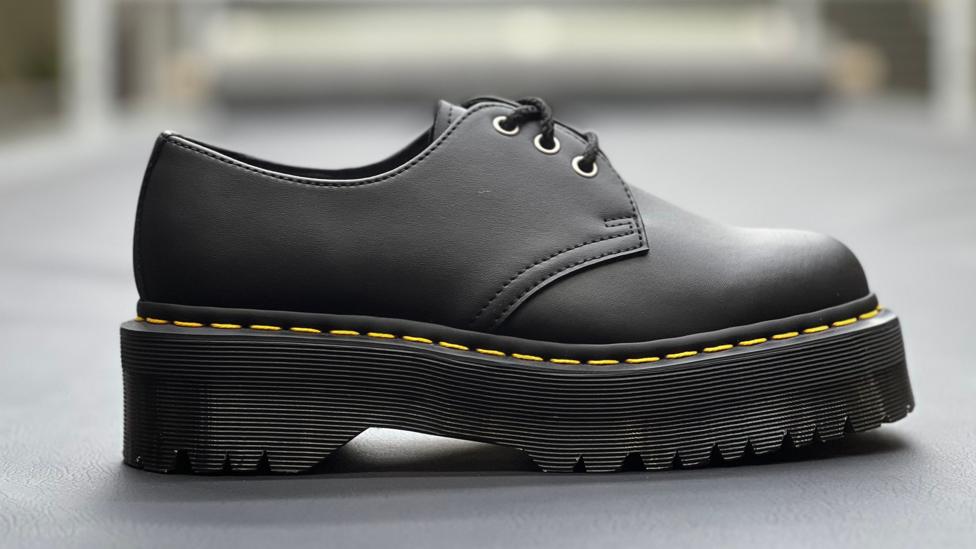
In Peterborough, Gen Phoenix believes that global consumer attitudes and legislation are beginning to spark meaningful change. The company recycles thousands of tonnes of waste leather annually into new fabric utilized by major brands including Dr Martens, Nike, and Coach, alongside specializing in seating for trains, buses, and aviation.
John Kennedy, chief executive of Gen Phoenix, noted that Jet2 was their commercial launch customer, and their material is now used on one in every five commercial aircraft currently flying. He stated that their material matches the properties of traditional leather while carrying an 80% lower carbon footprint and weighing significantly less, which is vital for airlines. He added that the company has successfully diverted more than 18,000 tonnes of material from landfills.
Paul Southall, head of sustainability for Jet2, expressed pride in the partnership, stating that the innovative material is much lighter than traditional leather, thereby reducing fuel burn and lowering CO2 emissions. He added that the material can also be recycled into brand-new aircraft seating when its lifespan ends, minimizing waste and providing a responsible option for cabin interiors.
Although leather originates as a waste product from the food industry, significant quantities are still wasted that Gen Phoenix believes can be recovered. Richard Peace, the company’s senior director of research and technology, explained that animal hides contain sections like the neck, shoulders, armpits, and belly that do not yield traditional finished leather. Gen Phoenix imports this waste as “wet blue”—hides that are partially processed—from tanneries worldwide, breaking the leather down into a fiber fluff that is sprayed onto thin sheets of tissue paper.
These sheets are subsequently sandwiched around a fabric, usually recycled polyester, and bound together using high-powered water jets. This process, known as hydro-entanglement, forms a new fabric without requiring resin binders, ensuring the resulting product is easily recyclable.
Kennedy noted that the importance of sustainability is experiencing a groundswell driven by both incoming legislation and shifting consumer attitudes, particularly among Generation Z. Tuze Mekik, global director of sustainability at Dr Martens, stated that while these products currently represent a small portion of their range, the growth observed in recent seasons highlights the exciting opportunities that emerge when companies like Dr Martens and Gen Phoenix collaborate to reimagine waste.
Gen Phoenix continues to innovate by developing technology aimed at recycling finished leather waste as well. Kennedy concluded that Peterborough remains the hub for all their manufacturing, research, and development, and while additional sites may be established in the future, Peterborough is where the primary work takes place.