Table of Contents
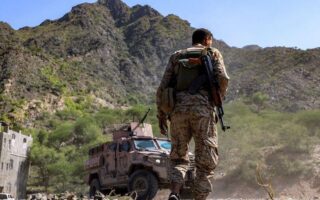
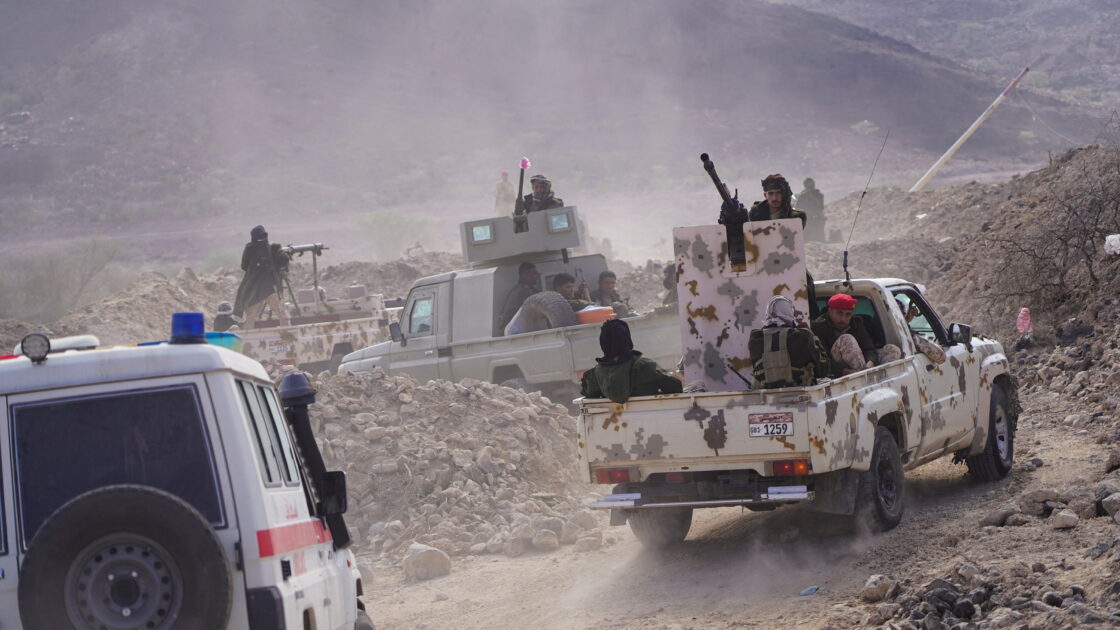
A growing military threat from Houthi forces toward Aden, the de facto capital of the Yemeni government, has elevated the strategic importance of the Southern Transitional Council (STC). As the Houthi group, also known as Ansar Allah, advances to within 60km (37 miles) of the city, southern separatist factions have begun mobilizing to defend the region.
The Role of the Southern Transitional Council
The STC, a movement seeking an independent state in southern Yemen and reportedly backed by the United Arab Emirates, has faced internal instability this year. Following a Saudi-supported military campaign against them, the group announced its dissolution at the start of the year. While some senior members declared that move invalid, the organization has remained in a weakened state for months.
However, the recent withdrawal of forces aligned with the internationally recognized Yemeni government from key Red Sea coast positions has created a power vacuum. Amr al-Bidh, a special representative for the STC president, told Al Jazeera that the government’s previous campaign against southern separatists contributed to the current collapse of defensive lines. “In January, the most effective anti-Houthi force in Yemen was taken apart by decisions in Riyadh, not by the Houthis,” al-Bidh stated.
STC leader Aidarous al-Zubaidi has initiated a mobilization campaign across the south to prepare for the defense of Aden, Lahij, and al-Dhalea. According to al-Bidh, the STC requires autonomy on the battlefield to effectively counter the Houthi advance. “No front can be held for long when the people defending it have no say in how it is defended,” al-Bidh explained to Al Jazeera. He emphasized that the group is prepared to commit its full capacity to the defense of Aden, provided they are granted the political authority to lead their own operations.
Expert Perspectives on the Conflict
Abdy Yeganeh, policy director for Independent Diplomat, noted that the STC remains a significant local entity despite previous efforts to marginalize the group. “Events in recent weeks have shown that despite attempts of marginalising the STC, they remain a credible local entity with significant popular support, with tens of thousands marching weekly across the south in their favour and with a capable military,” Yeganeh told Al Jazeera.
Conversely, military and strategic affairs expert Ali al-Dahab expressed skepticism regarding the STC’s ability to hold off the Houthi offensive independently. He pointed to internal political divisions and a heavy reliance on Saudi financial support. “Without the support of the government and the support of Saudi Arabia, it cannot [repel the Houthis],” al-Dahab told Al Jazeera. He added that the current capabilities of the Houthi forces have surpassed the combined strength of both the government and the STC.
Shifting Military Command
The relationship between the Yemeni government and the STC has been historically strained, marked by clashes over control of facilities in Aden. The Saudi-led coalition, which has supported the government since 2015, has previously targeted STC-linked shipments, leading to the relocation of leadership and the realignment of some units, such as the Southern Giants Brigades, under Saudi command.
In response to the escalating situation, Saudi Arabia’s King Salman issued a royal decree on Monday replacing the commander of coalition forces fighting the Houthis. Lieutenant General Fahd bin Hamad al-Salman was succeeded by General Fayyad al-Ruwaili, the Saudi Chief of the General Staff. Al-Dahab noted that this appointment serves to centralize decision-making during the ongoing offensive, as it grants the position of joint forces commander to the kingdom’s top military official.