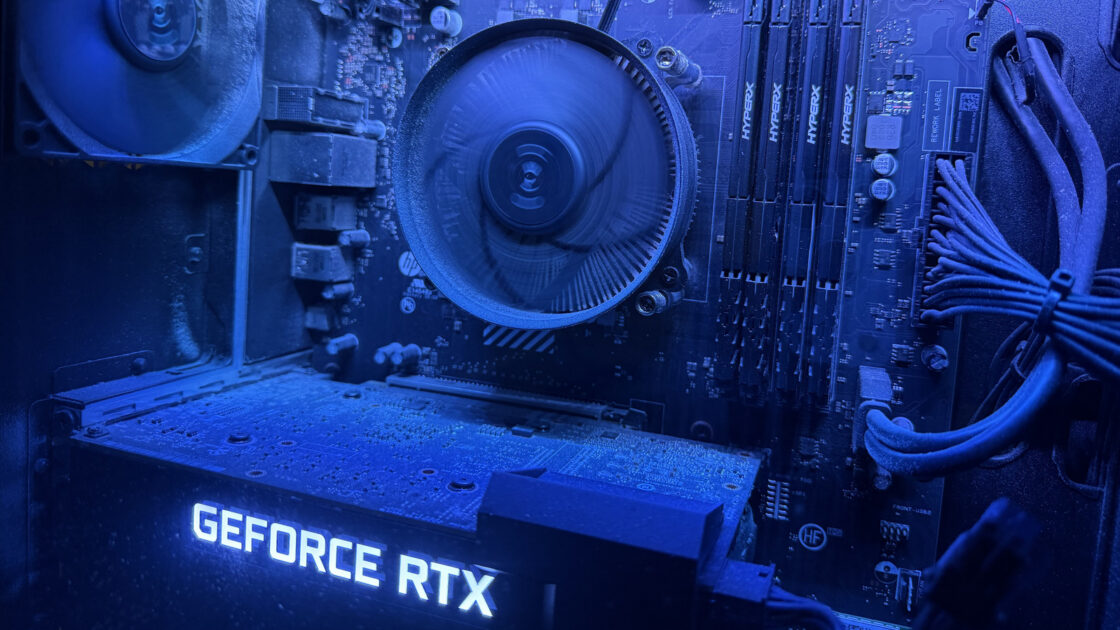
While gaming PCs and modern consoles utilize similar underlying technology, their graphics processing units are configured quite differently. A gaming PC features a dedicated graphics card with its own memory, whereas consoles integrate the processor and graphics onto a single chip that shares memory pools.
One Chip and Shared Memory
Opening up a PlayStation 5 or Xbox Series X reveals an AMD chip beneath the heatsink that handles both processing and graphics duties. Microsoft lists an eight-core CPU and a GPU with 52 compute units on a single 360.45 square millimeter piece of silicon known as an Accelerated Processing Unit (APU) or system on a chip (SoC). In contrast, a gaming PC divides these responsibilities between a standalone processor and a separate GPU, allowing PC owners to upgrade their graphics hardware independently.
The Xbox Series X includes 16GB of total memory shared between the CPU and GPU, with the operating system claiming 2.5GB and games utilizing the remaining 13.5GB. Meanwhile, console developers manually allocate portions of this shared pool for textures and other graphical data. Conversely, PC games that require more VRAM than the GPU possesses will spill data into slower system RAM, which can result in stuttering and delayed texture loading.
Semi-Custom Architecture and Fixed Hardware
Consoles rely on bespoke components tailored specifically for Sony and Microsoft, meaning every game is written for exact hardware specifications. Mark Cerny, lead architect of the PS5 and PS5 Pro, described the PS5 Pro’s graphics design as RDNA 2.x, combining features from multiple generations along with custom ray tracing capabilities to maintain backward compatibility without requiring studios to rebuild games.
Because standard consoles feature identical hardware, developers can precompile shaders before games are launched. PC games must instead compile shaders during gameplay or upon first launch, which often contributes to long loading times and stuttering. Performance comparisons by Digital Foundry showed that a PC with an AMD Radeon RX 6700 could outperform a PS5 in some titles while lagging behind in others, demonstrating how well-tailored console software can maximize mid-range hardware.
Microsoft is introducing Advanced Shader Delivery on Windows to download precompiled shaders and reduce loading times. Meanwhile, AMD CEO Lisa Su stated in February that the custom chip for the next Xbox is progressing toward a launch next year. As hardware pricing shifts, the cost gap between consoles and PCs has narrowed, with the PS5 starting at $599.99 and the cheapest Xbox Series X priced at $749.99, while comparable custom PC builds approach $900 amidst ongoing component shortages.