Table of Contents
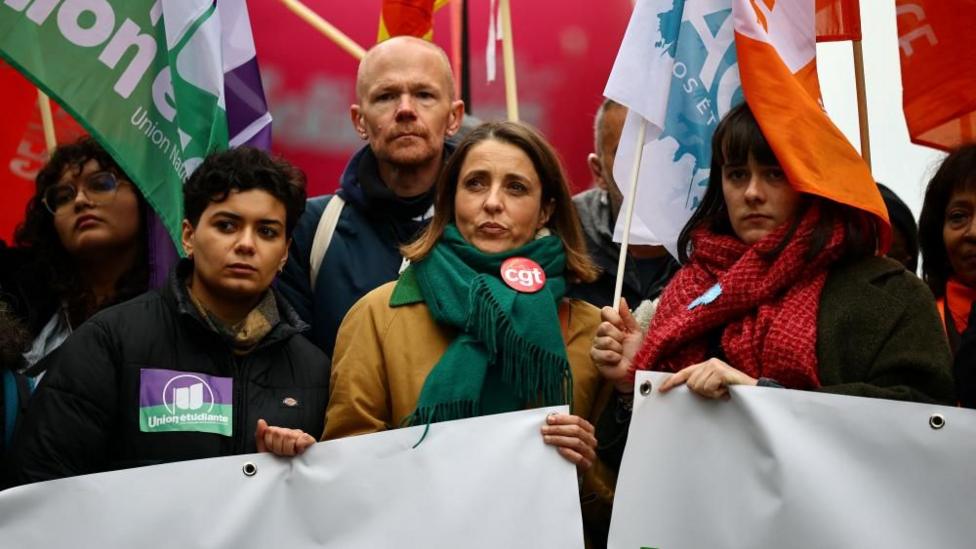
Protests and strikes are unfolding across France as five major unions, joined by students and demonstrators, demand immediate government action regarding the rising cost of living. By 13:00 local time on Thursday, more than 250,000 people had participated in demonstrations across nearly 70 cities and towns.
Escalating Demands and Disruptions
The current wave of unrest began in September, initially focusing on poor conditions and limited resources at high schools, or lycées. The movement has since expanded to include workers and the “yellow-vest” movement, which opposes high prices. Sophie Binet of the CGT union described the current turnout as “just the start,” noting that protesters have reached a new level of mobilization and are seeking concrete answers from the government.
The coalition of five unions has organized over 250 separate actions across both public and private sectors. Their primary demands include a rise in the minimum wage, currently set at €12.31 per hour, and a net monthly pay increase of €100, according to Marylise Léon of the CFDT union. Alice De Brito, vice-president of the Unef student union, told the BBC that the movement is no longer solely about education, but encompasses the state of all public services in France.
The strikes have caused significant disruptions, affecting hospitals, schools, and public transport. Notable landmarks, including the Eiffel Tower and parts of the Louvre museum, were forced to close. Additionally, production at oil refineries was halted, and disruptions at nuclear plants meant France was expected to import more electricity than it produced throughout the day. The education ministry reported that 16% of teachers participated in the strike, while unions stated that more than one in four lycées and the majority of universities were impacted.
Government Response and Security Measures
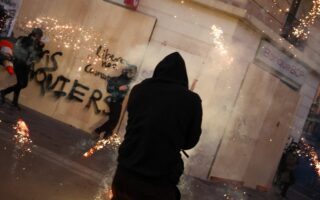
Interior Minister Laurent Nuñez announced the deployment of 70,000 police officers, promising a firm response to any violence. Authorities identified three primary risks: potential looting, unauthorized “wildcat” marches, and the presence of radical left-wing “black bloc” groups. Unrest was reported in Lyon, where a car was set on fire near the Gallieni bridge, and in Rennes, where masked individuals reportedly gathered near a union march.
To address public anger over inflation, the government has released 10 million barrels of diesel from strategic reserves to lower fuel costs. Furthermore, officials have pledged to reform the controversial Parcoursup university admissions system, with plans to replace it by 2028.
Logistics of the Protests
Union leaders expressed frustration regarding the restrictions placed on their demonstrations. While the march in central Paris was permitted, it was diverted from the unions’ preferred route—which would have passed near the National Assembly and the Élysée Palace—to a path between Place de la République and Place de la Nation. The CFDT union noted that receiving court approval for the route only on Wednesday evening complicated their organizational efforts.
Looking ahead, the “yellow-vest” movement has called for additional blockades and protests to continue through Friday and Saturday. Union leaders remain hopeful for high turnout, with the CFDT leader suggesting that reaching 800,000 participants would be a significant success for the movement.