Table of Contents
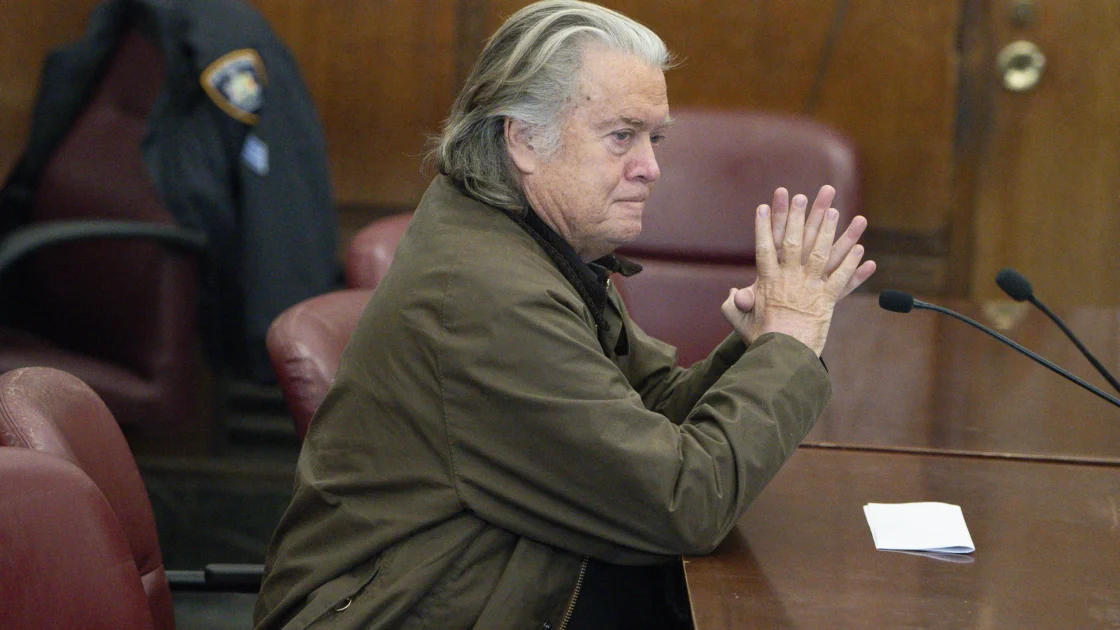
The Justice Department is seeking to drop the criminal contempt case and erase the conviction of Steve Bannon, a former adviser to President Trump. Legal experts and critics say this move follows a concerning pattern of the administration wiping the slate clean for political allies without any opposing defense in court.
Challenging the Bannon Contempt Case
During the Biden administration, prosecutors prosecuted Bannon for refusing to cooperate with the House committee that investigated the U.S. Capitol attack. Bannon ignored a subpoena and skipped an interview, leading a Washington, D.C. jury to deliver a guilty verdict in under three hours, which a federal appeals court later upheld.
Four years later, the Justice Department asked a court to dismiss the case and erase the conviction in the interests of justice, a request Bannon’s lawyers do not oppose. Bruce Searby, a Washington defense attorney and former federal prosecutor as reported by NPR, noted that no adversity remains in the high-profile matter between the Justice Department acting for the president and Bannon as a close political ally. The Justice Department and Bannon’s lawyers did not respond to requests for comment.
Vacating Past Convictions and Pardons
Searby first identified this trend in April when the Justice Department sought to vacate the convictions of roughly a dozen leaders and deputies from the Oath Keepers and Proud Boys. Those seditious conspiracy trials involved extensive evidence of extremists gathering weapons, recruiting followers, and breaching the Capitol. Trump previously pardoned most Jan. 6, 2021, defendants on his first day back in office, labeling them patriots and taking credit for the pardons during a recent CBS 60 Minutes interview.
To drop cases against senior members of the Oath Keepers and Proud Boys, the administration used the same rationale of the interests of justice that it later applied to Bannon. Lawyers representing Rep. Jamie Raskin urged a federal appeals court last spring to appoint an amicus, or friend of the court, to defend those judgments and present opposing arguments. Although judges ultimately dismissed the Jan. 6 charges without appointing an outside lawyer, U.S. District Judge Amit Mehta wrote that the epilogue diminished the gravity of the attack and excused criminal acts that threatened the peaceful transfer of power.
Prosecutorial Discretion and Systemic Concerns
The issue has now reached U.S. District Judge Carl Nichols, who presided over Bannon’s 2022 trial. In a recent court filing, the Justice Department stated it would exercise prosecutorial discretion to dismiss the indictment, arguing that courts grant wide leeway for prosecutors managing their resources.
Deputy Associate Attorney General Michael Weisbuch stated that pursuing the case was inappropriate because Bannon claimed he believed he was protected by executive privilege. Weisbuch added that the judge lacked authority to reject the unopposed motion. Conversely, Searby argued that the judge should not accept the department’s argument at face value, suggesting an outside lawyer could evaluate whether the actions constitute an abuse of prosecutorial discretion tainted by bad faith or impropriety.
Critics and good government groups argue the administration is exploiting a legal system built on opposing viewpoints. Attorney General Todd Blanche faced serious scrutiny over his sign-off on a tax return leak settlement that granted Trump and his sons immunity from tax audits, prior to the Senate confirming his nomination by a single vote in August.