Table of Contents
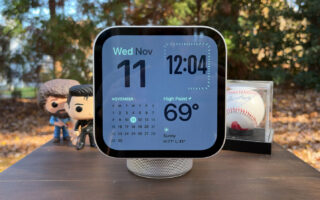
Apple has introduced HomeView, a new device that marks a significant shift in the company’s approach to biometric authentication. Unlike previous hardware, HomeView utilizes a new architecture called the Secure Exclave to process facial and voice recognition, moving away from the established FaceID system.
Balancing Security and Functionality
Apple maintains that it remains committed to comprehensive privacy and security standards with this release. To access iCloud data, HomeView requires verification of a user’s face and voice. Additionally, the device performs checks similar to the Apple Watch, ensuring the user’s iPhone or iPad is connected to the same Wi-Fi network and has been recently unlocked via PIN or FaceID.
The company acknowledges that expanding the architecture used for biometric processing introduces new challenges. As Apple attempts to secure user data, it faces constant pressure from law enforcement and exploit brokers seeking to bypass on-device defenses.
The Shift from Secure Enclave to Secure Exclave
FaceID was designed for close-range, head-on authentication and relies on the Secure Enclave, a physically isolated chip used by Apple since 2013. This architecture is central to the company’s encryption schemes. However, Apple determined that FaceID was unsuitable for HomeView, which requires rapid switching between users and relies on AI processing that exceeds the capacity of the Secure Enclave.
In its place, Apple developed the Secure Exclave. Rather than a separate physical chip, this is a dedicated, memory-protected space integrated into recent processors, including the S11 chip in the Apple Watch Series 12 and Ultra 4, and the A20 Pro chip in the iPhone 18 Pro and iPhone Duo. Apple noted that early versions of this architecture were previously implemented in the iPhone 16, iPhone 17, and MacBook Neo.
Verification and Future Security
Apple argues that the Secure Exclave is robust and allows for improved security across various features. In a recent blog post, the company explained that it utilized formal verification—a mathematical technique—to vet the microkernel developed for the Secure Exclave. Apple stated, “This work both benefits our newest features and strengthens the security of features we already ship, such as ‘Hey Siri’ detection. Our goal is to keep ambient sensor data secure even against highly sophisticated attacks.”
The Secure Exclave also governs the indicator lights for cameras and microphones on HomeView and the MacBook Neo. By isolating the command chain for these lights, Apple aims to prevent attackers from disabling the indicators or preventing them from activating when the hardware is in use.
Despite these measures, the person-recognition technology in HomeView is less comprehensive than FaceID. Apple notes that the system may be more vulnerable to 3D depth map reconstruction or voiceprint attacks compared to its predecessor.
Users have the option to use HomeView in guest mode or a limited personalized mode that restricts access to sensitive data like calendars or messages. As Apple integrates more AI into its ecosystem, the development of HomeView highlights the broader changes the company is planning for its future product lineup.