Table of Contents
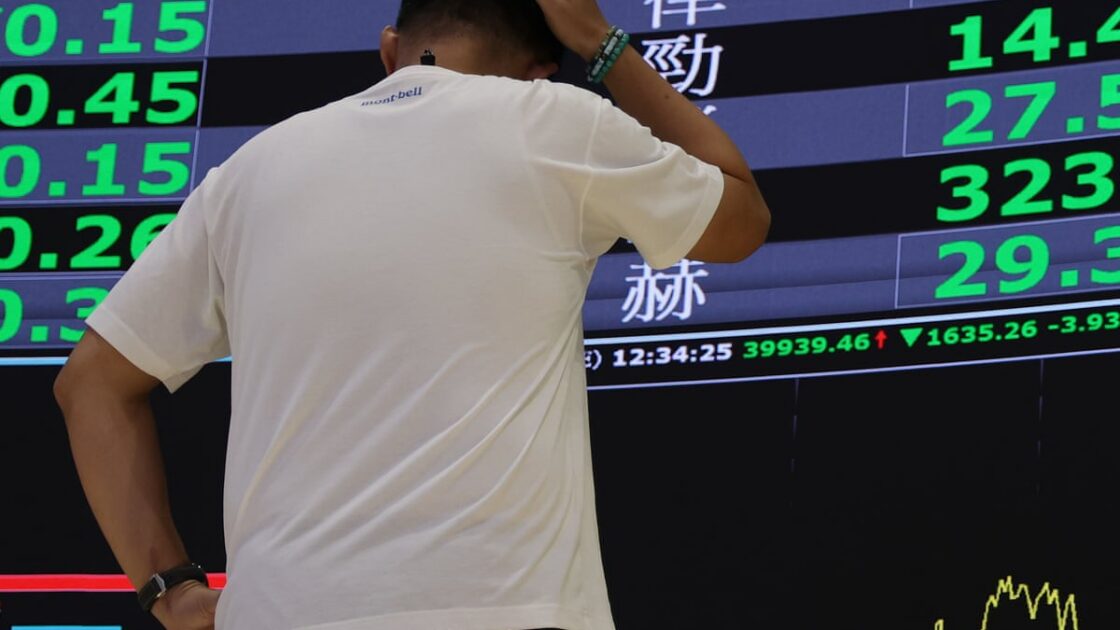
Global stock markets experienced significant volatility on Friday, with major indices in Asia and Europe recording sharp declines. The downturn followed a massive sell-off in US technology stocks on Thursday, which analysts suggest was fueled by growing investor anxiety regarding the future of artificial intelligence infrastructure spending.
Market Impact Across Regions
The market turbulence began on Wall Street, where the Nasdaq index suffered its worst performance in 19 months, dropping 5.5% on Thursday. This negative sentiment quickly spread to Asia on Friday, where Japan’s Nikkei 225 index sank 6% and South Korea’s Kospi index fell by more than 6.5%. Christopher Forbes, head of Asia and Middle East at CMC Markets, described the situation as a “disaster,” noting that the firm dealt with numerous client margin calls and complaints as positions were liquidated.
In London, the FTSE 100 index faced heavy pressure, falling as much as 254 points—or 2.35%—during morning trading. While the index recovered some ground to close down 1%, it remains more than 300 points below the record high reached in July. Elsewhere in Europe, Germany’s Dax index dropped 2%, France’s Cac 40 fell 0.8%, and Spain’s Ibex lost 0.6%.
Concerns Over AI Infrastructure
Market analysts point to fears that the rapid expansion of data centers may be slowing, threatening the massive investment cycle that has driven recent tech growth. Susannah Streeter, chief investment strategist at Wealth Club, explained that investors are becoming increasingly nervous about the returns on these substantial capital expenditures. “Big worries are colliding – the build-out of datacentres looks set to slow, which risks shredding the spending spree underpinning the boom,” Streeter stated.
The tech sell-off was particularly harsh for hardware manufacturers. On Thursday, memory maker SanDisk saw its shares tumble by 22%, while hard drive producer Western Digital fell 17%. The market’s “fear index,” the Vix, surged by over 60% to reach its highest level since the early stages of the Iran conflict.
Economic Outlook and Market Resilience
Despite the recent losses, many indices remain positive for the year. The Nasdaq Composite is still up 6.35% since January, and the FTSE 100 has gained nearly 7.5% in 2026. On Friday, US markets showed signs of stabilization as tech stocks rose, helping the S&P 500 gain 0.3% and the Nasdaq close up 1% following a stronger-than-expected employment report, which showed 165,000 new jobs added in October and an unemployment rate of 4.1%.
Mohit Kumar, an economist at Jefferies, suggested that the current downturn does not necessarily signal the end of the AI-driven trade. He noted that the Democratic party is unlikely to abandon a sector that serves as a primary engine for US economic growth and job creation. Meanwhile, the uncertainty has extended to the commodities market; the London Metal Exchange reported that copper is on track for its largest weekly decline since March. Craig Lang, a principal analyst at CRU, attributed this to the metal’s sensitivity to sentiment regarding data center expansion.
Chris Beauchamp, chief market analyst at IG, warned that the atmosphere remains fragile. “With AI fears still prominent there is a risk that there is much more selling to come,” Beauchamp said, adding that investors are also closely monitoring oil prices and the potential for the Iran conflict to escalate.