Table of Contents
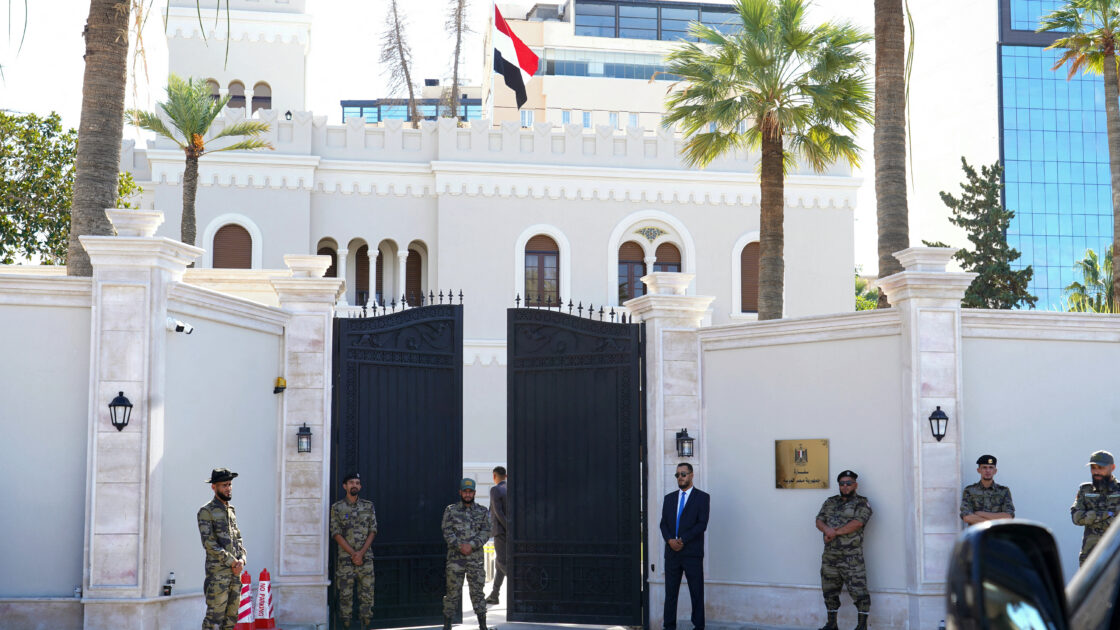
The reopening of the Egyptian embassy in Tripoli marks a fundamental political shift, both domestically and regionally, for Libya, according to analysts. Egyptian Foreign Minister Badr Abdelatty inaugurated the historic embassy building on Saturday, which had been closed for 12 years due to security concerns.
Shifting Alliances and Strategies
Libya has remained politically divided since the fall of Muammar Gaddafi in 2011, featuring rival administrations in Tripoli in the west and Tobruk and Benghazi in the east. Egypt was widely viewed as a backer of the eastern authority led by military commander Khalifa Haftar and his self-styled Libyan National Army (LNA), until recent regional developments prompted Cairo to reassess its strategy.
Libyan political analyst Hazem al-Rayes told Al Jazeera that the embassy reopening in Tripoli—formerly the seat of the internationally recognized government opposed by Haftar—demonstrates an attempt by Egypt to readjust its behavior in the Libyan file, noting that no Egyptian foreign minister had visited the capital for five years.
Elias al-Barouni, a political science professor at Nalut University, also told Al Jazeera that the move extends beyond resuming regular consular services, indicating a shift in Cairo’s method of managing relations with Libyan factions and a rearrangement of its priorities.
Recent political and regional shifts have contributed to stabilizing the volatile situation in Libya, where thousands have died in conflicts involving militias tied to rival authorities. In July 2026, Ankara and the LNA reached unprecedented coordination through agreements on military facilities, advanced surveillance systems, and training programs in Turkiye for eastern Libyan officers. Additionally, Saddam Haftar, deputy commander of eastern forces and Haftar’s son, visited regional capitals including Turkiye and Qatar, both previous supporters of Tripoli’s Government of National Accord (GNA). Libyan rivals also signed the “4+4 agreement” establishing a roadmap for potential presidential and legislative elections over the next two years.
Badr Hassan al-Shafei, a professor of African studies and conflict resolution at Cairo University, told Al Jazeera that Egypt reevaluated its policy after determining that exclusive reliance on eastern forces under Haftar did not serve its strategic interests. He stated that Cairo aims to create balance and signal to Haftar that actions must be coordinated with Cairo, while also extending cooperation to all of Libya.
Furthermore, Egypt faces heightened security concerns regarding developments south of its border, particularly the expansion of the Rapid Support Forces (RSF) in Sudan, which was allegedly supported by Haftar. Al-Rayes told Al Jazeera that Egypt’s policies are no longer limited to eastern authorities in Benghazi, as Cairo recognizes that the LNA has distanced itself, necessitating a political readjustment toward Tripoli and the legitimate government.
Economic Interests and Border Disputes
During his visit to Tripoli, Abdelatty discussed critical economic matters with Libyan officials, including the 2019 maritime border memorandum of understanding signed between Tripoli and Ankara. According to the Egyptian Ministry of Foreign Affairs’ Facebook page, Abdelatty reaffirmed the importance of addressing Egyptian concerns regarding maritime demarcation between Libya and Turkiye in accordance with international law, following the eastern parliament’s recent ratification of the agreement.
Al-Shafei told Al Jazeera that Cairo likely seeks to prevent the maritime agreement from harming its Eastern Mediterranean gas and oil exploration interests by negotiating directly with the Libyan government that signed the deal. He added that Egypt may also eye reconstruction opportunities and the revival of Libya’s oil industry, which could prioritize incoming Egyptian labor, improve living conditions for current workers, and open avenues for Egyptian investments and companies.
Path to a Comprehensive Settlement
Al-Rayes told Al Jazeera that years of backing rival sides have given way to a new regional consensus, increasing the likelihood that Libyan factions can reach a comprehensive agreement to end the war. However, al-Barouni cautioned that numerous challenges remain and that only a comprehensive solution can resolve the country’s divisions.
Al-Barouni stated that the Libyan problem involves disputes over the nature of power, the distribution of influence, institutional and military control, and election conditions. He concluded that while agreement among Cairo, Ankara, Washington, and other capitals to end the division is a positive development, any successful settlement depends on Libyans formulating an independent national project that ends the division rather than redistributing it.