Table of Contents
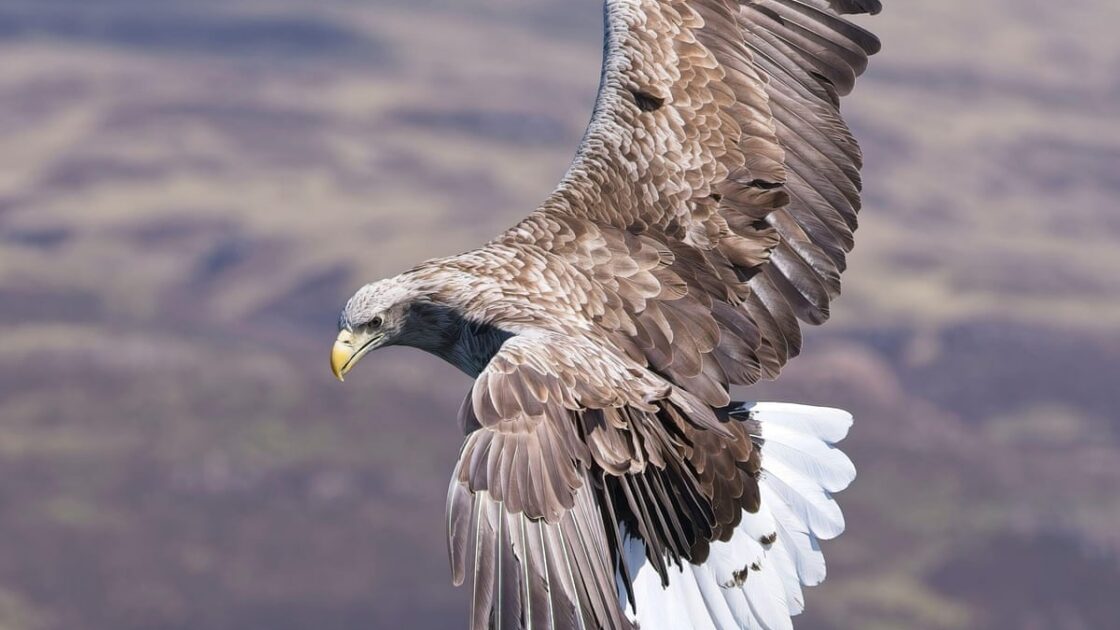
The reintroduction of white-tailed eagles into England and Wales has divided experts, with ecologists and conservationists warning the apex predators could imperil endangered seabird populations and potentially wipe out entire colonies.
Threats to Breeding Seabird Populations
Species such as puffins, guillemots, razorbills, fulmars, and kittiwakes face potential breeding population collapses if large numbers of white-tailed eagles are released, according to academic researchers and conservation groups. Tim Birkhead, an emeritus professor of ecology and evolution at the University of Sheffield, pointed out to Environment | The Guardian that the risk these birds pose to seabird colonies appears to have been overlooked amid the excitement of their return.
White-tailed eagles became extinct in Britain in 1918, but their recent comeback has been hailed as a conservation success. Current proposals include releasing up to 60 eagles in Gwent, south Wales, following the release of 20 young birds on Exmoor over a three-year period. This initiative has caused friction among wildlife organisations, with the Gwent Wildlife Trust backing the local reintroduction while the Wildlife Trust of South & West Wales (WTSWW) strongly opposes it.
Last month, an eagle from the Exmoor project was spotted above Skomer, a south Wales island sanctuary renowned for seabirds. While British seabirds have experienced a fifth of their population disappearing over the past five years—the worst decline among any bird group—south Wales colonies remain relatively healthy. Sarah Kessell, chief executive of WTSWW, expressed growing alarm over the UK-wide reintroduction plans due to mounting evidence regarding cliff-nesting seabirds, noting that Skomer and Skokholm already host globally important, threatened populations.
Weeding Out Risks and Benefits
White-tailed eagle numbers have grown significantly since chicks from Norway were brought to Scotland in 1975, resulting in roughly 200 breeding pairs today, alongside 45 birds released on the Isle of Wight since 2019 and the first English-born wild bird fledging in East Sussex in 2023. Wales, however, has not yet re-established the species.
Prof Geoff Hilton, head of wetland evidence at the Wildfowl and Wetlands Trust (WWT) which leads the Gwent project, acknowledged that conservation carries risks but emphasized the need to evaluate them carefully using robust evidence. Hilton noted that white-tailed eagles are generalist feeders consuming fish, carrion, and small mammals, citing a 2020 Baltic Sea study showing that species of conservation concern accounted for only about 1% of the eagles’ identified prey. WWT aims to establish seven to nine breeding pairs over ten years, expecting healthier ecosystems rather than population reductions in single species.
Conversely, Stephen Votier, a professor of seabird conservation and ecology at Heriot-Watt University, stated in WTSWW evidence that the eagles can severely impact seabirds by disrupting their breeding behavior. Researchers explain that beyond direct predation, the fear induced by eagles causes adult seabirds to abandon breeding sites temporarily, leaving chicks vulnerable to other predators like gulls and corvids.
Lessons from Scandinavia and Future Steps
Birkhead emphasized that scientific evidence from Scandinavia regarding predators accelerating seabird colony extinctions must be taken seriously. A 2023 study revealed that increasing eagle numbers in northern Norway accelerated the decline of a kittiwake colony in Røst, where large numbers of immature eagles disturbed nesting birds already struggling with scarce fish supplies.
Study co-authors Annette Fayet and Tycho Anker-Nilssen stated they cannot assume the Norwegian situation will replicate directly in south Wales, but noted it is impossible to rule out similar outcomes over time. Author Roger Morgan-Grenville added that rising eagle numbers on the Baltic coast correlate with reduced cormorant breeding success, alongside negative impacts in western Norway. He stressed the need to listen to all perspectives and recognize that modern landscapes are far more depleted than in 1918.
Natural Resources Wales is currently reviewing the Gwent release application, with a verdict anticipated by the end of the year. A spokesperson indicated that if a license is favored, a public consultation will follow from late 2026 into early 2027 prior to any final decision.