Table of Contents
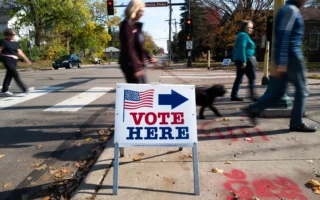
As Americans head to the polls on Tuesday for the midterm elections, a record number of voters identifying as political independents could prove decisive for control of the US Congress and state legislatures. Nearly half of the nation’s electorate, or up to 117 million adults, now identify as political independents, creating a fierce battleground for the Democratic and Republican parties.
The Independent Voter Paradox
Despite the massive share of citizens rejecting party labels, independent or third-party candidates rarely win federal or state seats. Rick Bennett, a former Republican Party chair in Maine who is running to become only the third independent governor in the state’s history, stated as reported by Al Jazeera that the entire electoral system is structured to frustrate voter independence. Political scientist AJ Simmons noted that while the 2026 cycle is shaping up to be one of the strongest for independent candidates in recent memory, outsiders have struggled for decades to achieve high levels of support.
Data from the Pew Research Center’s annual National Public Opinion Reference Survey shows that 44 percent of US adults identify as independent, compared with 29 percent for Democrats and 28 percent for Republicans. However, true independents who express no partisan leaning make up only 7 to 10 percent of the electorate, making them the core of the coveted swing vote. Polling firm Marist suggests that 52 percent of likely independent voters support Democrats in the 2026 midterms, while 39 percent back Republicans. Frustration with President Donald Trump permeates the landscape, with independent respondents more than three times as likely to vote primarily against the president, and 28 percent voting for change.
Systemic Barriers and Campaign Funding
While the US does not legally restrict elections to two parties, the winner-take-all electoral system and single-member congressional districts work against outsiders. Bernard Tamas, a political scientist at Valdosta State University, explained that legal barriers are rarely the main issue preventing third-party candidates from winning. Instead, the primary obstacle is money. Political advertisement spending alone for the 2026 midterms is projected to reach $11.6bn, following a $14.8bn total spend on the 2024 federal elections. During the 2026 campaign cycle, the Democratic National Committee raised nearly $252.3m and the Republican National Committee took in about $341m. Tamas noted that the US offers virtually no public support or funding to political parties and places no limits on campaign spending, leaving independent candidates with very little money and lower name recognition.
Republican strategist Lesley Shedd told Al Jazeera that the surge in independent identifiers often masks continued support for a major party. Shedd stated that voters calling themselves independent usually lean Republican or Democrat, differing on specific issues or simply wishing to distance themselves from the political culture of Washington, DC. Simmons added that the real test is persuading Americans to cast a meaningful ballot rather than a protest vote, as voters remain reluctant to waste their votes on candidates who are not major-party contenders. Efforts to bridge this gap include the Independent Leadership Council, launched in July by former Democrat-turned-independent Senator Joe Manchin, which has raised more than $10m to provide donors and campaign resources for independent congressional candidates.
Potential Impact on the 2026 Midterms
Currently, the US House features one independent and the Senate includes two, with zero independent state governors. Simmons expects up to 11 independent or third-party candidates running for governor or the US Senate to surpass the 5 percent vote threshold often used to gauge electoral viability. Independent congressional hopefuls could disrupt the midterm map notably in Nebraska and Montana. In Nebraska, Simmons identified independent Senate candidate Dan Osborn as a top alternative candidate to win, with the race listed as a toss-up by RealClearPolling after the Nebraska Democratic Party declined to field a replacement nominee against Republican Pete Ricketts. In Montana, former university president and Army veteran Seth Bodnar is running for the US Senate with backing from the Independent Leadership Council, though Democratic candidate Alani Bankhead risks a three-way split by siphoning off the same center-left and anti-Republican voter pool. Additional independent candidates in Idaho and South Dakota are expected to force Republicans to divert campaign time, money, and attention away from seats they previously took for granted.