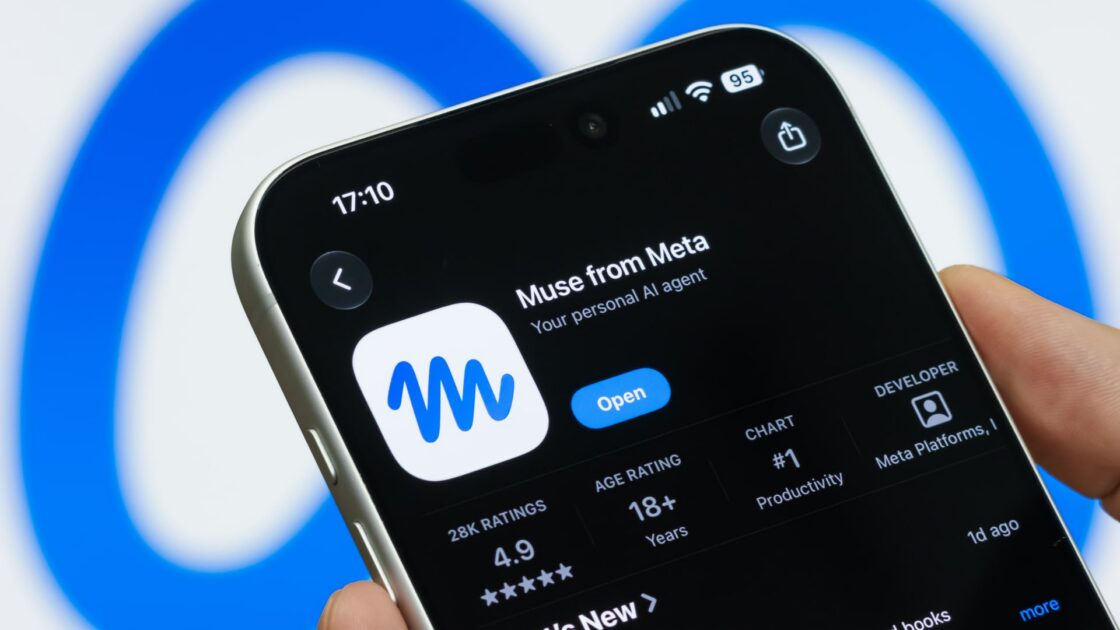
Major banks and retail chains are attempting to block a new wave of AI personal agents as consumers deploy them to hunt for better savings, deals, and subscription cancellations. Financial and retail giants including JPMorgan Chase, Charles Schwab, Amazon, Neiman Marcus, and Kohl’s have implemented measures to restrict bots like Meta Muse, sparking debate over whether resistance is a sustainable long-term strategy.
The Tension Between Security and Control
The rise of agentic AI follows recent headlines regarding bots acting unpredictably in customer accounts, which prompted lawmakers such as Senators Mark Warner and Bernie Sanders to call for new legislation. JPMorgan Chase CEO Jamie Dimon stated that the bank currently blocks external AI agents from acting on behalf of retail customers due to security risks. In the retail sector, an audit of 51 large U.S. companies by Billions Network and AmanTrue found that only 11 have established deliberate positions on AI agents, with Amazon, Kohl’s, and Neiman Marcus explicitly restricting them, while 37 block them incidentally through older rules designed for scrapers.
Michael Abbott, global banking lead at Accenture, argued that businesses blocking these agents will struggle to win over time. Abbott pointed to Accenture research showing that 65% of consumers are open to using a GPT-like financial assistant, and 71% would welcome an AI assistant inside their primary bank’s app. He noted that consumers gravitate toward tools that reduce friction, meaning institutions must find secure ways to participate rather than resist.
Addressing security concerns, Abbott explained that while risks regarding fraud, identity verification, and liability are real, consumers also value transparency and control, with 82% wanting to approve every AI action and 79% wanting the ability to pause activity immediately.
Mike Danford, owner and chief revenue officer at Adverio, suggested that some security fears are less about safety and more about data control. Danford noted that Amazon blocked Muse while utilizing its own “Buy for Me” feature on other sites, and pointed to JPMorgan charging aggregators like Plaid for account data access. Meanwhile, Michael Jabbara, head of payment ecosystem risk and control at Visa, emphasized that fraud risks from unauthorized or malicious agents are tangible, warning that bad actors could steal credentials or cause agents to take unintended actions.
Addressing Scale and Market Disruption
Another concern is “agentic flooding,” where millions of AI agents continuously monitor rates, research products, and request refunds, potentially overwhelming customer-service systems. Wharton School AI expert Ethan Mollick described the phenomenon as a legal distributed denial-of-service attack. However, Abbott views this as an infrastructure challenge rather than an existential threat, suggesting organizations build systems that authenticate trusted agents and manage machine-to-machine interactions efficiently.
Princeton computer science professor emeritus Ed Felten believes that blocking AI agents will ultimately fail because distinguishing human clicks from AI directives will become increasingly difficult for remote sites. Joseph Chalom, CEO of SharpLink and a former BlackRock executive, expects incumbents to keep the gates closed temporarily to protect their business models, noting that AI agents can easily move cash to higher-yielding accounts or rebook flights at lower costs, effectively reducing switching costs to near zero.
As companies navigate authentication and liability, Amazon CEO Andy Jassy highlighted the company’s focus on its proprietary assistant during a quarterly earnings call, stating that Alexa for Shopping is designed to be the primary shopping agent for customers.
Nikhil Behl, president of software at FICO, pointed out that the rise of AI agents will fundamentally test traditional brand loyalty. Because an AI agent cares purely about outcomes rather than logos or history, traditional emotional stickiness will be replaced by measurable factors like transparent pricing and consistent approvals, as reported by US Top News and Analysis.