The Trump administration continues to detain pregnant unaccompanied migrant children in a region of South Texas that lacks specialized obstetric care, according to an investigation by The Texas Newsroom and The California Newsroom published by NPR. Government records show that between July 2025 and May 2026, four of the 21 pregnant girls placed in the area had to be transferred out of state to receive medical treatment, including at least one abortion, that was unavailable locally.
Concerns Over Specialized Medical Care
Former and current government officials, along with medical experts and members of Congress, have expressed serious concern about placing high-risk adolescent pregnancies in deep South Texas. Jen Smyers, who helped oversee the Office of Refugee Resettlement (ORR) during the Biden administration, told NPR that the first out-of-state transfer should have prompted officials to stop placing children in remote areas where necessary care cannot be provided.
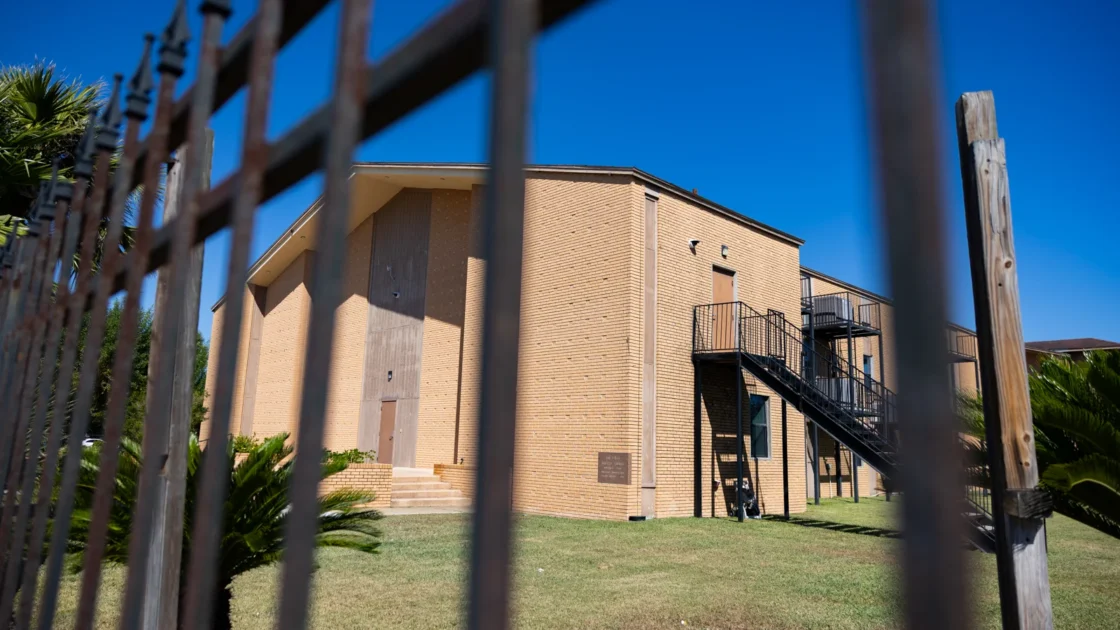
The joint investigation revealed that the administration established a policy of detaining pregnant unaccompanied minors—some as young as 13, with at least half pregnant as a result of rape—at a single shelter in San Benito near the border with Mexico. Internal agency communications obtained through public records requests show that ORR’s then-acting health director, Joanna Gaines, warned leadership in July 2025 about Texas’s high maternal mortality rate and the lack of quality perinatal care in the Rio Grande Valley. Four days after her email, ORR issued a directive to place all pregnant children at the San Benito facility.
According to agency records, a pregnant 12-year-old girl was later transferred from the Rio Grande Valley to New York because access to medical specialists in South Texas was extremely limited. Another minor was moved to California for a high-risk medical need, and at least one child was transferred out of state to obtain an abortion. Marsha Griffin, a retired pediatrics professor at the University of Texas Rio Grande Valley School of Medicine, explained that pregnant girls aged 10 to 14 are inherently high-risk patients and that local shelters lack adequate medical staff and specialized obstetricians.
Congressional Inquiries and Shift in Facilities
The Department of Health and Human Services (HHS), which oversees ORR, denied using a blanket policy for placement. In a September letter responding to an inquiry from 48 Democratic members of Congress, HHS Assistant Secretary Alex J. Adams wrote that ORR makes individualized placement decisions based on safety, medical needs, and available services. HHS also stated that housing minors in Texas is operationally efficient.
However, U.S. Rep. Joaquin Castro, a Democrat from Texas who authored the congressional letter, accused the administration of failing to be honest about its practices. Internal agency data shared by ORR officials showed that by the time Castro visited the San Benito shelter in April, the agency had stopped sending newly detained pregnant minors there and had begun placing them at a shelter 13 miles away in Los Fresnos. The Los Fresnos facility is operated by Compass Connections, a contractor that has received over $1.9 billion in federal grants to care for unaccompanied minors over the past four years.
U.S. Rep. Judy Chu, a Democrat from California who signed the inquiry, stated that moving pregnant children across the country for medical care demonstrates that the initial placement in Texas was flawed. Advocates and Democratic lawmakers also voiced concern that sending pregnant minors to Texas—where abortion is virtually banned—is intended to limit their access to legal reproductive healthcare. They noted that states like California offer stronger legal representation and broader access to reproductive medical services for undocumented minors.
Internal ORR data provided by officials speaking anonymously revealed that 95% of the roughly 300 unaccompanied children apprehended by immigration authorities in September were placed in Texas detention facilities, up from 45% in June. HHS maintained that no operational changes have occurred regarding the placement of pregnant unaccompanied children.