Alice Brown views a jumper with a hole not as a problem, but as an opportunity. As a 27-year-old forest ranger from Lincolnshire, she has embraced the growing fashion for eye-catching repairs, using needle-felting to cover moth holes and stains with cute animals and insects.
The Art of Visible Mending
Over the past year, Alice has developed a unique style that has built her a large online following. She notes that placement forces creative thinking, explaining that the natural place for decoration is in the front centre, while holes on the shoulder or under the arm require different design approaches.
Often referred to as visible mending, this trend has moved beyond hobby crafters and community workshops to influence fast-fashion brands and designer catwalks this year. During a Saturday morning workshop in Brighton, instructor Jayne Eagle teaches students how to place fabric patches behind tears so designs peek through.
Jayne instructs her students in stitching techniques inspired by traditional Japanese methods like Boro and Sashiko. Instead of matching thread colours to garments, participants use large white geometric stitching or vibrant contrasting colours to celebrate repairs rather than disguise them.
Student Nicola used these techniques to cover sunscreen marks on a T-shirt, noting that people now focus on the decoration instead of the stains. Another student, Lisa, points out that while her mother’s generation hid mends, today people take pride in their work, even laughing about how she proudly highlights a patch she needed after accidentally snipping a newly bought second-hand jacket with scissors.
Industry Adoption and Retailer Response
Historically, mending focused on saving money by extending clothing life, but visible mending celebrates the choice itself. Jayne states that the trend took off around six years ago and has since boomed as a backlash against the overproduction, pollution, carbon emissions, water use, and poor labour conditions tied to the fast-fashion era that began in the 1980s.
Surprisingly, retailers are embracing this mended style. Brands ranging from Ralph Lauren to ultra-fast-fashion firm Shein are selling pre-stitched and patched garments right off the peg. Other High Street chains are taking an authentic route by offering workshops and in-house repairs.
Maria Ledous, head of sustainability at Uniqlo, states the brand wants to give customers practical ways to extend the life of garments they already love instead of replacing them. Similarly, Primark longevity lead Vicki Swain explains that the company believes affordability and durability should not be opposites.
Outdoor brand Finisterre reports that about a fifth of its customer mends are designed to be eye-catching, while premium artisan clothing store Toast notes that roughly a third of its customers choose that option. Toast chief executive Suzie de Rohan Willner highlights the magic of customers bringing in garments to decide what they will become next, adding that while Toast’s repair services are free, renewed off-the-peg pieces command higher prices for their unique character.
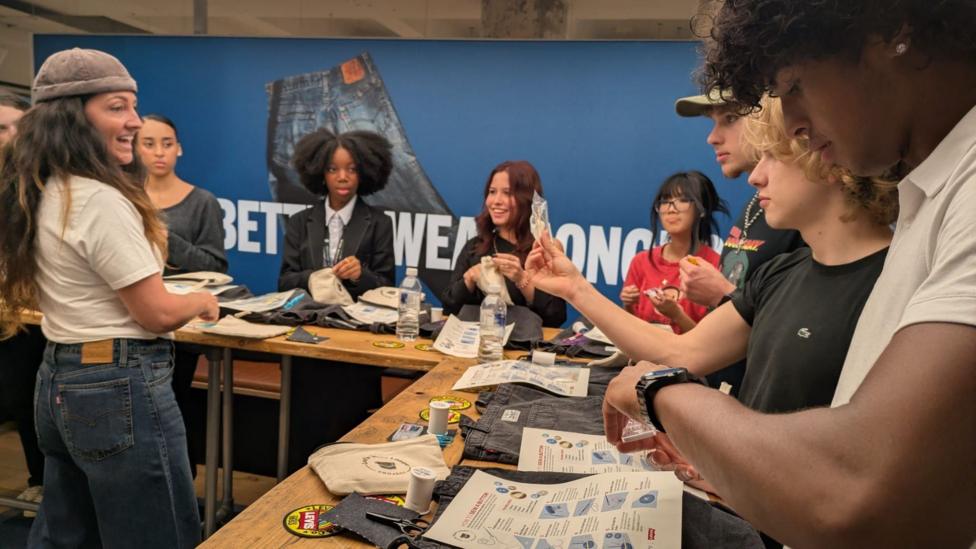
Levi’s is rolling out a workshop programme this year, noting that research shows younger customers want to repair more but lack the know-how. At a recent London launch event, Gen Z participants focused on traditional skills like hemming and button sewing.
Sixteen-year-old school student Bianca from East London says visible holes can still carry social stigma among peers, and 19-year-old Theo prefers learning invisible mending to keep jeans looking original, which could help his side hustle selling clothes at car boot sales. His friend Nicholas, also 19, adds that most people want to look fresh rather than like they emerged from a dumpster.
Paul Dillinger, head of global design innovation at Levi’s, believes creative repairs will eventually win younger generations over as their skills develop. He remarks that perfection is no longer considered cool, noting that people crave agency and view mending as a demonstration of humanity where a stain becomes the memory of a great day.