Table of Contents
Candidates competing in key U.S. Senate races are increasingly soliciting financial contributions from across the country, using digital campaign strategies that highlight broad national themes over regional concerns. An analysis of Google advertising conducted by NPR across high-profile Senate contests in Iowa, Georgia, Ohio, and Texas revealed that Democratic and Republican candidates spent more than $15 million on fundraising-related ads during the 2025–26 election cycle, with roughly 75 percent directed toward national audiences.
National Messaging Replaces Local Issues
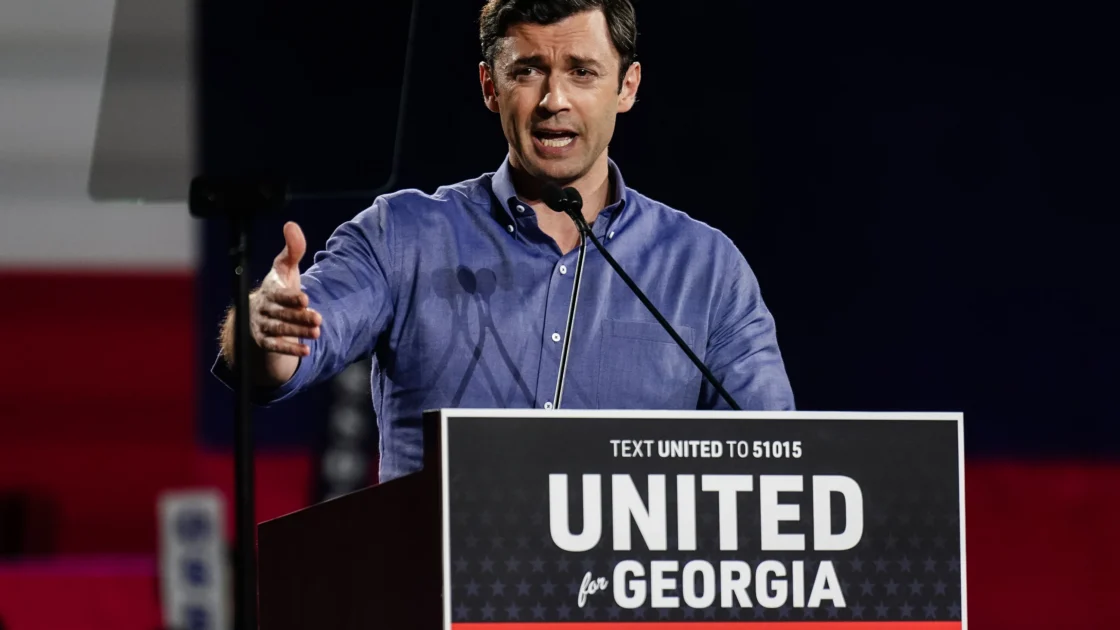
Fundraising advertisements targeting out-of-state residents frequently revolve around polarizing national topics, such as attacking or defending former President Donald Trump or controlling the political balance of the Senate. For politicians such as Georgia Democratic Sen. Jon Ossoff and Iowa Democratic candidate Josh Turek, more than 80 percent of itemized individual donations have originated from outside their home states.
Michael Franz of the Wesleyan Media Project explained that candidates adopt distinct approaches for local and national campaign messaging. While local television broadcasts avoid heavy partisan labels to win over moderate and swing voters, digital advertisements delivered nationwide rely heavily on explicit party identity to mobilize donors.
This dynamic is evident across major campaigns. Former Ohio Democratic Sen. Sherrod Brown urges national supporters to help flip his state blue, while Georgia Republican Rep. Mike Collins calls on donors to turn his state’s Senate seat red. Similarly, Iowa Republican Rep. Ashley Hinson emphasizes her alignment with “America First” policies in her campaign ads, whereas Ossoff targets Trump directly in national appeals.
Responding to the findings, the Ossoff campaign stated to NPR that it does not target digital audiences based on geographic location. The campaign added that its fundraising “is powered by small-dollar donors because the Senator refuses donations from corporate PACs and federal lobbyists.” Representatives for the other Senate campaigns either declined to comment or did not respond to inquiries.
Grassroots Platforms Lower Solicit Costs
Online fundraising tools have significantly altered campaign strategies by lowering the financial barrier to collect small contributions nationwide. Digital platforms ActBlue, created in 2004, and WinRed, launched in 2019, serve as major drivers for out-of-state contributions.
Zachary Albert, a politics professor at Brandeis University, told NPR that low operating costs encourage campaigns to rely heavily on digital advertising. “ActBlue and WinRed really reduced the transaction costs for contributing,” Albert said, noting that even $5 or $10 contributions are worthwhile to pursue when solicitation expenses remain low.
University of Pennsylvania political science professor Daniel Hopkins noted that modern candidates now answer to two separate groups: a local constituency for votes and a broader national donor base for financial support. Hopkins explained that political success is increasingly routed through high-donation districts across the country rather than solely through local party structures.
Additionally, donors living in politically dominant states often direct their money elsewhere. Sarah Bryner, research director at Public Agenda, observed that residents in states like California, where statewide election outcomes are largely predictable, frequently send contributions to competitive races in states such as Georgia or Texas to exert political influence.
Legal Landscape and Impact on Voters
The growing emphasis on nationalized fundraising has raised concerns about constituent representation. Oxford University researcher Michael Heseltine warned that as candidates devote more focus to broader national talking points, politicians risk neglecting the specific needs of the communities they are elected to represent.
Efforts to restrict out-of-state political financing face significant legal hurdles. Raymond La Raja, a political science professor at the University of Massachusetts, pointed out that constitutional protections and Supreme Court rulings limit restrictions on political spending. Following a June Supreme Court decision favoring coordinated campaign spending, the National Republican Senatorial Committee tripled its advertisement expenditures compared to the previous midterm election period.
Some states are exploring local regulatory measures. Hawaii has enacted a cap on out-of-state donations scheduled to take effect in 2027, while states like Alaska, Colorado, and Virginia mandate donor transparency laws requiring advertisements to list their top financial contributors. La Raja suggested public fund-matching systems—similar to the model used in New York City—could incentivize candidates to focus more heavily on local donor networks.
Despite the substantial flow of outside capital, high fundraising numbers do not guarantee success at the ballot box. Bryner highlighted previous high-profile contests where candidates raised massive sums from out-of-state supporters, such as Amy McGrath in Kentucky and Beto O’Rourke in Texas, yet ultimately lost their races.
“As much as money in politics is such a factor in America, voters are still ultimately who makes the final decision,” Bryner said. “And if you’re getting all your money from outside of the state, those people can’t vote for you.”