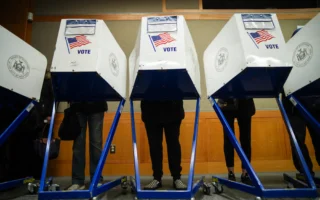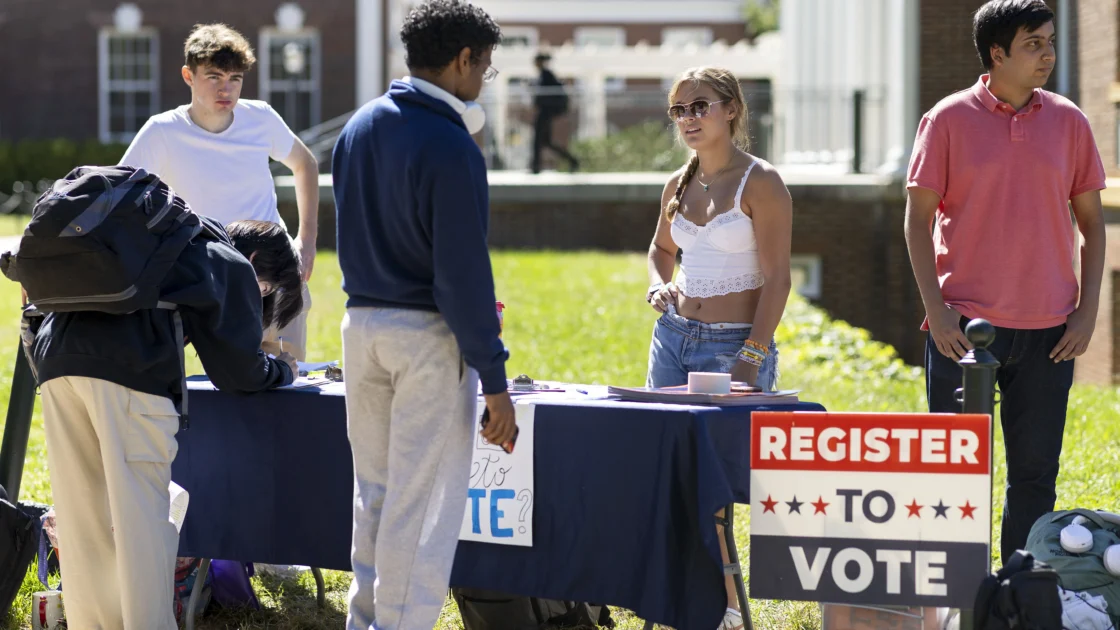
College students studying away from home often face a key decision before casting a ballot: whether to register to vote in their campus community or in their hometown. A 1979 U.S. Supreme Court ruling affirmed the right of eligible students to register in the communities where they reside during the academic year, but debates over student voting qualifications continue to re-emerge.
The issue recently resurfaced in Montana, where the Republican-controlled state legislature passed a law restricting “temporary” residents participating in an “educational program.” Under the revised state law, those residents could only register in a Montana county if they intend to make the county or state their permanent home after completing their studies. Student advocacy group Montana Public Interest Research Group (MontPIRG) filed a lawsuit to overturn the restriction, warning it could prevent thousands of students from participating in local elections.
Legal Challenges and Residency Standards
Missoula County Judge Jason Marks issued a preliminary injunction blocking the Montana restriction in February, finding that it likely violates the state’s constitution. Following a court hearing, Judge Marks is now preparing a final ruling. State Republican officials argued in court filings that the restriction was not intended to apply to university students, asserting that degree programs lasting two to eight years should not be considered temporary. However, Judge Marks rejected that interpretation, leaving Montana’s previous registration rules active through Election Day.
In the U.S., voting eligibility is tied to residency, which is determined by state and local governments. However, federal law sets standards to ensure specific groups are not discriminated against. Michael Hanmer, a professor of government and politics at the University of Maryland, told NPR that states cannot apply different standards to different groups, meaning college students must receive the same treatment as any other new resident in a community.
Hanmer explained that like individuals who own multiple homes, eligible college students have the right to choose which residence serves as their official voting address. In legal terms, this primary address is known as a voter’s “domicile.”
Defining Domicile and General State Mandates
Yael Bromberg, an attorney and youth voting rights scholar who co-edited a book on the Twenty-Sixth Amendment, told NPR that a domicile is defined as a singular, fixed, principal home where a person intends to return, even if they do not currently live there. For college students who may not yet know where they will reside after graduation, Bromberg noted that establishing a domicile is a highly personal and individual assessment.
Although federal rules protect students from targeted voting barriers, states retain the authority to set broad residency regulations that apply to all newcomers. Hanmer pointed out that students opting to register in their college towns must navigate any general requirements their state imposes on new residents. For instance, some states require new residents to obtain a local driver’s license or update their vehicle registration. As long as these rules apply uniformly to all new residents rather than targeting students specifically, states are legally permitted to enforce them.