Table of Contents
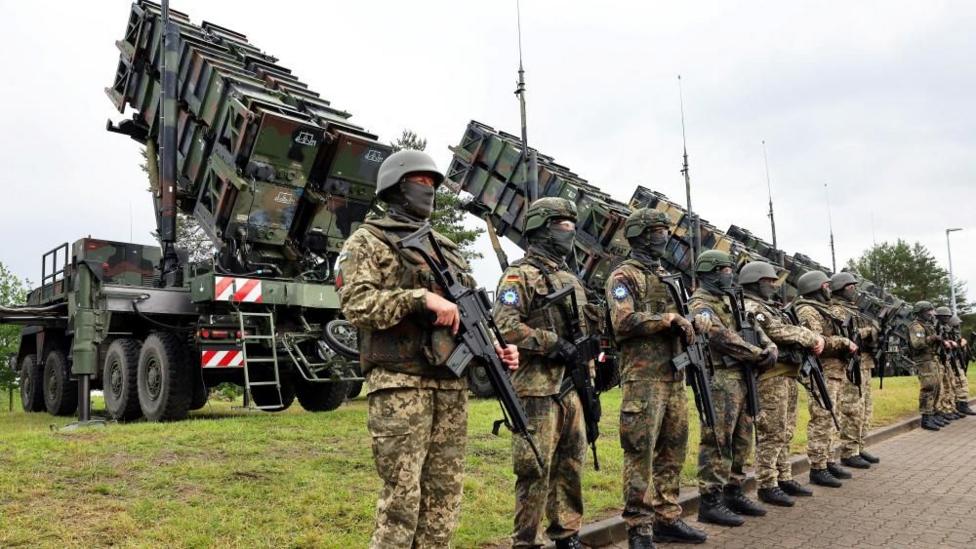
The United States has approved the sale of 500 Patriot missiles to Ukraine to help defend against escalating Russian aerial attacks. However, Ukrainian President Volodymyr Zelensky has warned that deliveries could take several years to arrive.
Missile Sale Details and Funding
The US State Department announced that the advanced PAC-3 interceptor missiles will cost $2.1bn (£1.6bn) and will be funded entirely by Kyiv’s allies in Europe and Canada. According to the State Department, the proposed sale supports American foreign policy and national security objectives by enhancing the security of a European partner country.
Ukraine will pay for the purchase using donations from Canada, Germany, and Norway via the JUMPSTART program and national funds, financed by the European Union’s Ukraine Support Loan. The principal contractor for the order is American company Lockheed Martin, and the State Department emphasized that no US funds are involved in the sale.
The State Department stated that the order is for new builds rather than existing stockpiles. Patriots require lengthy production times, with the US Department of Defence noting that only 600 of these missiles are produced per year, meaning rapid delivery to Ukraine is unlikely.
Zelensky’s Response and Energy Infrastructure Strikes
Zelensky welcomed the US announcement in a social media post, but stated that Ukraine needs the Patriot missiles immediately. He noted that Ukraine had been waiting almost a month for the US to sign off on critical missile supplies as the nation runs critically low on interceptors.
Zelensky reported that around 200,000 households in the Dnipro region and at least 80,000 households in the Kyiv region lost electricity following Russian strikes. He accused Russia of deliberately targeting civilian infrastructure every day and intensifying attacks on key energy infrastructure ahead of winter, noting more than 30 Russian strikes on critical parts of the power grid over the preceding two weeks.
Kyiv desperately needs the interceptors, but a global shortage exists due to the use of the munitions by the US in its conflict against Iran. In July, Donald Trump stated that Washington had not agreed to license Ukraine to produce Patriot missiles, just three weeks after previously offering the country that right.
Diplomatic Tensions at the G20
The missile approval follows recent political friction between Zelensky and Donald Trump, which occurred after the US eased sanctions on Russia as part of a deal to secure Russian diesel. Trump previously stated it was time for Ukraine to get a new leader to strike a peace deal, though tensions eased following talks between Zelensky and US envoys in Oslo.
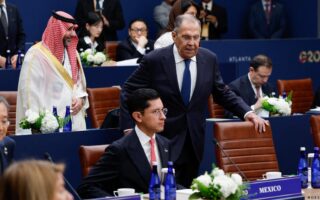
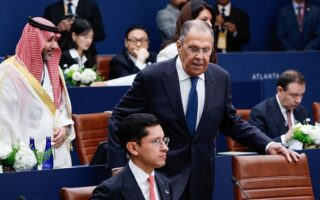
Meanwhile, at the G20 foreign ministers’ meeting in Atlanta hosted by US Secretary of State Marco Rubio, European diplomats protested the presence of Russian Foreign Minister Sergei Lavrov by refusing to stand for an official photograph. During the summit, UK Foreign Secretary Ed Miliband directly addressed Lavrov, accusing his government of killing innocent civilians in Ukraine.