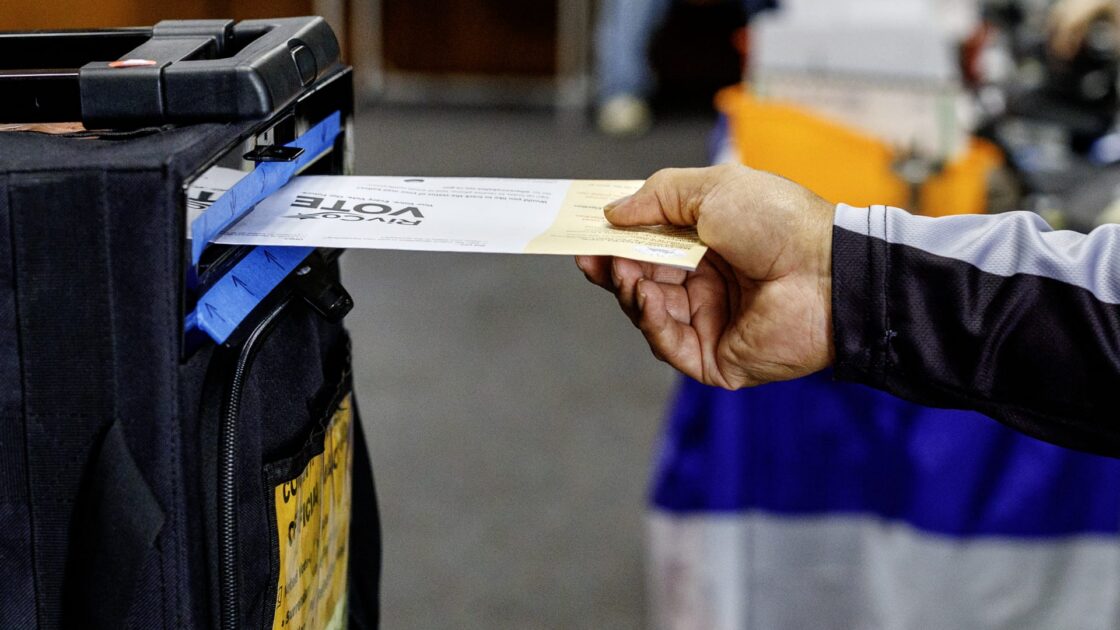
The U.S. Supreme Court declined a request from the Department of Justice to block California from tabulating mail-in ballots from individuals the federal government claims may not be U.S. citizens.
Justice Department Arguments and Lawsuit
Solicitor General D. John Sauer filed an application to the Supreme Court stating that the federal government identified over 20,000 individuals registered to vote in California who are believed to be likely non-citizens based on publicly available information. Sauer stated that the United States is likely to succeed on the merits of its appeal after a lower court denied the DOJ’s request.
According to the petition, the United States suffers a judicially cognizable injury to its sovereignty from the violation of its laws, and once California mixes the challenged ballots with lawful ones, they cannot be retrieved. The DOJ filed the lawsuit on Oct. 15 in U.S. District Court in Los Angeles, seeking to stop state election officials from counting mail-in ballots from likely non-citizens in the upcoming federal election until their citizenship status is verified. Previously, the DOJ provided Los Angeles County officials with a thumb drive containing names of voters the department suggested could be noncitizens, who are barred by law from voting in federal elections.
Lower Court Decisions
U.S. District Judge David Carter denied the DOJ’s request to order California officials to set aside mail ballots from alleged noncitizens and withhold counting them until citizenship is confirmed. Carter stated in his ruling, “This case is about the right of every American citizen to vote in a free and fair election.” He added that the federal government sought to coerce a state and local government to abandon constitutional election procedures on the eve of an election, noting that California and its people are also sovereign.
The DOJ subsequently appealed that ruling to the 9th Circuit, where a three-judge panel denied the appeal in a 2-1 decision. The majority ruling by Circuit Judges Mark Bennett, appointed by President Donald Trump, and Gabriel Sanchez, appointed by former President Joe Biden, noted a material risk that granting the requested relief would result in voter disenfranchisement.
Related Legal Actions
A federal judge dismissed another DOJ lawsuit that aimed to block Alaska election officials from immediately certifying U.S. Senate election results if incumbent Republican Sen. Dan Sullivan loses by a margin attributable to voter confusion over another candidate with his name. The DOJ is currently appealing that ruling.