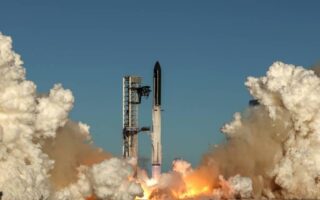
Starship lifted off on schedule from South Texas for its 15th test flight in over three years. The evening launch took place under ideal atmospheric conditions, leaving a persistent white plume in the calm skies over Starbase.
Successful Orbital Insertion
The first stage ascended cleanly and released the upper stage over the Gulf of Mexico. The upper stage then ignited its Raptor engines to enter a nominal low-Earth orbit, marking only the second time SpaceX has flown Starship into orbit.
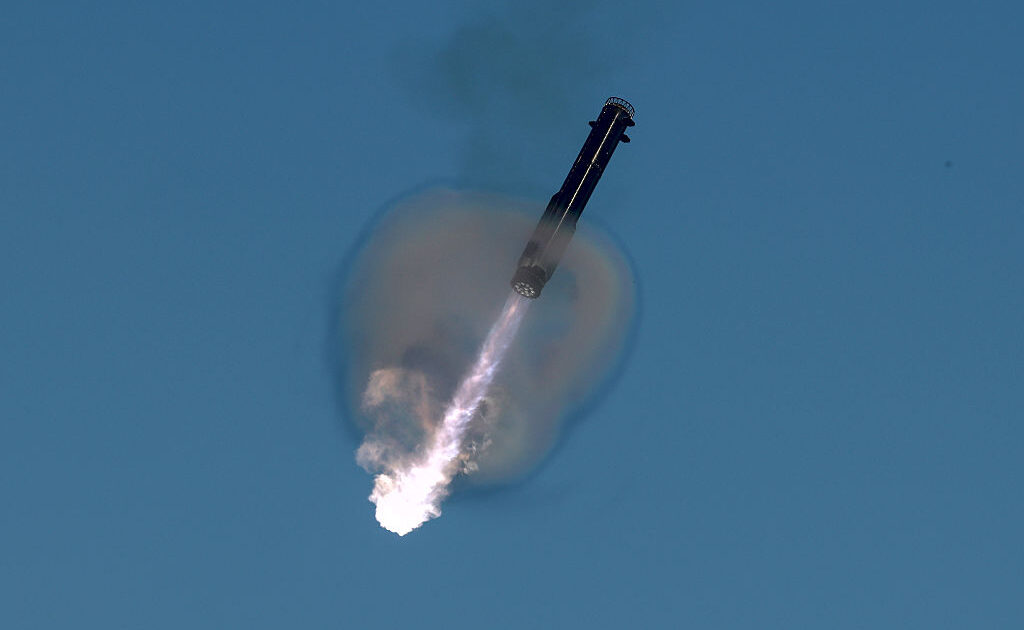
During the return sequence, the first stage descended rapidly, but an unspecified issue prompted engineers to command the vehicle to divert into the Gulf instead of returning for a tower catch. The maneuver resulted in a powerful explosion visible to observers more than 10 miles away.
Satellite Deployment
The primary objective of the mission was the deployment of 26 Starlink V3 satellites through a narrow door near the spacecraft’s base. Approximately 40 minutes into the flight, all 26 satellites—equipped with solar panels stretching 60 meters end to end—were successfully released into orbit, where they will use onboard propulsion to raise their altitude.
With this flight, Starship functions as an operational orbital rocket, standing as the largest and most powerful machine ever launched into space. SpaceX now faces the challenge of achieving reusability and significantly increasing its launch frequency.
Although the mission achieved its orbital and deployment goals, the first-stage booster was not recovered. SpaceX had intended to return, refurbish, and refight the version 3 booster, marking another step toward full reusability for the newest vehicle iteration.