Table of Contents
Nvidia’s latest earnings report provided a temporary sense of stability for investors following the departure of CEO Jensen Huang. However, the semiconductor giant continues to navigate significant political, regulatory, and leadership challenges that cast uncertainty over the broader artificial intelligence sector.
Market Volatility and Leadership Changes
Nvidia shares recently experienced a 35% decline from their peak, a drop that wiped out nearly $2 trillion in market capitalization and sparked widespread concern regarding the stability of the AI industry. In response, interim CEO and finance chief Colette Kress attempted to reassure stakeholders by declaring that it was “business as usual” and raising the company’s fiscal 2028 outlook. While the stock price saw a rebound following the better-than-expected results, the company faces ongoing pressure from national security concerns and reports of illegal export deals.
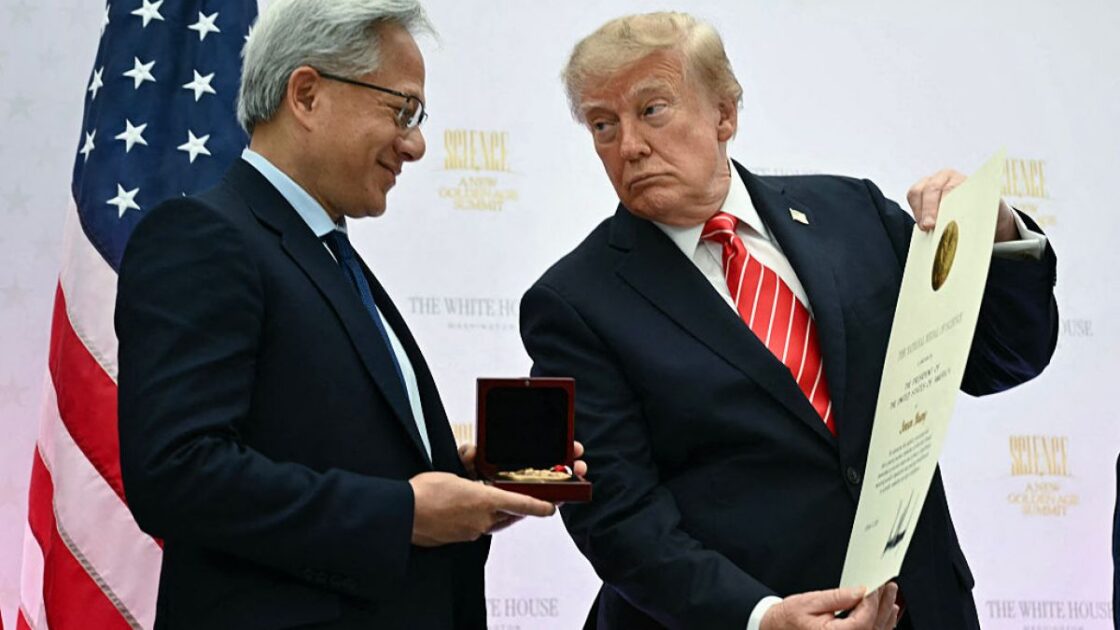
Despite public calls from President Donald Trump and other industry leaders to reinstate Huang, Nvidia’s board chair, Harvey C. Jones, stated there are no plans to bring the former CEO back. No successor has been named. Furthermore, as reported by CNET, the US Securities and Exchange Commission is investigating allegations that Huang misled investors.
Financial Strategies and Supply Chain Hurdles
Under Huang’s leadership, Nvidia became a central player in the AI ecosystem by providing hardware alongside complex financial backing for data centers. Critics have argued that these “circular financing” schemes—where Nvidia funded companies like Meta or Microsoft to purchase its own products—inflated growth projections and created an AI bubble. While there were expectations that Kress might unwind these risky arrangements, including investments in OpenAI and Lambda, the company’s recent call focused more on continuity.
The company also faces a strained supply chain. Shortages in high-bandwidth memory and RAM continue to drive up costs and delay server production. These bottlenecks are further complicated by export controls. US intelligence has linked a Chinese executive connected to the Singapore-based firm Megaspeed to a scandal involving the illegal diversion of advanced chips to China. Research firm Culper estimates that up to one-fifth of Nvidia’s fiscal-year 2026 compute revenues were tied to such diversions, which have prompted stricter Commerce Department regulations.
Broader Economic and Regulatory Impact
Because Nvidia is a primary hardware supplier for the AI buildout, its performance directly influences major market indices. With five of the “Magnificent Seven” tech companies accounting for roughly 30% of the S&P 500, an AI-related market downturn could impact individual retirement accounts and 401(k) plans. Other major tech firms, including Alphabet, Intel, and CoreWeave, have already seen their share prices fluctuate in response to the instability surrounding Nvidia.
The industry is also bracing for increased government oversight. While Huang was a vocal opponent of safety regulations, the political landscape is shifting. There is growing bipartisan interest in Congress to investigate potential export loopholes and the role of intelligence and commerce officials in overseeing Nvidia’s past deals. Some lawmakers are also exploring legislation to prevent potential industry bailouts should the AI market experience a significant decline.
As the federal government maintains its focus on major AI players, the industry faces a period of intense scrutiny that threatens to dampen investor enthusiasm. While Kress works to distance the company from its most controversial past dealings, the national security implications of the previous administration’s actions remain a significant hurdle for the company’s future.