Table of Contents
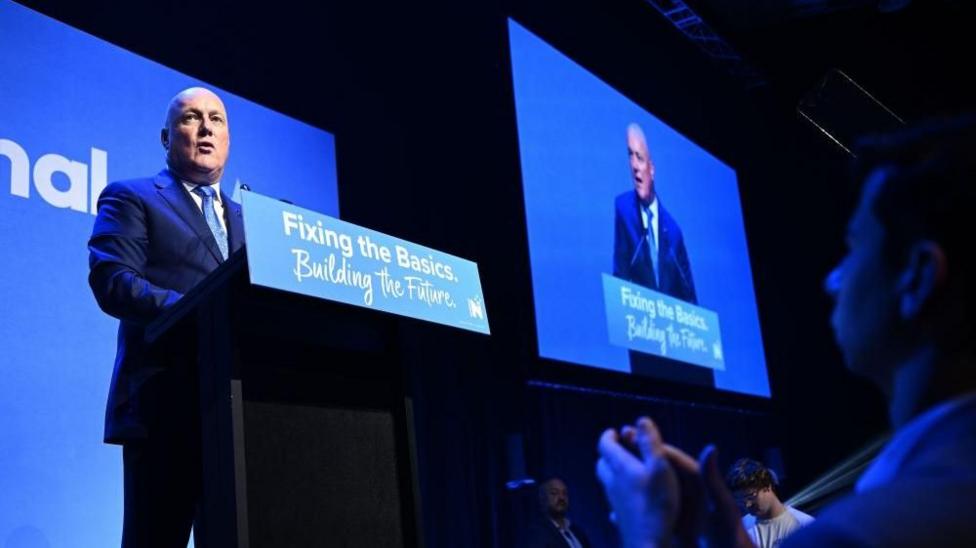
New Zealand’s general election ended without a clear winner on Saturday, setting the stage for political negotiations as party leaders prepare to form a coalition government. Prime Minister Christopher Luxon’s centre-right National Party emerged as the largest party, but both major political blocs fell short of securing an outright majority.
Coalition Negotiations and Party Positions
Preliminary results show the National Party won 42 seats, leaving it 19 seats short of the simple majority required to govern alone. Combined with potential coalition partners ACT and New Zealand First, the centre-right bloc would hold a slim lead if an agreement can be finalized. Meanwhile, opposition leader Chris Hipkins and his Labour Party secured 36 seats, with Hipkins declining to concede and stating that the future government’s shape remains uncertain for now.
Luxon congratulated Hipkins on a hard-fought race and announced plans to run a caretaker government until final results are confirmed later in the month. He noted that meaningful negotiations will follow the official results. Hipkins remarked that voters have spoken, though determining the exact message may take time, emphasizing that the incoming parliament will demand compromise and cooperation from all sides.
Minor Parties and the Role of Kingmakers
With more than 99% of the votes counted, the preliminary tallies indicated historically low support for the two main parties, sharing a combined vote of approximately 60%. Other parties securing representation include the Greens with 16 seats, ACT with 13, New Zealand First with 12, the Opportunity Party with 7, and Te Pāti Māori representing Māori interests with 5 seats.
The Opportunity Party crossed the 5% threshold to enter parliament for the first time. Party leader Qiulae Wong told supporters they could change the way politics is conducted by focusing on the future and finding common ground, noting they are open to working with either major bloc but will negotiate first with the party winning the most seats.
University of Otago election law expert Professor Andrew Geddis described the Opportunity Party as a wildcard player capable of determining which bloc governs. Geddis explained that outcomes depend on fine vote margins and the processing of special votes, which include ballots cast outside a voter’s electorate and overseas, over the following three weeks.
Campaign Issues and Voting System
The election campaign was primarily defined by cost of living pressures and unemployment. Julian McCrann, head of polling at Roy Morgan, told BBC News that economic issues dominated voter concerns, noting that voters felt previous promises to improve economic conditions had not been fully delivered.
An annual social cohesion survey indicated that over half of New Zealanders no longer view the country as a land of opportunity, coinciding with record numbers of citizens leaving for countries like Australia. New Zealand operates under a mixed-member proportional voting system, where voters cast two ballots—one for their local constituency representative and another for a political party—a structure that typically results in coalition governments.
The electoral commission scheduled the official election results to be announced on 27 November.