Table of Contents
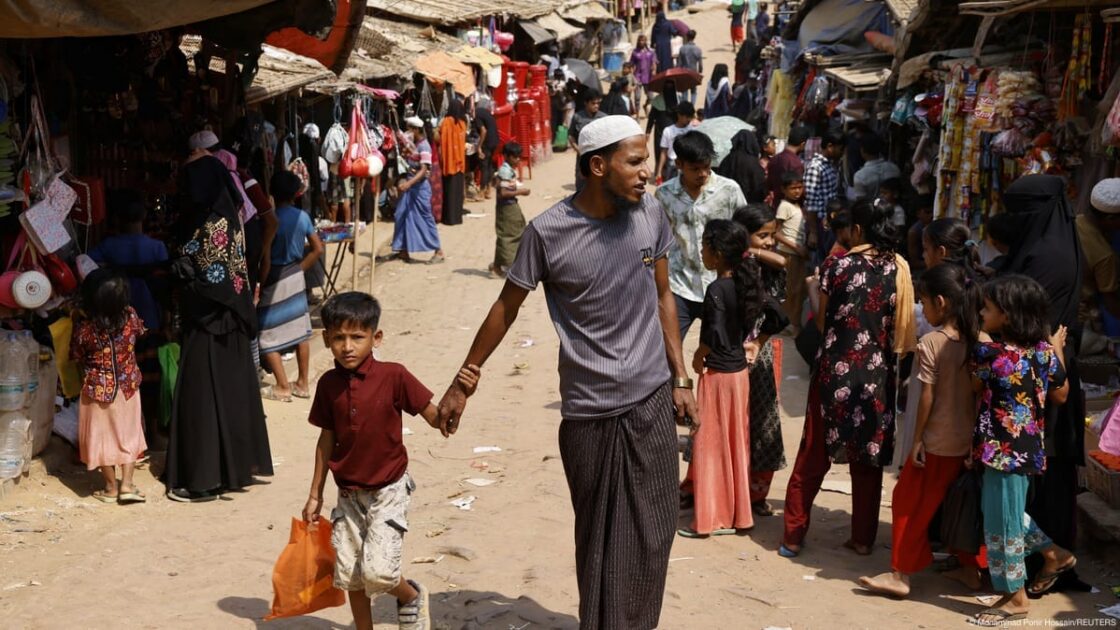
The International Court of Justice (ICJ) ruled on Thursday that Myanmar committed genocide against the Rohingya community a decade ago, marking a historic judgment welcomed by the persecuted minority and human rights advocates. The UN’s top court ordered the Myanmar government to prevent future crimes, implement legal reforms to safeguard the Rohingya, and provide reparations or compensation to the victims.
A Historic Judgment After Seven Years
The ruling follows a case filed seven years ago by The Gambia, which accused Buddhist-majority Myanmar of orchestrating a deliberate campaign involving arson, rape, and murder against the predominantly Muslim Rohingya community in 2016 and 2017. This decision represents the ICJ’s first-ever finding of genocide against a state, as well as the initial ruling in any legal proceeding initiated globally against Myanmar or its leadership.
Throughout the proceedings, Myanmar argued that its actions in Rakhine State constituted lawful counterinsurgency measures directed at the Arakan Rohingya Salvation Army, an armed faction that targeted police and military installations. The ICJ firmly rejected this defense. ICJ President Yuji Iwasawa, reading from the 9-6 ruling delivered by the 15-judge panel in The Hague, stated that the casualties and damage vastly exceeded military necessity. He noted that the execution of Rohingya men and boys, widespread sexual violence, targeting of children and infants, systematic burning of villages, and attacks on fleeing civilians were incompatible with counterinsurgency operations.
A UN-backed fact-finding mission previously estimated that approximately 10,000 individuals likely perished during the violence, with children accounting for roughly one in five victims. Michael Becker, an associate professor of international human rights law at Trinity College Dublin, described the decision as monumental because it establishes state responsibility for genocide and proves that establishing genocidal intent is achievable. He explained that the panel carefully demonstrated how The Gambia satisfied the court’s strict standard for genocidal intent, while also affirming that forced displacement, violence against children, and sexual violence are relevant considerations.
Challenges to Enforcement and Real-World Relief
Following the verdict, attention shifted immediately toward implementing the court-mandated remedies. The ICJ instructed Myanmar to facilitate the safe, voluntary, and dignified repatriation of displaced individuals, investigate the atrocities, and prosecute those responsible. Additionally, Myanmar must return or replace confiscated property or compensate victims within a two-year window.
However, the individuals responsible for the genocide, including former military chief and current president Min Aung Hlaing, have maintained power since overthrowing Myanmar’s democratically elected government in 2021. Much of the nation, including Rakhine State, remains engulfed in a violent civil war between the military and various resistance factions. Furthermore, the Arakan Army, which currently controls most of Rakhine, faces widespread accusations of persecuting the Rohingya.
Becker noted that these circumstances do not provide an environment conducive to fulfilling the ICJ’s relief orders anytime soon. Enforcement of the court’s directives ultimately rests with the UN Security Council. Richard Horsey, a senior Asia adviser at the International Crisis Group, stated that China and Russia, both of which support and heavily arm the Myanmar government, would almost certainly veto any Security Council resolution seeking to penalize Myanmar. Consequently, pressure must originate from governments and the General Assembly rather than the Council itself.
In response to the judgment, the United Kingdom announced it was expelling Myanmar’s defense attache in London and would request a UN Security Council meeting to address the ruling.
The Road Ahead for Rohingya Justice
Although numerous Western nations have repeatedly imposed sanctions on Myanmar over the past decade, these measures have yielded little visible impact. Myanmar has pursued efforts to shed its pariah status and normalize international relations, with Min Aung Hlaing receiving warm receptions from eight Asian and Eastern European nations following his transition from general to president after elections earlier this year.
Horsey observed that while the ICJ ruling will impede these diplomatic efforts, it will not completely reverse them. He added that most regional governments will maintain engagement, though nations with Muslim-majority populations, particularly Malaysia and Indonesia, will face domestic difficulties in justifying such ties. Japan and South Korea, which hold substantial business interests in Myanmar, are expected to proceed cautiously, whereas the United States will likely maintain a transactional relationship following recent meetings with senior officials. Horsey emphasized that the tangible cost for Myanmar is that any government engaging with the state must now account for its status as a regime found responsible for genocide.
For the Rohingya, the path toward genuine change remains long and demanding. Wai Wai Nu asserted that a ruling in The Hague will not instantly halt bombings, feed starving families, or end ongoing atrocities in Rakhine State, making international enforcement imperative. Karim urged the global community to leverage the ICJ decision as a mechanism to open doors and protect vulnerable populations.
Arsalan Suleman, lead counsel for The Gambia, stated that the genocide ruling can support accountability efforts in other judicial bodies, noting that the International Criminal Court is currently evaluating an arrest warrant request for Min Aung Hlaing concerning alleged crimes against humanity against the Rohingya. Tun Khin conveyed that the primary aspiration of most Rohingya is to return to their homes and villages with full citizenship rights and legal protections, acknowledging that the process will require time as this legal milestone represents only the beginning.