The extremist group Male State has denied any connection to a wave of hoax bomb threats that caused flight disruptions across European airports. The denial comes amid ongoing investigations and new reports of security scares targeting airlines and media organizations.
Denial from the Group
Responding to inquiries from the BBC Russian Service, a Telegram account linked to the group and its founder Vladislav Pozdnyakov dismissed any involvement in emailing the threats. The channel questioned the existence of the group, noting that it has not existed for many years.
The Male State was banned in Russia in 2021, and founder Vladislav Pozdnyakov is believed to reside abroad. The organization has since adopted the name Male Legion in certain spaces.
Details of the Threats
The initial hoax email, reviewed by the BBC, was sent on Thursday morning to Aeroporti di Roma and accounts at Rome’s Fiumicino airport. The message appeared to originate from an email address connected to state health services in Bogota, Colombia.
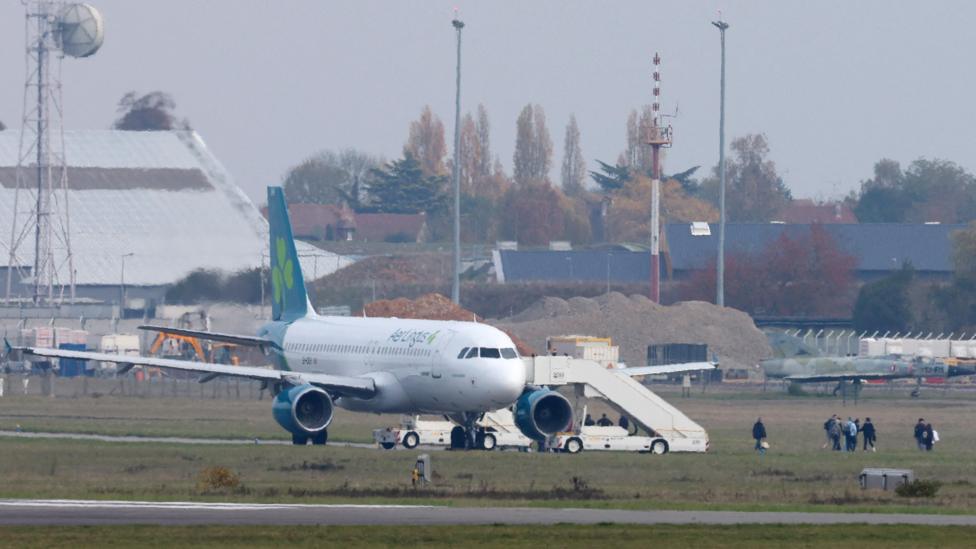
Written in fluent Italian, the message claimed that fighters from the Male State had placed explosives on two incoming flights to target Italy’s feminist regime. As a result, one flight was diverted to France, while another was escorted into Rome by Italian air force jets. No explosives were discovered on either aircraft or any other reported flight.
Subsequent reports on Friday included bomb scares on a Ryanair flight from Rome to Lisbon, a Wizz Air flight from Prague to Rome diverted to Venice, and threats directed at several high-profile Irish media organizations.
Official and Media Reactions
A source at Aeroporti di Roma told the BBC that such warnings were highly unusual and unprecedented in recent years, explaining why the threat was taken seriously. Meanwhile, Italy’s La Stampa newspaper published an article suggesting the group could be acting as an armed wing for the Russian regime.
Bellingcat’s online investigation team previously described the group as a vocal supporter of the Russian invasion with a far-right ideology. Channels connected to Pozdnyakov frequently feature pro-Russian messaging and posts highlighting European tensions.
Italian Defence Minister Guido Crosetto warned of an ongoing strategy to increase chaos through hybrid threats, citing recent incidents affecting supermarket refrigerators and French blood supplies alongside the false aviation alarms. Authorities across Europe continue to investigate the source of the hoax messages and whether they are coordinated or the work of copycats.