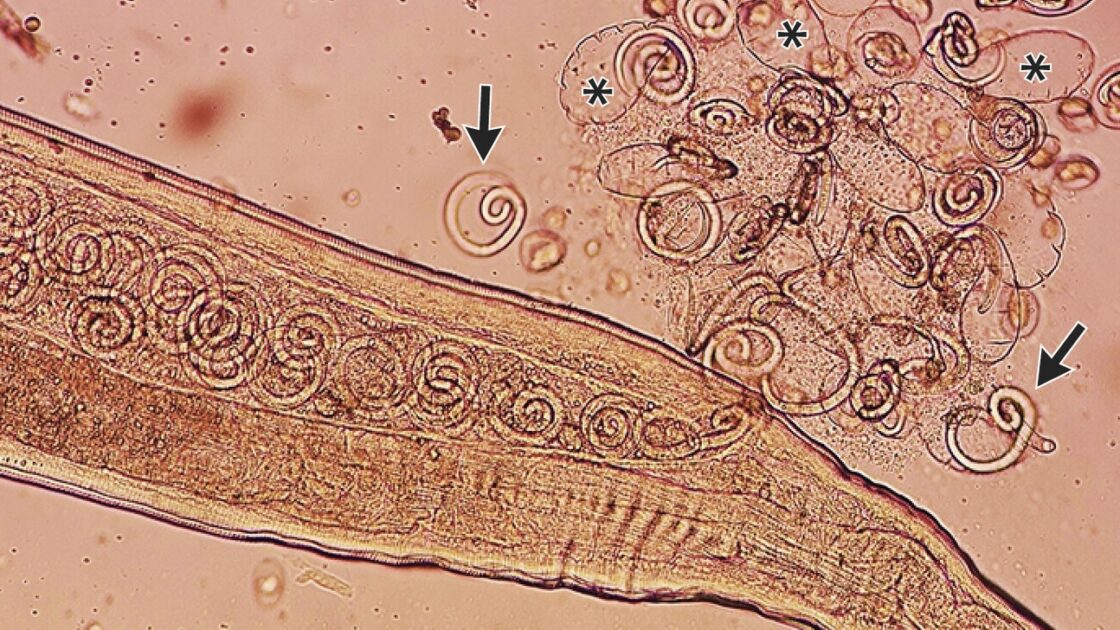
After experiencing two months of persistent discomfort, a 71-year-old crop farmer in South Korea visited an eye clinic, where medical professionals extracted 11 living, wriggling worms from his eyes. The parasites had reproduced during their time in his eyes, with many of the female worms pregnant at the moment of extraction. The patient narrowly avoided a situation where the parasites would have released their living larvae directly onto his eyeballs.
Symptoms and Medical Examination
The patient reported feeling as though a foreign object was trapped in both of his eyes for the prior two months, alongside redness and blurry vision. Upon examination, ophthalmologists immediately identified multiple moving, whitish roundworms. The physical condition of his eyes had deteriorated significantly; blood vessels in the conjunctiva—the membrane covering the eye—were enlarged, causing severe redness. Furthermore, cells in his cornea, the clear dome-shaped outer layer of the eye, had eroded, potentially as a result of the parasitic activity.
Worm Extraction and Parasite Identification
As documented in a case report published in the New England Journal of Medicine, medical staff administered a topical treatment to numb the man’s eyes. Using fine forceps, they systematically removed the worms individually. The intervention yielded 11 adult worms, measuring between 11 and 22 millimeters in length.
Microscopic analysis of the extracted specimens confirmed they were Thelazia callipaeda nematodes. These parasitic roundworms are common throughout Asia and have established populations in certain European regions. While these parasites typically infect the eyes of dogs and cats, they can occasionally and accidentally find their way into human eyes.