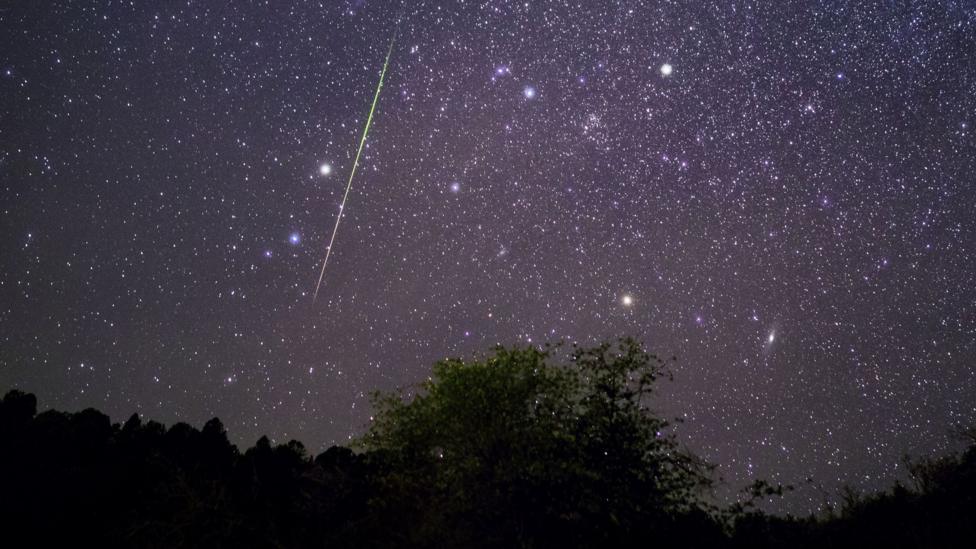
The Leonid meteor shower reaches its peak on Tuesday night, giving UK sky gazers their best chance to view the celestial spectacle this year. Although the event runs until November 30, peak activity is anticipated on the night of Tuesday, November 17, extending into the early hours of Wednesday.
Origins and Viewing Tips
Observers could spot between 10 and 15 meteors every hour during the peak. The shower originates from dust particles shed by Comet 55P/Tempel-Tuttle, which leaves a trail of debris along its orbit around the Sun. Entering Earth’s atmosphere at speeds reaching up to 44 miles (71km) per second, these debris particles create the fastest streaks of light in the night sky.
According to experts, viewers should find a safe and dark environment far away from light pollution sources like street lamps. The meteors can be seen with the unaided eye, meaning binoculars or telescopes are unnecessary. Allowing eyes roughly 20 to 30 minutes to adjust to the darkness improves visibility, while wide open spaces offer a comprehensive view.
While meteors can appear across the entire sky, the radiant point of the Leonids sits near the head of the constellation Leo, making it the ideal section to watch. Because Leo does not rise until approximately midnight, the optimal viewing window falls after midnight and leading up to dawn. As with any stargazing event, clear skies remain essential.
Weather Conditions
Viewing conditions may favor observers near the peak because the Moon sets around 23:30 GMT on Tuesday, reducing reflected moonlight during the prime post-midnight hours. The far north of Scotland, including Orkney and Shetland, anticipates the highest chance of clear skies with broken cloud cover and minimal risk of passing showers.
Parts of southern England, Wales, Northern Ireland, and the Midlands will also experience clear spells, though mixed with cloudier intervals and occasional rain. Northern Ireland, North Wales, and the Midlands favor earlier clear breaks during the night, whereas northern England and most of Scotland outside the far north face limited visibility due to persistent clouds and damp weather.