Table of Contents
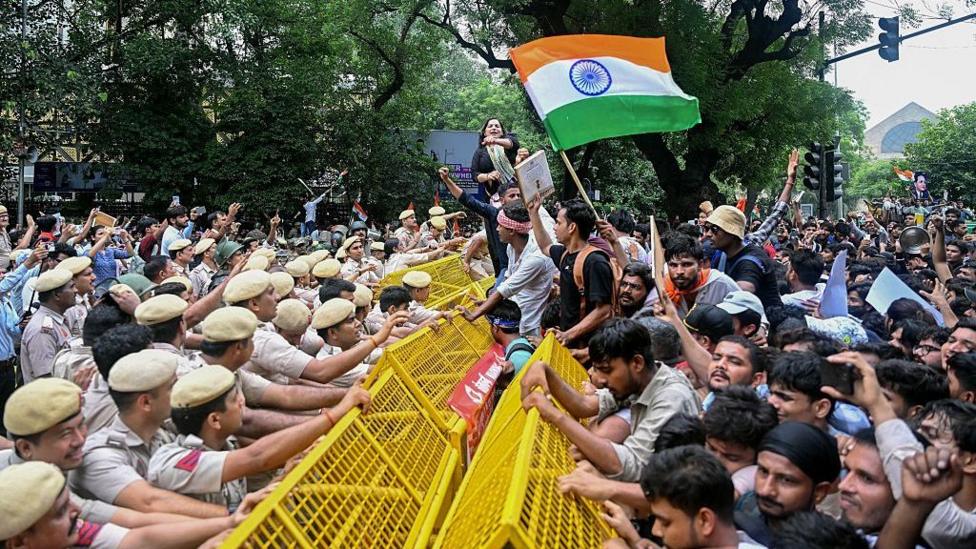
Cheers erupted at Delhi’s Jantar Mantar protest site in July when Gen Z-led demonstrations forced federal education minister Dharmendra Pradhan to resign. Just over three months later, student protesters are struggling to assemble, facing sweeping restrictions and thousands of detentions by authorities.
The Rise of a New Dissent
The summer brought a fresh wave of dissent across India, driven by youth frustration and fueled by online satire. Prime Minister Narendra Modi, known for a strongman image and unaccustomed to open mockery, struggled to contain the movement. Yamini Aiyar, visiting professor at Brown University and former president of the Centre for Policy Research, noted that the movement posed a challenge for the ruling Bharatiya Janata Party (BJP) because it cut across caste, gender, and economic classes, even attracting upwardly mobile, lower-income sections of the base.
Protesters broke political taboos by openly mocking the prime minister online. Sakhi, a student protester with Delhi University’s left-wing student organisations, stated that comedy became a new language to challenge authority because their generation feels less fear of repercussions. Past major movements, such as the 2020 farmer protests that eventually forced the government to abandon agricultural reforms, were easier for authorities to label as narrow or anti-national, according to Aiyar.
Cracking Down on Activism
The government’s response has tightened significantly since the summer. CJP leaders, including spokesperson Saurav Das, faced repeated detentions, and Das alongside Ashutosh Ranka spent a week in Delhi’s Tihar jail after being accused of trespassing at Jantar Mantar. The protest site has since been removed from the list of authorised venues, a decision facing a legal challenge. Left-wing All India Students’ Association (Aisa) protesters have also encountered police action for allegedly defying orders.
Das told BBC News that they expected a crackdown and that the government learned a lot from the summer. Legal experts warned of the chilling effect of such proceedings. Ali Khan, assistant professor at Lloyd Law College, explained that the process itself acts as a deterrent even if cases lead to acquittals years later. Constitutional lawyer Vrinda Grover, advising the CJP, argued that restrictions have become excessive and rights are being whittled down under the guise of law and order.
BJP national spokesperson Syed Zafar Islam rejected accusations of heavy-handedness in statements to BBC News, asserting that the constitution mandates freedom of expression, but it must operate within the law and cannot override public security or the rights of other citizens.
Online Risks and Ongoing Resistance
Dissenting online carries heavy risks, as Sakhi faced targeted abuse, transphobic attacks, and violence threats after viral social media posts. Sakhi mentioned that some content was removed after gaining millions of views. Under India’s IT laws, the government can order platforms to block content for national security reasons, and notices on X and Instagram have shown accounts being withheld in India.
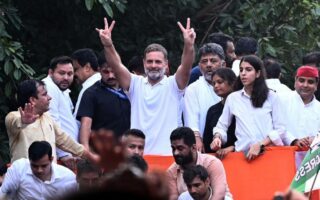
CJP leaders compared the crackdown to the 1975 Emergency, when civil liberties were suspended. Opposition parties have filled some of the void, with tens of thousands gathering in Delhi on November 1 for a permitted rally organized by the opposition alliance INDIA bloc, led by Congress. Meanwhile, following his release from Tihar prison on October 21, Saurav Das told BBC News that time is on their side and urged people to wait and watch.