Table of Contents
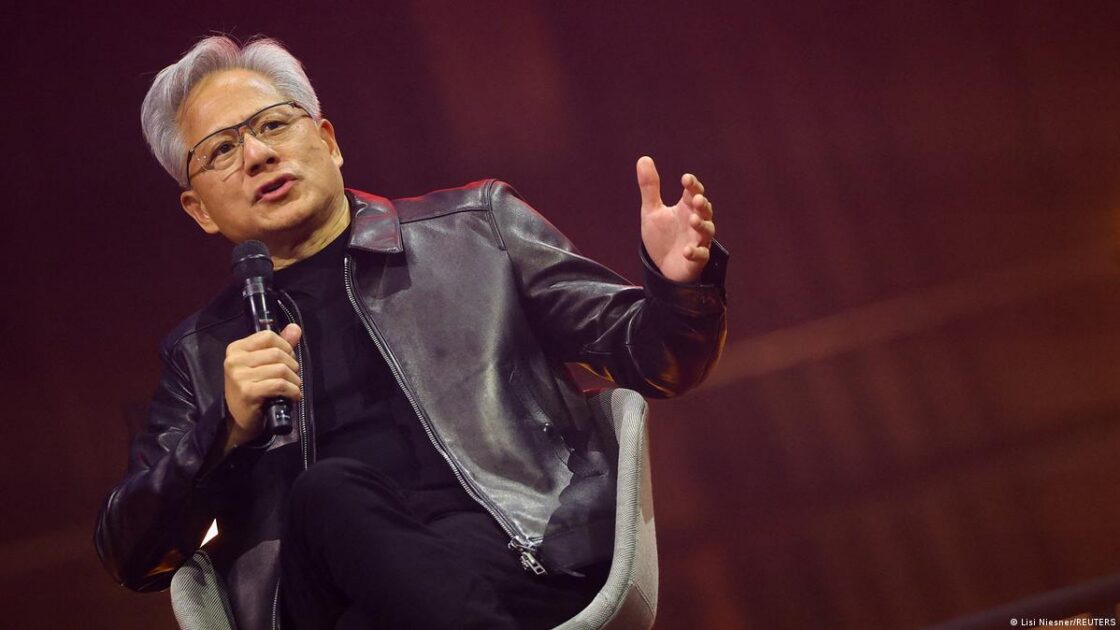
Nvidia CEO Jensen Huang has resigned from his roles as president, chief executive, and board member, effective immediately. The departure follows reports of a second extramarital affair involving a senior executive at the company, according to reporting by Deutsche Welle.
Resignation and Leadership Transition
Nvidia’s board of directors convened late Wednesday to address Huang’s future after allegations surfaced regarding an affair with a direct report. The company confirmed the resignation in a statement on Thursday morning. Current Vice President and Chief Financial Officer Colette Kress has been appointed as interim CEO. Under the firm’s bylaws, the 11-member board holds the authority to remove a CEO with or without cause by a majority vote.
The latest scandal, first reported by The New York Times, follows a separate admission by the 63-year-old Huang just three days prior regarding a relationship with a woman named Alice Huang. US intelligence agencies have identified her as a potential spy for China. She is a former executive at Megaspeed, a Singapore-based cloud computing firm and a major Nvidia client currently under US investigation for allegedly violating export curbs by sending Nvidia chips to China. Megaspeed has denied the claims and pledged to cooperate with investigators.
Market Impact and Succession
The dual scandals have significantly impacted Nvidia’s market valuation, which has declined by more than $600 billion to $4.2 trillion since the first report emerged on Sunday. Nvidia shares fell over 9% in premarket trading on Thursday, following a 10% drop earlier in the week. Despite the volatility, many analysts anticipate minimal impact on near-term sales due to the high demand for the company’s advanced processors.
Dan Ives, a partner and senior managing director at Yorkville Ives, noted that while Huang was central to the company’s identity, the firm’s leading-edge technology and market position remain intact. Regarding long-term leadership, Bloomberg reported that the board is working with advisers to identify a permanent successor. Potential candidates mentioned in market discussions include former Apple CEO Tim Cook and former Google CEO Eric Schmidt, alongside internal figures like Kress and members of Huang’s family.
Strategic Risks and Geopolitical Tensions
Huang’s departure creates uncertainty regarding the company’s strategic direction, as he was known for his hands-on involvement in engineering and product architecture. His exit is viewed as potentially disruptive to Nvidia’s relationships with major AI hyperscalers and foreign governments. Huang had served as a primary lobbyist on export rules, notably persuading US President Donald Trump to ease certain restrictions on China last year.
The situation coincides with heightened tensions in the global AI race. Beijing has accused the US of using the spying allegations as a pretext for a technological “blockade.” As Chinese firms like DeepSeek and Alibaba narrow the performance gap with US rivals, the issue is expected to be a key topic during upcoming discussions between President Trump and Chinese President Xi Jinping at the APEC summit in Shenzhen.