Table of Contents
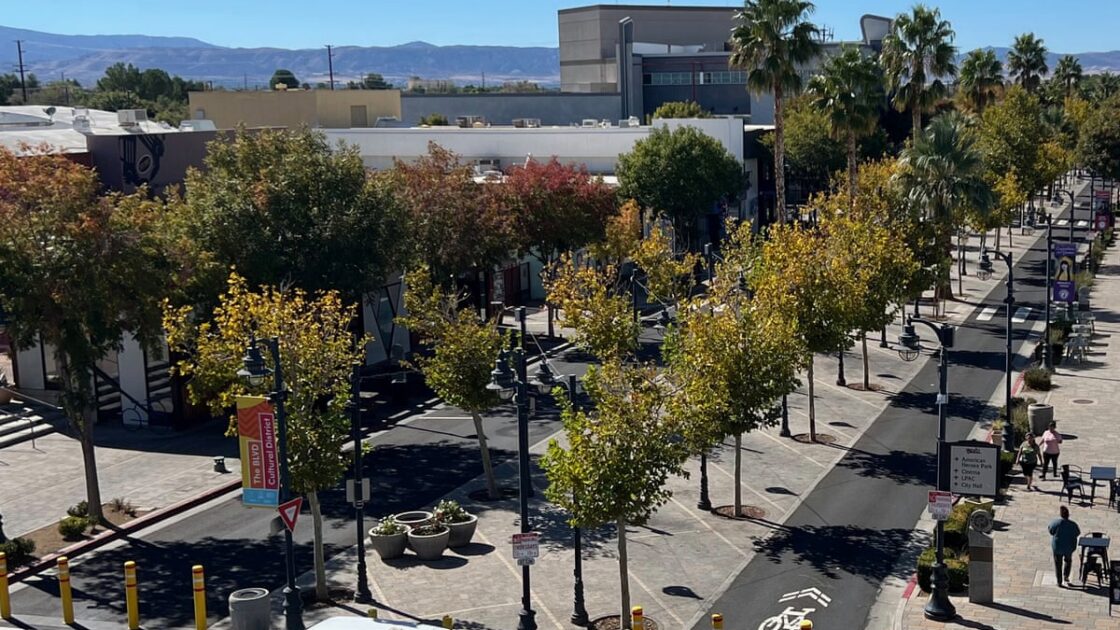
Located in the Mojave Desert, the city of Lancaster, California, has successfully repurposed a former five-lane highway into a vibrant, pedestrian-friendly destination known as The BLVD. By investing $11.5 million in 2010, the city replaced the center of the thoroughfare with tree-lined walkways, creating a hub that now hosts 250 public and private enterprises.
Economic and Social Revitalization
The project, planned and funded by the city’s redevelopment agency, has yielded significant financial returns. According to city data, the transformation generated over $270 million in economic output and attracted $130 million in investment within its first four years. Beyond the financial impact, the project spurred the construction or renovation of hundreds of housing units and created numerous jobs.
John Elford, manager of the Lancaster public library, noted that while initial construction caused frustration among residents, the sentiment shifted once the project was completed. The improved walkability encouraged more people to visit the library, transforming it into a shared community space. Elford observed that the environment has fostered a better understanding between residents and the local unhoused population, as visitors have become more familiar with their neighbors through frequent, casual interactions.
Community and Business Integration
In 2013, local property and business owners partnered with the city to form the BLVD Association, a district funded by city taxes that manages maintenance and promotion. The association introduced an ambassador program in 2016 to assist visitors and ensure the area remains safe. Brian Morris Jr., an ambassador, stated that while minor issues occasionally occur, the area remains livable and secure.
Local business owners and residents have praised the project for its ability to bring the community together. Nicole Stevens, who runs a local marketplace, noted that the redesign has successfully united families and small businesses. Similarly, restaurant worker Alex Arreola described the area as a unique, walkable asset that stands out compared to other cities in the region.
Cultural Impact and Future Outlook
The BLVD also serves as a cultural center, anchored by a museum opened in 2012 that highlights the history and art of California’s Antelope Valley. Kim Calderwood, the museum’s art program manager, explained that the area’s new foliage and diverse businesses have attracted a younger demographic. The museum frequently engages the public through events like open mic nights and figure drawing classes.
Nanette Rushing, a business owner on the boulevard, described the street as a “melting pot” that influences local food, music, and art. While some residents, such as Frazier Farrell, enjoy the variety of entertainment options ranging from comedy to dining, others have noted that the slower speed limits in the district are a common point of discussion. Despite this, the project is widely viewed as a successful example of urban planning in a region where such walkable spaces are rare.