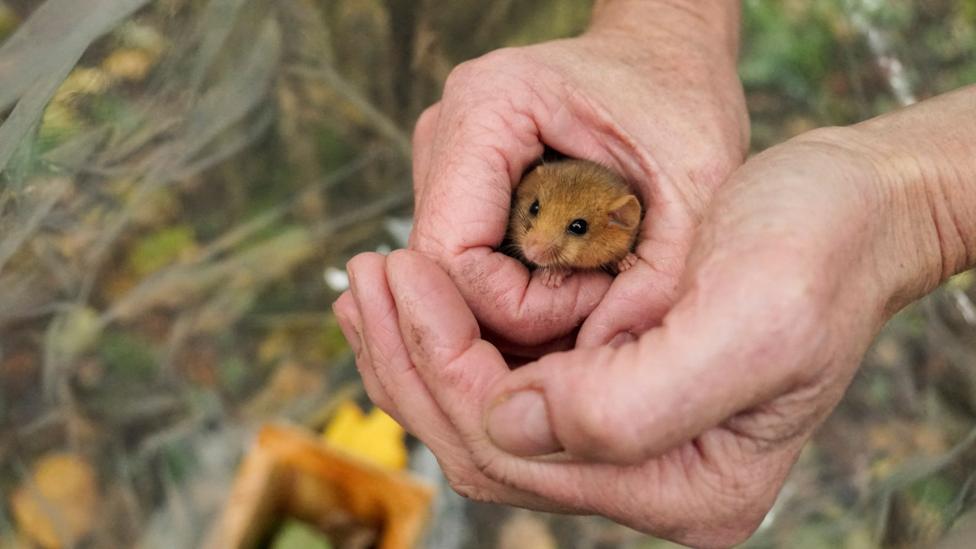
Hazel dormice are thriving at a National Trust site in Devon due to targeted habitat work and a monitoring scheme, defying nationwide population drops. Rangers manage 100 nest boxes across the Killerton estate, recording weights and details for each captured mouse between April and October.
Conservation Efforts and Population Trends
The National Trust stated that the animals continue to prosper in the area, indicating that staff are successfully building a healthy, diverse, and well-connected environment for local wildlife. In contrast, data from the People’s Trust for Endangered Species indicates that UK populations have fallen by more than two thirds since 2000, primarily driven by habitat fragmentation. Typically weighing between 20g and 40g, the mammals are expected to put on enough weight to begin hibernating in the coming weeks and endure the winter months.
Fi Hailstone, senior ranger for the National Trust at the Killerton estate, explained that climate variables impact the animals’ survival. She noted that warm weather disrupts their sleep cycles while wet springs hinder their foraging abilities when awake, making a resilient ecosystem with abundant shelter, scrub, and food essential.
Hailstone highlighted the value of brambles, noting that although gardeners often dislike them, they serve as a crucial life source providing spring flowers, berries, and protective cover from predators for nesting.
Local Habitat and Monitoring Results
Outside of hibernation periods, the shy and nocturnal creatures remain difficult to spot. Hailstone stated that Devon serves as a regional stronghold for the species due to a robust hedge network.
Monitoring efforts at Killerton began in 2018, revealing a stable population that defies broader national declines. Hailstone observed that the animals are appearing in new zones, demonstrating that they are spreading across the estate as a result of extensive hedge and tree planting.
Hailstone cautioned that while newly planted woodlands are beneficial, their impact on dormice will not materialize for roughly a century, making the active management of existing woodlands vital. Anyone encountering a dormouse during the winter is advised to leave the animal untouched and immediately contact the RSPCA or a local animal shelter.