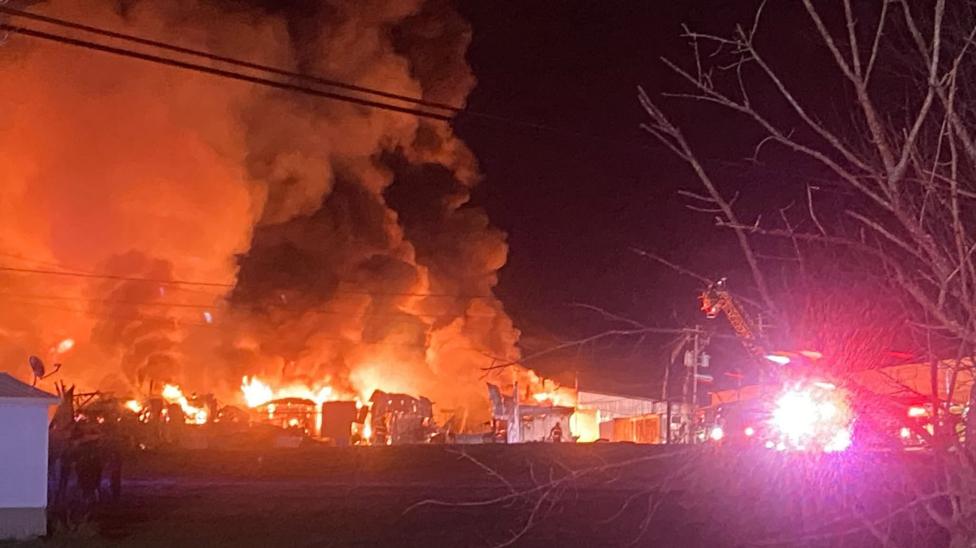
A major fire struck one of the largest foie gras producers in the United States on Thursday, destroying structures and killing an undetermined number of birds. The incident occurred at Hudson Valley Farms in upstate New York, bringing emergency crews from dozens of departments to the scene.
Fire Response and Damage
The flames tore through several barns at the Ferndale facility before firefighters could gain entry. Marcus Henley, manager of Hudson Valley Foie Gras, explained to local news outlet Radio Catskill that the fire completely destroyed two buildings where ducks and geese were housed. He stated that he suspected an electrical malfunction might have triggered the blaze, though official confirmation is still pending.
Emergency responders managed to rescue hundreds of young birds and hatchlings. According to local news reports, neither workers nor first responders sustained any injuries during the incident. Westchester News 12 reported that the early morning emergency response required 37 fire departments and a total of 200 first responders.
Firefighters faced significant challenges in containing the blaze because it spread rapidly through the metal-clad, wood-frame structure. Hudson Valley Foie Gras and local fire authorities did not respond to requests for comment regarding the incident.
Industry Controversy and Background
The farm’s operations do not publicly disclose the total number of birds housed at any given time, though commercial poultry facilities generally accommodate thousands. Foie gras, a product derived from the fattened livers of ducks and geese, has consistently faced fierce opposition from animal welfare organizations over its production methods.
The standard production process requires force-feeding birds via plastic tubes, causing them to gain more than a third of their body weight in a short timeframe. Animal rights groups point to these methods as inhumane, and voters recently supported bans on foie gras sales in Washington DC and Denver during midterm elections.
Legal battles have surrounded the facility for years, beginning when New York pursued a ban on the product in 2019. During a subsequent city council hearing that year, Henley defended the farm’s practices, claiming that journalists visiting the property observed no inhumane treatment.
In the wake of the disaster, the animal rights activist group PETA informed BBC News that they plan to install a memorial billboard nearby to honor the birds that died. The organization also urged Hudson Valley farms to transfer any surviving birds to local animal sanctuaries.