Table of Contents
As a longtime fan of the franchise, Blade Runner 2099 showrunner Silka Luisa approached adapting the iconic universe for television with excitement rather than fear. The new series, streaming on Amazon Prime Video, is set 50 years after the events of the 2017 film Blade Runner 2049 and explores a bleak future where artificial humans known as replicants take over society following a brutal war.
Approaching a Bold Concept Without Fear
Discussing the project with The Verge, Luisa stated that it is impossible to approach the franchise with hesitation because of its bold nature. She noted that original creator P.K. Dick took significant creative risks, meaning the property is unsuited for the timid. Luisa explained that she ignored any potential fears to stay focused on the monumental task ahead, maintaining concentration on moving the production forward at every single step.
Luisa pointed out that the significant time gap in the narrative provided essential creative space to build an original story. Just as Ridley Scott evolved the original film far beyond the novel and Denis Villeneuve crafted a distinct visual identity in Blade Runner 2049, the new series follows that tradition of carving out a fresh path. She emphasized that a familiar world fails to generate awe or a sense of unsettling wonder, making it vital to establish a unique perspective.
Building a Post-Human Society
The core concept of the series began with examining a world where technology completely overtakes humanity. Rather than focusing on the war itself, Luisa found the aftermath and the shift into a post-human society much more compelling. This inverted the dynamics of the original story, creating a replicant-dominated society where the narrative follows an undercover structure rather than a single individual’s journey.
The writers’ room dedicated extensive effort to establishing the visual texture of this new world, utilizing real-world historical references, films, and imagery. Luisa noted that because the setting required entirely fictional details rather than existing historical archives, the initial writing process was notably slower.
Balancing Pacing and Iconic Costumes
Translating the famously slow and deliberate cinematic pacing of the films into an eight-hour television format sparked significant internal debate. Early discussions centered on whether modern television audiences would maintain patience for a meditative atmosphere. While the script initially pushed for higher narrative momentum, the editing process later integrated breathing room to accommodate composer Leopold Ross’s score and allow for dreamier sections essential to the franchise’s identity.
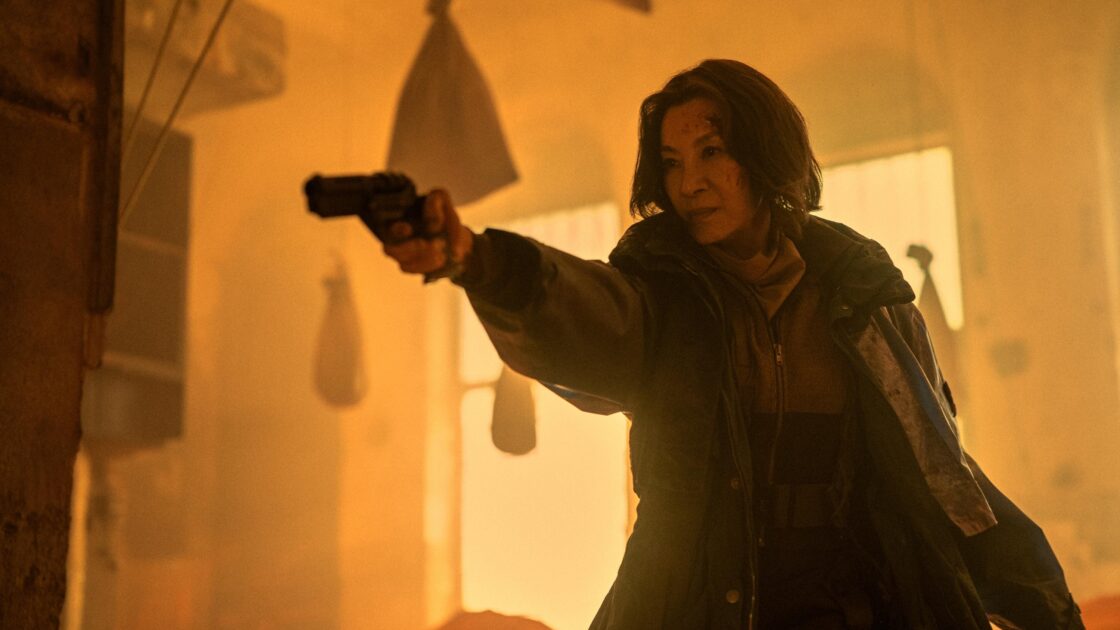
The series stars Michelle Yeoh as an aging replicant and Hunter Schafer as a human hiding her identity, working as a pair of noir detectives. Continuing the cinematic tradition of iconic outerwear established by Harrison Ford and Ryan Gosling, costume designer Helen Huang created distinct silhouettes, including a traditional trench reference for Yeoh and a bomber jacket for Schafer. Luisa told The Verge that seeing the actors wear the coats during screen tests provided the defining moment when she realized she was truly making a Blade Runner project.