Table of Contents
As the festive season approaches, many wonder whether the UK will experience a white Christmas. Historical data from the Met Office shows that the likelihood of seeing snow is actually higher than many might imagine.
How a White Christmas Is Defined
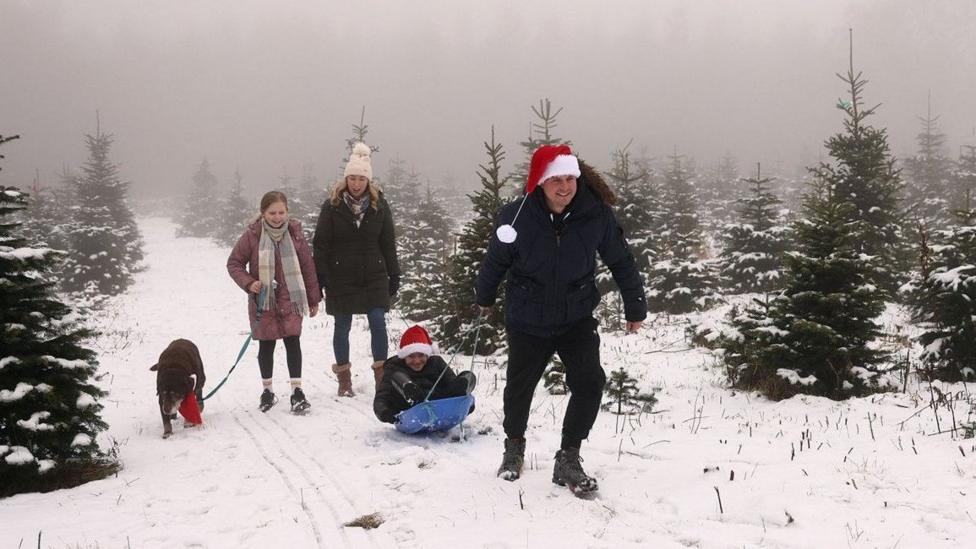
For an official white Christmas, a single snowflake must fall anywhere in the UK during the 24 hours of December 25, recorded at any point within the Met Office network of roughly 300 weather stations. This means a thick blanket of snow on the ground is not strictly required to meet the official definition.
Conversely, a landscape covered in existing snow does not count as a white Christmas if no fresh snow falls on Christmas Day itself. The last widespread white Christmas occurred in 2010, when 19 percent of measuring stations recorded falling snow and 83 percent reported snow lying on the ground. More recently, every year from 2020 through 2023 officially qualified as a white Christmas, though very few locations actually observed settling snow.
Weather Factors and Early Omens
Several atmospheric factors influence the UK weather in the lead-up to the festive period. A major element is a record-breaking El Niño approaching its peak in the Pacific. While its strongest impacts occur locally in the tropical Pacific, the energy released into the atmosphere can alter weather patterns globally. For the UK, these impacts tend to be subtle and inconsistent, though strong El Niño events can raise the odds of wet and stormy weather in late autumn and early winter, with some studies suggesting an increased chance of colder weather later in the season.
Additional atmospheric shifts also play a role, such as the stratospheric polar vortex winds that weakened and reversed earlier in November, marking the earliest sudden stratospheric warming event on record. This phenomenon typically happens much later in winter and can weaken the jet stream, which raises the probability of cold northerly or easterly winds. Because this event occurred so early in the season, its effects are harder to quantify, and the exact impact on the upcoming weeks remains uncertain.
Latest predictions from Met Office scientists, incorporating these influences, indicate an increased likelihood of colder and drier conditions than average across December, January, and February. However, this only points to an increased probability, meaning shorter-term periods of milder and wetter weather are still very likely to occur throughout the season.
When to Expect Accurate Forecasts
Accurately forecasting snow in the UK remains difficult even a day or two in advance. Because snow demands a precise balance of cold air and moisture, minor shifts in either factor can transform a predicted snow event into rainfall. Longer-range forecasting remains even more challenging, making precise predictions impossible a month before Christmas.